

 Travel Essentials
 Travel Essentials

Explore Austria's premier national parks: Hohe Tauern's majestic mountains, Gesäuse's rugged gorges, and more. Ideal for adventurers seeking diverse landscapes and biodiversity.
 Travel Essentials
Austria boasts six remarkable national parks that showcase the country’s diverse natural wonders, from towering Alpine summits to serene wetlands. These protected areas, recognized internationally by the IUCN, preserve unique ecosystems and offer endless opportunities for outdoor enthusiasts. Spanning high mountains, ancient forests, and riverine habitats, they represent Austria’s commitment to conservation while inviting visitors to explore pristine landscapes.
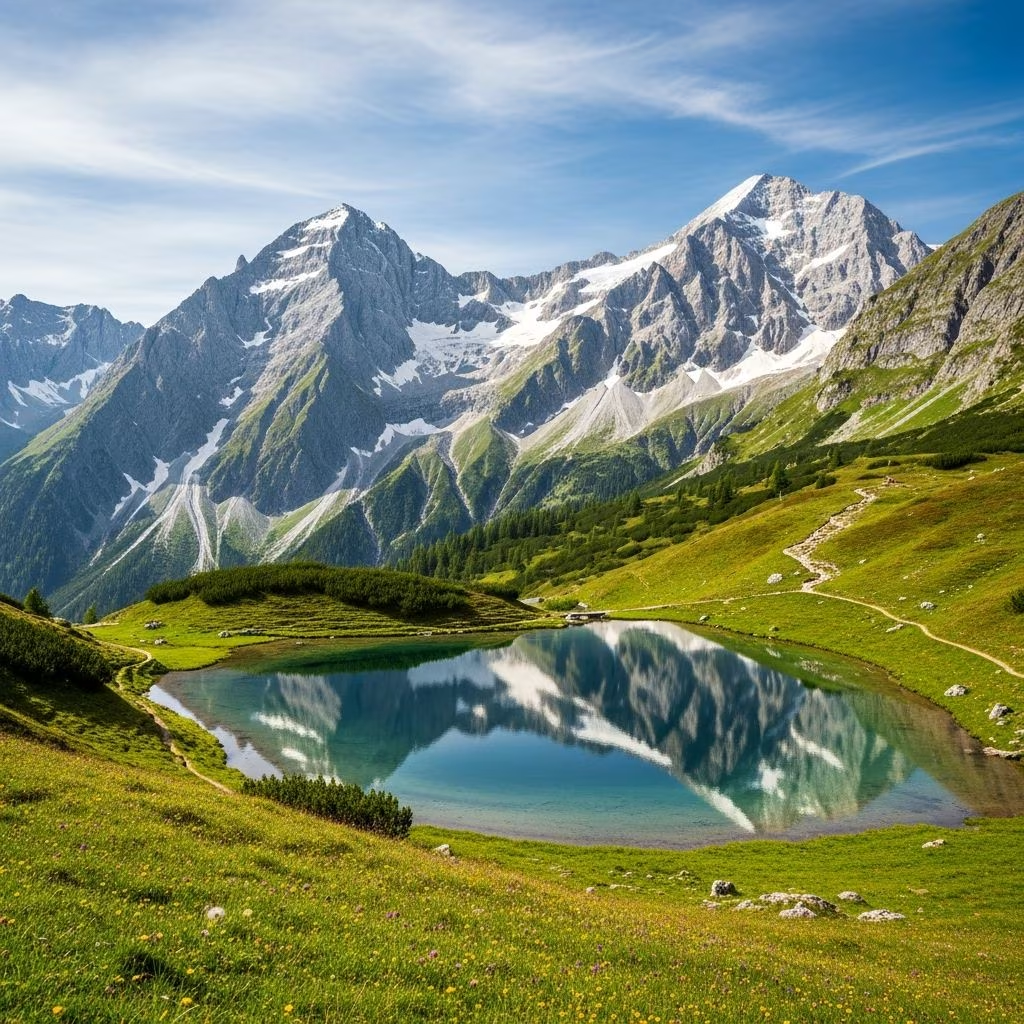
Dominating the landscape as Austria’s largest national park at 1,856 square kilometers, Hohe Tauern stretches across Carinthia, Salzburg, and Tyrol. Established between 1981 and 1991, it features over 300 peaks exceeding 3,000 meters, including the nation’s highest point, Grossglockner at 3,798 meters. Glaciers like the expansive Pasterze, the longest in the Eastern Alps, carve through the terrain, feeding into crystal-clear alpine lakes.
Visitors are drawn to the dramatic scenery, where lush pastures give way to sheer cliffs and thundering waterfalls such as Krimml, Austria’s tallest. The park supports a rich biodiversity with species like chamois, ibex, golden eagles, marmots, and alpine salamanders. Over 15,000 wildlife species thrive here, representing half of Austria’s total fauna.
Austria’s youngest national park, Gesäuse covers 125 square kilometers in Styria since 2002. Centered on the turbulent Enns River, it boasts limestone gorges, vertical rock faces up to 1,800 meters, and peaks like Hochtor at 2,369 meters. This compact yet intense area offers a wilderness feel with steep massifs including Reichenstein and Buchstein.
Biodiversity shines with peregrine falcons, chamois, rare butterflies, and alpine salamanders. The park’s inaccessibility enhances its appeal for climbers and photographers capturing dramatic vistas. Over 200 endemic species highlight its ecological value.
| Feature | Details |
|---|---|
| Size | 125 km² |
| Elevation | 490m – 2,369m |
| Key Wildlife | Peregrine falcons, chamois |
| Activities | Hiking, climbing, watersports |
Encompassing 209 square kilometers in Upper Austria since 1997, Kalkalpen protects the largest contiguous forest in the Central Alps. Areas like Sengsengebirge and Reichraminger Hintergebirge feature old-growth beech woods, cave systems, and elevations from 385 to 2,515 meters. Transitions from mountain to cultivated land foster exceptional biodiversity.
Lynx, successfully reintroduced, roam alongside golden eagles and capercaillie. The park’s dense forests provide habitats for diverse species, making it a haven for ecologists and quiet hikers seeking shaded trails.
Established in 1996, this 93-96 square kilometer park east of Vienna safeguards Central Europe’s last major river floodplains along the Danube between Vienna and Bratislava. Low elevations (140-180m) host dynamic wetlands, riparian forests of alder, willow, and poplar that flood seasonally, plus steppe meadows.
Over 700 plant species, 30 mammals, 100+ breeding birds, and the European pond turtle thrive here. Boat tours reveal the river’s power and wildlife abundance.
At 97 square kilometers in Burgenland since 1993 (UNESCO Biosphere in 2001), this park on the Austrian-Hungarian border centers on Central Europe’s largest endorheic lake. Salt marshes and Pannonian steppes at 115-125 meters support 340+ bird species, great bustards, white storks, and unique flora.
Ideal for birdwatching, cycling, and reed boat rides, it contrasts sharply with Austria’s alpine parks.
Austria’s smallest at around 25-30 square kilometers (part of cross-border with Czech Republic), Thayatal in Lower Austria protects rocky valleys, dry grasslands, and the Thaya River. Established in the 1970s and upgraded, it features rare orchids, lizards, and birds in a karst landscape.
Austria’s parks cater to all levels: multi-day treks in Hohe Tauern, via ferratas in Gesäuse, or gentle paddles in Donau-Auen. Obtain permits where required, use marked trails, and check weather—Alps change rapidly. Sustainable practices like Leave No Trace are essential.
Seasonal Guide:
These parks balance tourism with protection. Hohe Tauern’s wilderness zones limit access; Kalkalpen reintroduces predators. Visitor centers educate on climate threats like glacier melt. Support by staying in eco-lodges and joining guided tours.
Six, covering alpine, forest, floodplain, steppe, and river valley types.
Hohe Tauern offers 4,300 km of trails with epic views.
Most are free, but some attractions like roads or cable cars charge fees.
Designated sites only; wild camping restricted.
Donau-Auen with boat tours and easy paths.
From ibex in mountains to bustards in steppes—bring binoculars!
