

 Travel Essentials
 Travel Essentials

Explore six global tattoo traditions, from Japanese irezumi to Polynesian ink, and learn their meanings, methods, and cultural roots.
 Travel Essentials
Tattoos serve as profound markers of identity, protection, and storytelling across cultures. From ancient rituals to modern expressions, these body arts reflect heritage and personal narratives. This exploration covers six influential styles, detailing their origins, methods, and enduring legacy.
Humanity’s fascination with tattoos dates back millennia, with evidence from mummified remains and archaeological finds showing markings for status, spirituality, and adornment. In Polynesia, tattoos denoted social rank; in Japan, they evolved from punishment to artistry. Today, these traditions inspire global enthusiasts seeking meaningful ink.
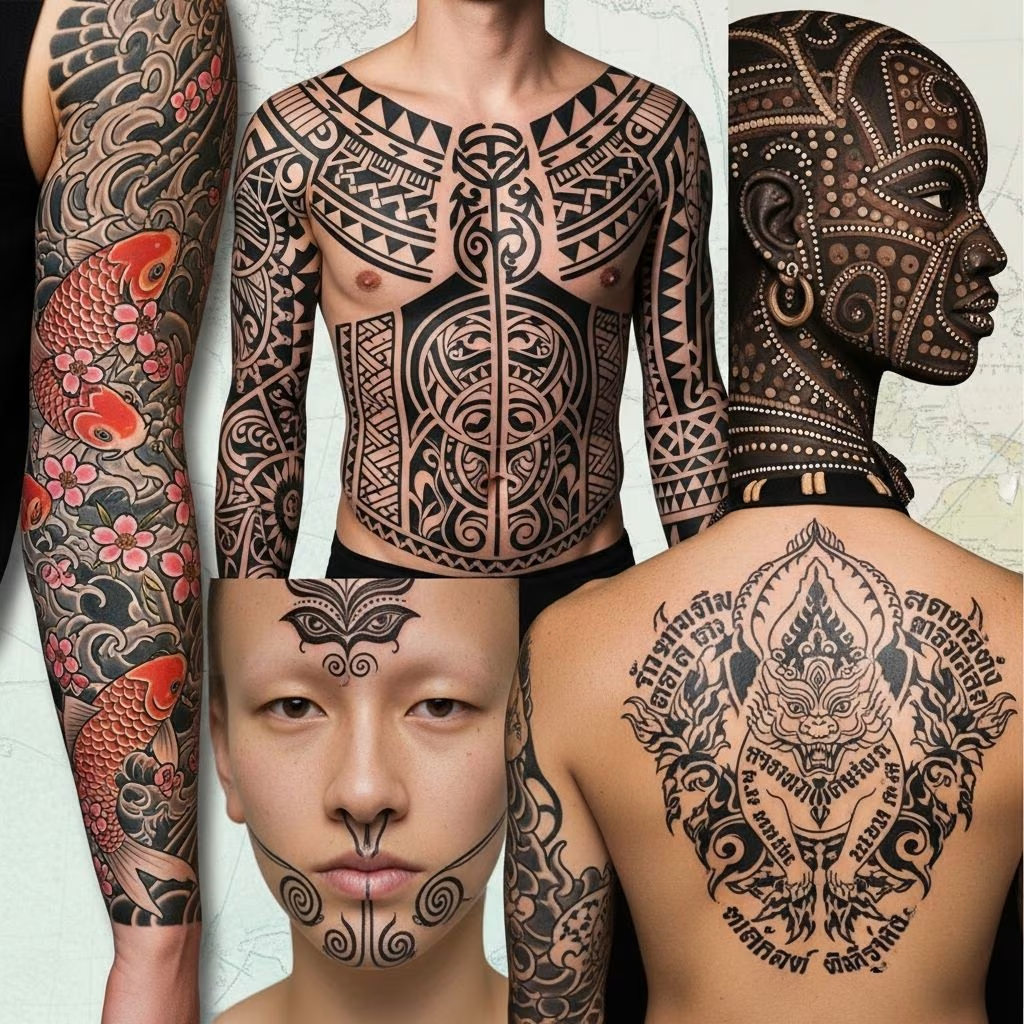
Japanese irezumi represents a pinnacle of tattoo craftsmanship, drawing from ukiyo-e woodblock prints featuring dragons, koi fish, and phoenixes symbolizing strength and transformation. Artists traditionally employ tebori, hand-poking ink with bundled needles on wooden handles for textured shading. This labor-intensive process creates full-body suits, often leaving central torso bare in munewari style. Modern practitioners like Takashi Matsuba preserve these methods amid machine tattooing’s rise. Irezumi demands patience, with sessions spanning years, embodying perseverance much like the mythical creatures depicted.
Born in early 20th-century sailor ports, American traditional tattoos emphasize thick outlines, limited palettes of red, yellow, green, and black, and iconic motifs like anchors for stability, swallows for safe voyages, and hearts pierced by daggers for lost love. Pioneered by figures like Norman ‘Sailor Jerry’ Collins, this ‘old school’ style prioritizes readability and flash appeal, making designs pop even when aged. Its straightforward aesthetic contrasts intricate global counterparts, appealing to those desiring timeless, punchy art.
| Motif | Symbolism |
|---|---|
| Anchor | Steadfastness at sea |
| Eagle | Freedom and patriotism |
| Pin-up | Romance and adventure |
Mehndi, or henna tattoos, offers intricate, non-permanent designs central to Indian, Pakistani, and North African celebrations like weddings. Applied with natural henna paste, patterns of paisleys, florals, and geometrics symbolize joy, fertility, and protection. Brides adorn hands and feet in elaborate bridal mehndi, lasting 1-3 weeks. Unlike permanent ink, its dye stains the upper skin layers, allowing experimentation. Global fusion sees mehndi inspiring permanent tattoos mimicking its fluid lines.
Sak Yant, Thailand’s bamboo-tapped tattoos, blend Buddhism, animism, and warrior lore. Ajarns (masters) hand-poke sacred yantras—geometric scripts with animals, deities, and spells—for invulnerability, luck, or charm. Common designs like Hah Taew (five lines) ward off misfortune. Performed in temples, recipients follow sak yant rules like moral conduct to activate blessings. Popular among fighters and travelers, its spiritual weight transcends aesthetics.
Originating across Thailand, Cambodia, Laos, and Myanmar, sak yant uses metal rods dipped in ink, creating textured lines. Celebrities and backpackers flock to Wat Bang Phra festival for mass blessings.
Encompassing Maori ta moko and Samoan pe’a, Polynesian tattoos use hand-tapping tools to chisel patterns denoting genealogy, status, and voyages. Maori moko features grooved spirals on face and body, uniquely carved to follow muscle contours. Samoan pe’a blankets men from waist to knees in months-long rituals, showcasing endurance. Revived in the 1980s, modern artists blend traditional motifs—sharks for protection, turtles for longevity—with machine techniques. Body placement signifies realms: upper for sky gods, lower for earth.
| Style | Region | Key Features |
|---|---|---|
| Ta Moko | New Zealand (Maori) | Carved grooves, spirals |
| Pe’a | Samoa | Full lower body, geometric |
Celtic tattoos revive ancient Irish and Scottish knotwork, symbolizing infinity, faith, and Celtic cosmology. Intricate loops without beginnings or ends adorn arms, backs, and necks, often in blackwork for bold contrast. Dating to 500 BCE, these designs appear in illuminated manuscripts like the Book of Kells. Modern interpretations add color or zoomorphic elements (animals in knots), appealing to heritage seekers. Their hypnotic flow suits sleeves or chest pieces.
Adopting global styles demands respect for origins. Research artists skilled in traditions—e.g., tebori specialists for irezumi. Consider pain (hand methods intense), healing, and cultural sensitivity to avoid appropriation. Consult portfolios; verify hygiene.
Neo-traditional builds on American roots with nuanced shading, expanded colors, and Art Nouveau curves, featuring fantastical flora and fauna. It bridges old school boldness with contemporary detail, ideal for vibrant storytelling.
Hand-tapped methods like Sak Yant or Polynesian rank high due to repetitive tapping; bony areas amplify discomfort.
Yes, with education and authentic artists; support communities via ethical studios.
Bold outlines endure decades; quality ink and care key.
No, but inspires fine-line permanent versions.
Varies: Polynesian upper body for spiritual, lower for earthly; irezumi flows with anatomy.
Revivals sustain these arts amid modernization. Festivals, apprenticeships, and documentaries educate, ensuring tattoos remain living cultural archives. Whether for protection, memory, or beauty, global traditions offer endless inspiration for personalized expression.
