

 Travel Essentials
 Travel Essentials

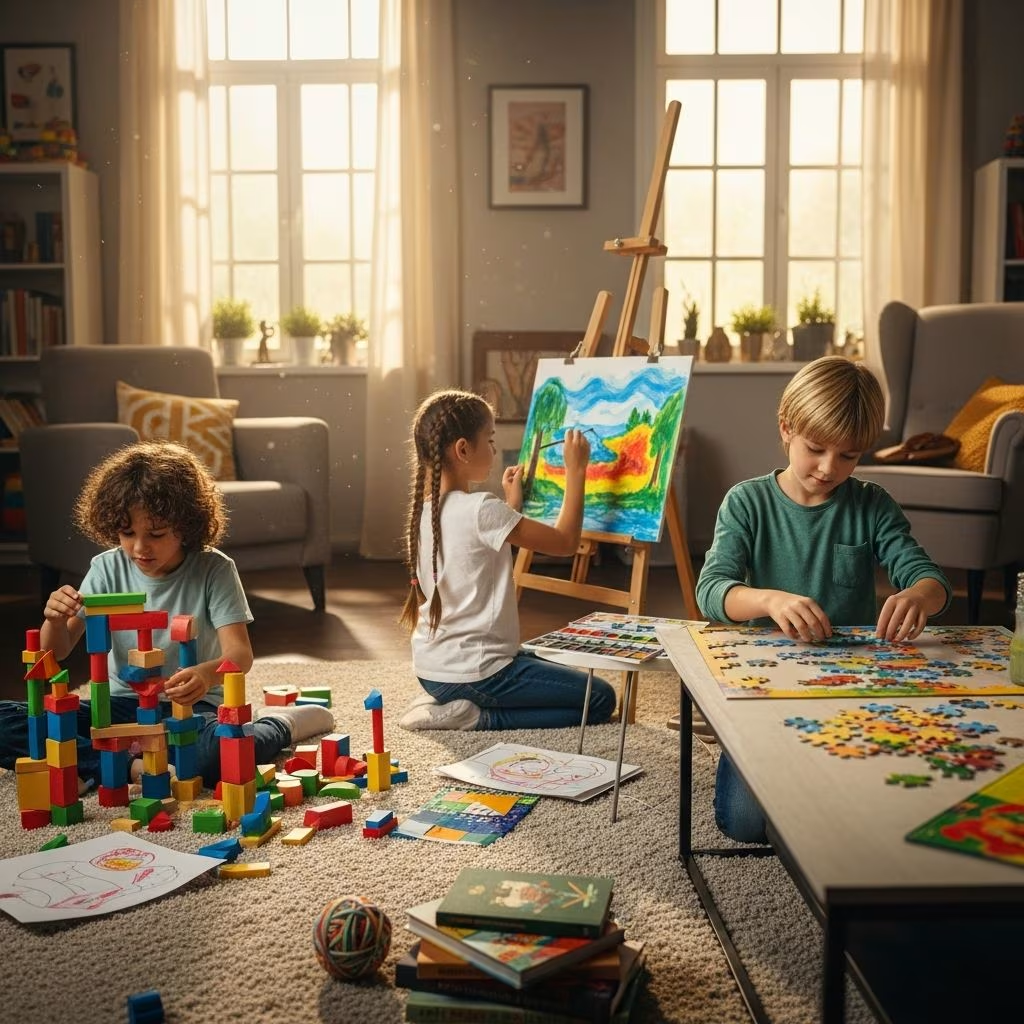
Screen-free activities for kids at home, from building and art to movement and pretend play, that spark creativity and independent engagement.
 Travel Essentials
Finding meaningful ways to keep children engaged and entertained presents one of the most common challenges parents face. Whether managing a rainy afternoon, working from home, or simply seeking to reduce screen time, having a diverse repertoire of activities can transform potentially difficult moments into opportunities for creativity, learning, and family bonding. The activities outlined here span various interests, age groups, and skill levels, ensuring there is something for every child.
Children benefit enormously from activities that encourage independent engagement. When young people participate in self-directed play, they develop problem-solving skills, creativity, and confidence in their own abilities. Creating an environment where children can pursue activities without constant parental involvement allows them to explore their interests while giving caregivers the flexibility to attend to other responsibilities.
The key to fostering independent play lies in providing materials and activities that are accessible yet stimulating. Simple items from around the house can be transformed into engaging pursuits with minimal preparation.
Construction-based play remains one of the most effective ways to occupy children while simultaneously developing spatial reasoning and fine motor skills. Building a fort from household materials—blankets, pillows, cushions, and furniture—provides hours of entertainment while encouraging creative problem-solving. Children might construct increasingly complex structures as they experiment with balance, weight distribution, and design principles.
For structured building, traditional toys like building blocks continue to captivate multiple age groups. LEGO sets, DUPLO blocks for younger children, and specialized construction systems offer endless possibilities for imaginative creation. These materials encourage children to conceptualize ideas and bring them to life through three-dimensional construction.
Additional building options include:
Artistic pursuits offer unlimited opportunities for self-expression and skill development. Rather than providing predetermined activities, equipping children with basic art supplies—paper, markers, colored pencils, crayons, and paints—allows them to direct their own creative endeavors. Art-based play contributes to fine motor development, color recognition, and emotional expression.
Beyond traditional drawing and coloring, children can explore various artistic mediums. Rock painting transforms collected stones into personalized artwork, while marble painting creates interesting abstract patterns when children roll paint-covered marbles through a shallow box. Shadow drawing, which involves tracing outlines of objects or shadows cast by sunlight, combines observation skills with artistic technique.
Collage-making using magazines, paper, and glue encourages decision-making and composition skills. Children cut, arrange, and paste images to create visual narratives reflecting their interests and imagination. This activity requires minimal expense while producing satisfying results that children proudly display.
Children possess abundant physical energy requiring appropriate outlets. Activities emphasizing movement not only keep children engaged but also contribute to their physical health and development. Indoor dance parties, particularly when children select their favorite music, combine entertainment with cardiovascular activity and emotional expression.
Obstacle courses constructed from household materials challenge children physically while maintaining engaging gameplay. These courses might include crawling under furniture, jumping over cushions, balancing on tape lines, or navigating around furniture arrangements. Adjusting difficulty levels keeps the activity fresh and appropriately challenging across different ages and abilities.
Traditional games like hide-and-seek develop spatial awareness, strategy, and social interaction. Paper airplane construction and flying competitions engage children in both fine motor skill development and enthusiastic retrieving activities. Balloon volleyball or games involving keeping balloons airborne provide low-impact physical activity adaptable to various indoor spaces.
Pretend play represents a crucial developmental activity where children explore relationships, practice social skills, and work through experiences. Setting up imaginative environments encourages extended engagement without requiring adult involvement.
Popular role-playing setups include:
Puppet shows represent another imaginative outlet where children can create narratives, manipulate characters, and perform for family audiences. Simple puppets fashioned from socks, paper bags, or paper plates require minimal materials while providing extensive entertainment value.
Not all activities require high energy or noise. Quiet pursuits develop concentration, patience, and sustained attention—valuable skills in contemporary environments filled with constant stimulation. Reading sessions, whether children read independently or listen to audiobooks, expose them to language patterns, stories, and new concepts while promoting relaxation.
Board game learning introduces strategic thinking and rule-based gameplay. Card games develop memory skills, probability understanding, and social interaction. Writing activities—whether creating letters to friends, designing comic strips, or composing stories—strengthen literacy skills while allowing creative expression.
Fine motor activities like threading dried pasta through colander holes, stringing cereal or beads into necklaces, or manipulating play dough develop hand strength and coordination crucial for writing development. These tactile experiences engage the senses while maintaining focused attention.
Some activities seamlessly blend entertainment with educational content. Creating time capsules encourages reflection on current interests and imagination about future possibilities. Building bird feeders introduces concepts about wildlife, nutrition, and environmental responsibility.
Musical exploration—creating instruments from household items, playing water glasses tuned to different pitches, or listening to new artists—develops auditory discrimination and appreciation for creative expression. Science-oriented activities like volcano creation or simple sensory experiments satisfy curiosity while demonstrating scientific principles through hands-on experience.
Recording activities where children create their own videos, cartoons, or audio stories develop narrative skills, technical familiarity, and creative confidence. These modern approaches to imaginative play align with children’s growing awareness of technology while channeling it toward creative purposes.
Weather and seasons provide natural variations to activity options. Sledding during winter months offers thrilling physical activity, while outdoor painting, chalk drawing, and sidewalk-based games maximize warm seasons. Collecting natural materials—leaves, rocks, pinecones—provides free craft supplies for indoors projects.
Bubble production and experimentation appeals universally across ages and seasons. Whether blown individually or produced by machines, bubbles captivate children’s attention while requiring minimal setup and expense.
Creating activity boxes containing varied materials prepares children for independent engagement. These collections might include coloring supplies, card games, puzzles, craft materials, or craft projects. Allowing children to participate in assembling these boxes builds anticipation while encouraging them to envision activities they’ll pursue.
Rotating activities maintains freshness and prevents monotony. Storage solutions that keep materials accessible yet organized support independent activity initiation. Clearly labeled containers help children identify available options and return materials to appropriate locations.
| Activity Type | Age Appropriateness | Duration | Cleanup Level |
|---|---|---|---|
| Building with blocks | 2+ | 30-90 minutes | Low-Moderate |
| Art projects | 3+ | 30-60 minutes | Moderate-High |
| Imaginative play | 3+ | 60+ minutes | Low-Moderate |
| Board games | 4+ | 20-45 minutes | Low |
| Reading/audiobooks | All ages | 15-45 minutes | None |
| Physical activities | 2+ | 20-60 minutes | Low |
Provide accessible materials, create designated play spaces, establish routines where independent play is expected, and gradually increase the time between check-ins. Start with shorter independent periods and progressively extend duration as children become comfortable engaging without immediate adult attention.
Building projects, imaginative play scenarios, outdoor games, and family game nights accommodate various ages when younger children receive modified roles and older children support younger siblings. Adjust complexity and rules to match different developmental levels while maintaining group engagement.
Contain activities to specific areas using tablecloths or designated craft zones. Provide washable markers instead of permanent markers, use playdough instead of paint for younger children, and establish clear expectations about material usage. Newspaper, drop cloths, or old clothing protect furniture and clothing.
Essential supplies include paper in various colors and sizes, writing instruments, basic building materials, art supplies, craft materials like pipe cleaners and pom-poms, and recyclable items such as cardboard boxes and plastic containers. Rotate materials seasonally to maintain freshness.
While these activities promote screen-free engagement, incorporating educational videos or creating video content can complement hands-on play. Balance screen time with predominantly screen-free pursuits, using visual media as occasional enrichment rather than primary activity.
Successful activity implementation requires considering family schedules, available resources, and individual child preferences. Rather than attempting all suggestions simultaneously, selecting activities aligned with current interests, materials on hand, and available time creates manageable approaches to entertainment and engagement.
Children benefit from variety, novelty, and the opportunity to revisit favorite activities repeatedly. Balancing new experiences with familiar pursuits maintains interest while building confidence through mastery of enjoyed activities. The activities outlined here serve as starting points for creative adaptation using household materials and personal resourcefulness.
By intentionally creating opportunities for independent play, creative expression, physical movement, and imaginative exploration, caregivers support children’s development while creating space for their own responsibilities and restoration. These activities transform ordinary days into memorable experiences while building valuable skills and confidence in young learners.
