

Food & Culture Stays Travel Essentials Travel Guides Trip Ideas
Categories
From the Blog
Remy’s Ratatouille Adventure at EPCOT: Ride Review, Tips & 2D Update
Travel Essentials

63 U.S. National Parks: State-by-State Guide and Travel Tips

An in-depth guide to the 63 U.S. national parks, highlighting top destinations, unique features, planning tips, and conservation efforts across states.
Travel Essentials

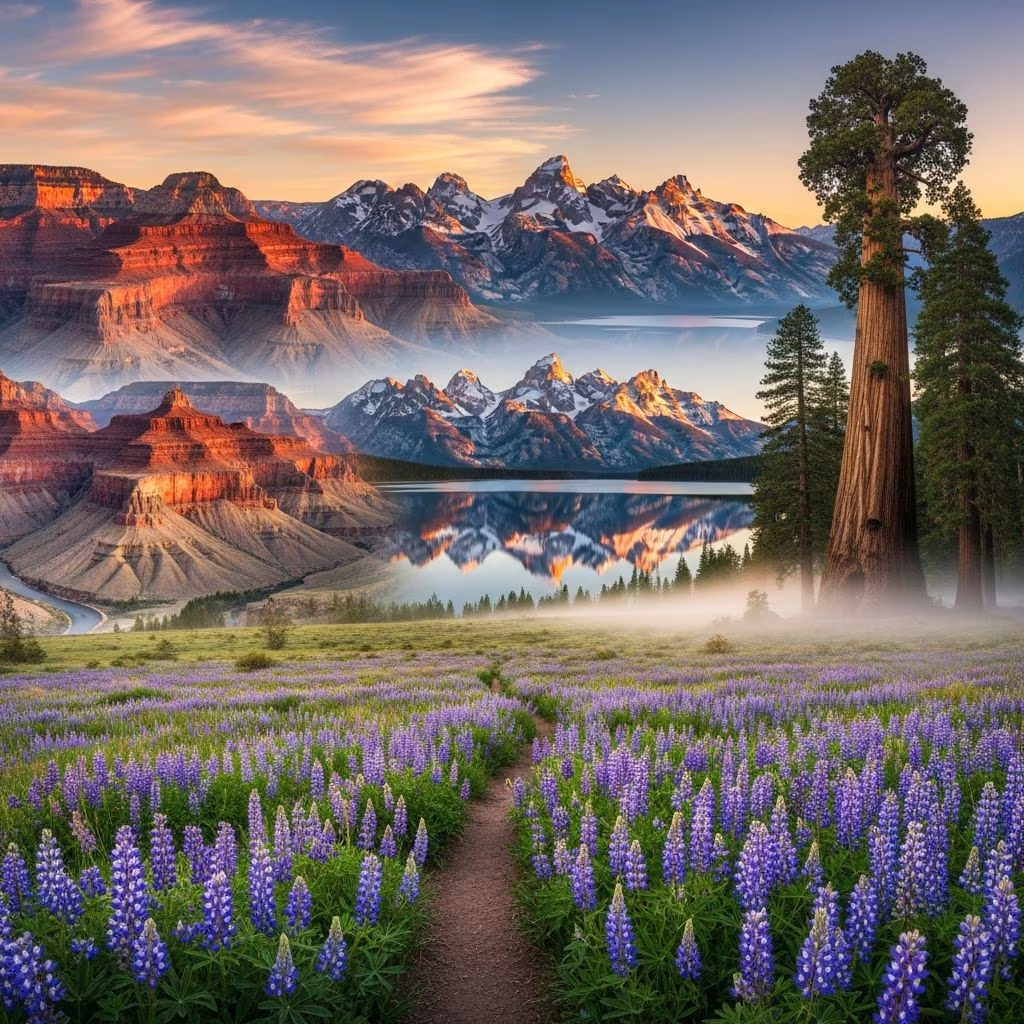
The United States boasts 63 national parks, congressionally designated protected areas managed by the National Park Service under the Department of the Interior. These parks preserve natural beauty, unique geological features, diverse ecosystems, and recreational opportunities.

The Scope and Significance of the National Park System

Spanning 30 states and territories like American Samoa and the U.S. Virgin Islands, the national parks cover approximately 52.4 million acres, with an average size of 833,000 acres but a median of 220,000 acres. The largest, Wrangell–St. Elias in Alaska, exceeds 8 million acres, dwarfing many states, while the smallest, Gateway Arch in Missouri, spans just 192.83 acres.

Established to protect ‘outstanding scenic features or natural phenomena,’ these parks form part of the broader National Park System, which includes 433 units totaling over 85 million acres across all 50 states and territories. Created by the Organic Act of 1916 under President Woodrow Wilson, the system safeguards natural and cultural heritage for current and future generations.

National Parks by State: Where to Find the Gems

California leads with nine parks, followed by Alaska (eight), Utah (five), and Colorado (four). Here’s a breakdown of standout parks per region:

  • California: Home to icons like Yosemite’s granite cliffs and waterfalls, sequoia groves in Kings Canyon, and Death Valley’s extreme desert landscapes.
  • Alaska: Dominates in size with Wrangell–St. Elias, Denali’s towering peak, and Glacier Bay’s icy fjords.
  • Utah: Features slot canyons in Zion, arches in Arches, and hoodoos in Bryce Canyon.
  • Colorado: Rocky Mountain National Park offers alpine lakes, meadows, and wildlife like elk and bighorn sheep.
  • Florida: Everglades, the largest tropical wilderness, spans 1.5 million acres of wetlands teeming with unique wildlife.
  • Arizona: Grand Canyon’s vast chasm reveals billions of years of Earth’s history.
  • Texas: Guadalupe Mountains includes Guadalupe Peak, the state’s highest point at 8,749 feet.
  • Washington: Olympic National Park protects rainforests, glaciated peaks, and untouched Pacific coastline with ancient cedars.
StateNumber of ParksHighlight ParkKey Feature
California9YosemiteWaterfalls & granite domes
Alaska8Wrangell–St. Elias8M+ acres, glaciers
Utah5ZionSlot canyons
Colorado4Rocky MountainAlpine tundra
Florida1EvergladesTropical wetlands

Iconic Parks That Define American Wilderness

Yellowstone, the world’s first national park (1872), mesmerizes with geysers, hot springs, bison herds, bears, and elk across grasslands and valleys. Denali in Alaska showcases North America’s tallest peak amid vast tundra. Grand Canyon astounds with its colorful layers carved by the Colorado River.

Crater Lake in Oregon holds the deepest lake in the U.S. within a volcanic caldera of vivid blue waters. Zion’s red rock canyons invite hikers through narrow slot gorges. Olympic’s temperate rainforests contrast with rugged coastlines and snowy peaks.

Recent additions include New River Gorge (2020), White Sands (2019 upgrade), and Indiana Dunes (2019).

Planning Your National Parks Adventure

With diverse climates—from Alaska’s subarctic cold to Florida’s humid tropics—time visits seasonally. Summer crowds peak in popular spots like Yellowstone; shoulder seasons (spring/fall) offer solitude.

  • Entry & Passes: Most charge $35/vehicle for 7 days; the $80 America the Beautiful Pass covers all parks for a year.
  • Reservations: Book lodges, campsites, and shuttles months ahead, especially post-pandemic.
  • Activities: Hiking, wildlife viewing, stargazing, kayaking, ranger programs.
  • Accessibility: Many trails and viewpoints are wheelchair-friendly; check NPS apps for details.

Road trips like the Pacific Coast Highway or Utah’s Mighty Five maximize efficiency. Pack layers, bear spray (where needed), ample water, and follow Leave No Trace principles.

Wildlife and Ecosystems Across the Parks

Parks host grizzlies in North Cascades and Yellowstone, alligators in Everglades, moose in Rocky Mountains, and manatees off Florida coasts. Ecosystems range from deserts (Joshua Tree), tundra (Denali), rainforests (Olympic), to coral reefs (Virgin Islands).

Glaciers cover over a quarter of Wrangell–St. Elias, including massive Hubbard and Malaspina. Biodiversity thrives: Everglades protects rare sawgrass prairies and wading birds.

Preservation Challenges and Success Stories

The NPS confronts overtourism, climate change (shrinking glaciers, wildfires), and invasive species. Successes include wolf reintroduction in Yellowstone, restoring balance. Visitor numbers hit record highs, emphasizing sustainable tourism.

FAQs

How many national parks are in the US?

There are 63 national parks managed by the NPS.

Which state has the most national parks?

California, with nine.

What is the largest national park?

Wrangell–St. Elias in Alaska, over 8 million acres.

Do I need reservations for national parks?

Yes, for lodging, campsites, and some timed entries in high season.

Are national parks free?

Entrance fees apply, but free days occur; annual passes save money.

Top Tips for First-Time Visitors

  • Download the NPS app for maps and alerts.
  • Start with bucket-list parks like Yellowstone or Grand Canyon.
  • Combine parks: Utah’s five are drivable in a week.
  • Go beyond summer for fewer crowds and unique sights (e.g., fall colors in Great Smoky Mountains).
  • Support conservation via park foundations.

References

  1. List of national parks of the United States — Wikipedia. Accessed 2026. https://en.wikipedia.org/wiki/List_of_national_parks_of_the_United_States
  2. A Guide to America’s 13 Unmissable National Parks — Pettitts Travel. Accessed 2026. https://www.pettitts.co.uk/guides/13-unmissable-national-parks-in-the-usa
  3. U.S. National Parks by State — National Park Trips. Accessed 2026. https://www.nationalparktrips.com/parks/us-national-parks-by-state-list/
  4. National Park System — U.S. National Park Service (nps.gov). Accessed 2026. https://www.nps.gov/aboutus/national-park-system.htm
  5. From Acadia to Zion: A complete guide to all 63 national parks — Lonely Planet. Accessed 2026. https://www.lonelyplanet.com/articles/usa-national-parks-overview
ME
medha deb
Medha Deb is an editor with…

Medha Deb is an editor with a master's degree in Applied Linguistics from the University of Hyderabad. She believes that her qualification has helped her develop a deep understanding of language and its application in various contexts. Medha specializes in the areas of beauty, health, sports, and wellness and is committed to ensuring that the content on the website is of the highest quality.Medha's passion for writing and editing began early in life when she joined a book writer's club with her mother. It was there that she discovered her love for the written word and the power it holds to inform, inspire, and transform lives. Since then, she has honed her skills as a writer and editor, working with a variety of clients and publications to produce compelling and informative content. Currently, she writes and edits for CultureTreker.She is also an ardent animal lover and dedicates her time and resources to the foster care of neonatal kittens, providing them with the love and attention they need to thrive. Her commitment to animal welfare is a testament to her compassion and empathy, and it underscores her belief in the importance of caring for the most vulnerable members of our society.

← Previous
Free Things to Do in Charlotte, NC
‹›
