

 Travel Essentials
 Travel Essentials

Learn common carry-on mistakes like overpacking and improper liquids that lead to security delays, plus proven tips to avoid them and speed through checkpoints.
 Travel Essentials
Airport security lines can turn a smooth travel day into a frustrating ordeal when your carry-on gets flagged. Many travelers unknowingly pack in ways that confuse X-ray machines or violate rules, leading to manual inspections and delays. This guide explores the most frequent errors, explains why they trigger alarms, and provides practical solutions to help you navigate checkpoints efficiently, whether at TSA in the U.S. or international airports.
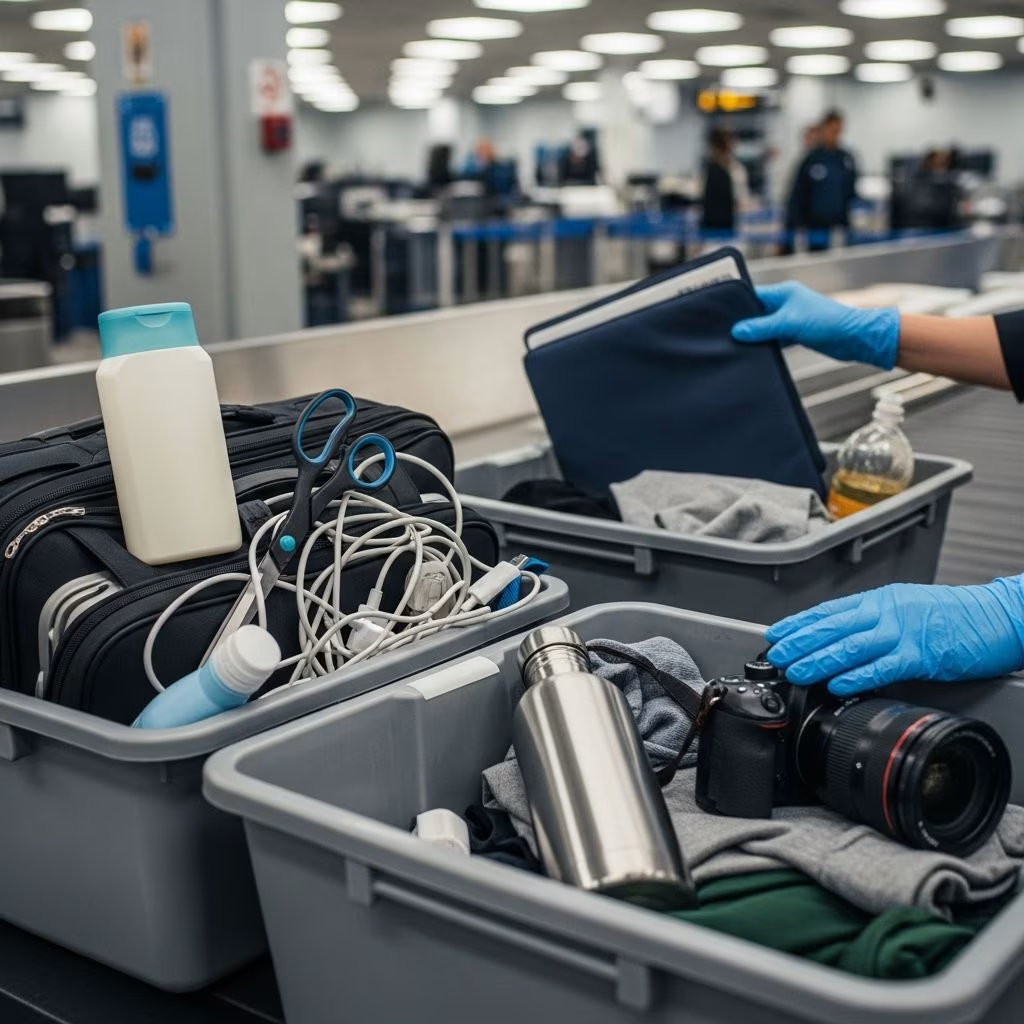
Modern scanners rely on clear imaging to identify items quickly. When bags are densely packed or contain ambiguous objects, they create “opacity issues,” where screens show blurred masses that officers must investigate manually. Overlapping clothes, cables, and toiletries often blend into suspicious shapes, prompting bag pulls. Understanding these triggers allows proactive packing for faster processing.
Global security standards, including those from the TSA, emphasize visibility and compliance with the 3-1-1 liquids rule: containers no larger than 3.4 ounces in a single quart-sized, clear plastic bag. Violations here are among the top reasons for flags, but poor organization amplifies risks.
The urge to fit everything into one carry-on leads to overpacking, turning your luggage into a solid block that scanners cannot penetrate. X-ray machines need space between items to distinguish objects; tight packing causes everything to merge visually, mimicking concealed threats.
To fix this, opt for structured luggage that opens flat for screening. Use packing cubes to create defined compartments, ensuring air gaps. Aim for 70-80% capacity to maintain clarity on scans.
Transferring shampoos, creams, or lotions into unmarked or opaque bottles is a major flagger. Scanners detect liquids but cannot verify contents in solid-colored jars, triggering swabbing and delays. This issue spans continents, from U.S. TSA to EU and Asian checkpoints.
| Problem Item | Why It Flags | Solution |
|---|---|---|
| Unmarked travel bottles | Opaque; unknown contents | Use clear, labeled TSA-approved bottles |
| Oversized gels (>3.4 oz) | Exceeds 3-1-1 rule | Buy travel sizes or decant properly |
| Transferred powders | Indistinguishable from threats | Keep in original packaging |
Pro tip: Pre-pack your liquids bag separately and place it at the top for quick removal.
Without TSA PreCheck, laptops, tablets, and large electronics must be removed for separate screening. Nestled under layers of clothes, they force public unpacking, exposing belongings and holding up lines. Spare lithium batteries also require isolation to avoid fire risks.
Strategy: Dedicate a clear pouch for all tech, positioned accessibly. Coil cables individually and use velcro ties. Place heavy items like laptops in external sleeves for instant removal.
Solid foods like cheese blocks, nut butters, or moist salads create dense shadows on scans, resembling explosives or drugs. Even allowed edibles trigger checks if they obscure other contents.
Avoid:
Choose dry alternatives: nuts, bars, dried fruits. For wet items, adhere to liquids limits and pack transparently.
TSA focuses on contents, but airlines enforce strict carry-on counts (usually one bag plus personal item). Multiple overflowing bags at gates lead to gate-checks or fees. Oversized personal items also jam sizers, flagging your group.
Check airline policies pre-flight:
Consolidate with compression cubes and multi-use bags.
Bundled chargers, headphones, and adapters form suspicious loops on X-rays, indistinguishable from detonators. Jewelry in dense clusters or leather goods add opacity.
Best practices:
Gifts wrapped tightly hide contents, necessitating unwrapping. Knives, scissors over 4 inches, or tools get confiscated if not checked.
Ship gifts ahead or wrap post-security. Keep sharps in checked luggage.
Beyond basics, invest in checkpoint-friendly bags that lay flat. Enroll in Global Entry or PreCheck to skip removals. Practice packing drills at home to simulate scans.
| Bag Type | Benefit | Example Use |
|---|---|---|
| Flat-Open Design | No disassembly needed | Laptop compartments |
| Packing Cubes | Organizes, reduces density | Clothes separation |
| Clear Pouches | Quick liquids/tech access | Multiple categories |
Yes, solid foods are allowed, but avoid dense or liquid-heavy items that confuse scanners. Dry snacks pass easiest.
You can leave laptops and liquids in bags, but smart packing still speeds things up.
No, but opacity and liquids issues are universal. Research destination specifics.
Use original, labeled containers under 12 oz; declare if needed.
Structured, expandable carry-ons with multiple clear compartments.
By addressing these pitfalls—overpacking, liquids mishaps, buried tech, tricky foods, bag limits, tangles, and wraps—you minimize flags and maximize efficiency. Frequent travelers report halving wait times with organized, scanner-friendly loads. Always verify current rules via official sites, as policies evolve. Safe journeys await with these habits.
