

 Travel Essentials
 Travel Essentials

Discover Azerbaijan's diverse landscapes, ancient cities, and cultural heritage across a carefully planned week-long journey through the Caspian region.
 Travel Essentials
Azerbaijan presents a compelling destination for travelers seeking to experience where ancient tradition intersects with modern development. Nestled between the Caspian Sea and the Great Caucasus Mountains, this nation offers diverse experiences within a compact geography. A seven-day journey through Azerbaijan allows visitors to witness contemporary urban achievements alongside centuries-old cultural landmarks, all while enjoying the renowned hospitality that characterizes the region.
The nation’s strategic location has shaped its historical trajectory and contemporary character. Azerbaijan serves as a crossroads where Eastern European, Central Asian, and Middle Eastern influences converge. This positioning along ancient trade routes, particularly the historic Silk Road network, created prosperous cities and established cultural exchanges that remain visible today in architecture, cuisine, and artistic traditions.
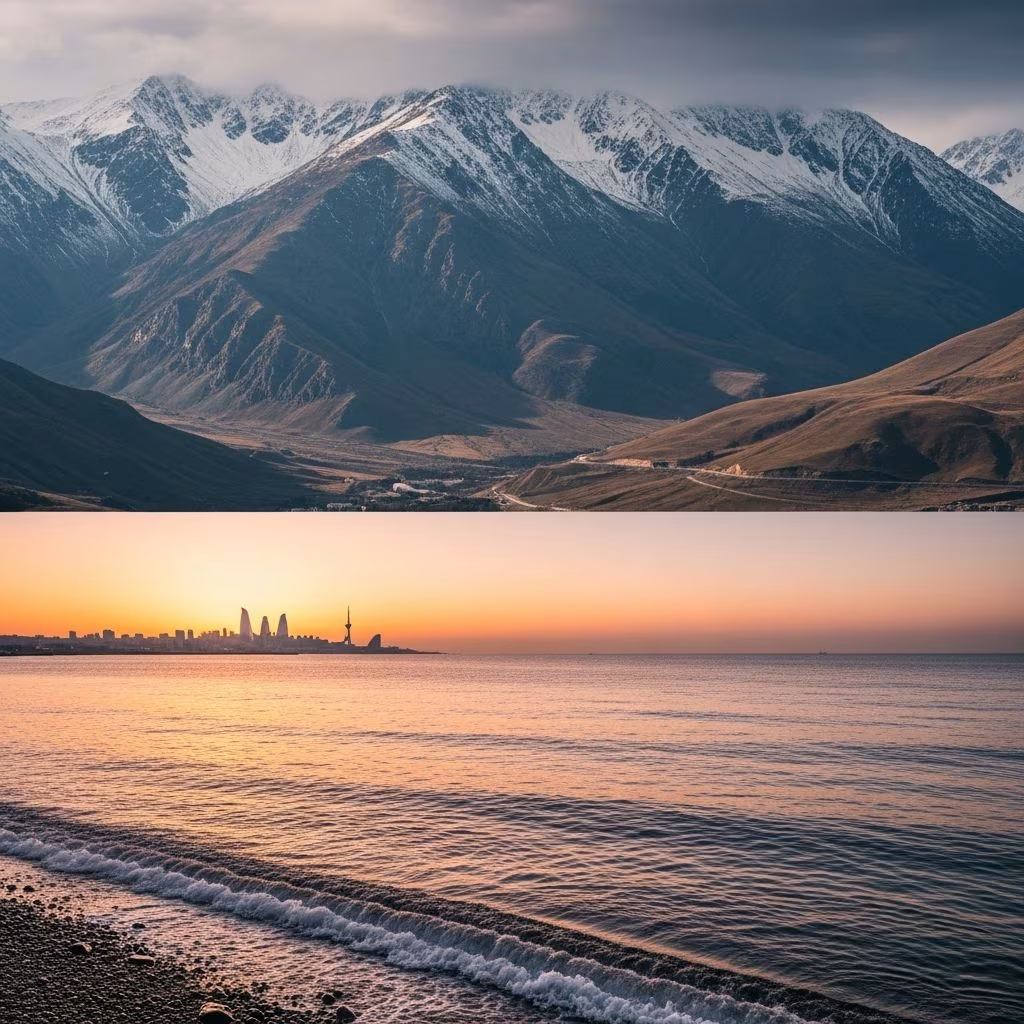
The country’s landscape dramatically shifts from coastal lowlands to elevated mountainous terrain, creating distinct regional environments. From the Caspian shoreline to alpine valleys, each zone presents unique attractions and experiences. Understanding this geographic diversity helps travelers plan visits that showcase Azerbaijan’s full range of natural and cultural offerings.
Your Azerbaijan experience appropriately begins in Baku, the nation’s capital and primary entry point for most international visitors. The city presents a striking juxtaposition of historical preservation and contemporary architecture. The UNESCO-inscribed Old City (Icherisheher) contains the foundational narrative of Azerbaijan’s medieval period, with narrow winding streets that retain authentic urban planning principles spanning centuries.
Within the Old City’s walls, two primary monuments warrant extended attention. The Palace of the Shirvanshahs represents sophisticated Central Asian architectural principles, featuring intricate stonework and spatial organization that reflects the Shirvanshai dynasty’s political prominence. The Maiden’s Tower, whose origins remain somewhat mysterious, rises as the Old City’s most recognizable silhouette and offers panoramic perspectives of both the historic district and modern Baku sprawling beyond its walls.
Beyond medieval structures, Baku’s contemporary development presents equally impressive achievements. The Bulvar waterfront development creates a modern recreational corridor along the Caspian, integrating cultural venues, dining establishments, and recreational spaces. The Azerbaijan Carpet Museum, shaped to resemble a rolled carpet, educates visitors about textile traditions spanning generations while housing an extensive collection representing regional weaving techniques.
The Baku Eye Ferris wheel provides elevated vantage points for surveying the city’s expansion across multiple districts. Nearby attractions including Mini-Venice—featuring authentic Venetian gondolas on artificial waterways—offer cultural experiences reflecting Baku’s cosmopolitan aspirations. The State Puppet Theatre, housed within a restored oil-boom era building, continues theatrical traditions while showcasing early 20th-century architectural aesthetics.
Traveling northwest from Baku requires approximately three hours of road travel to reach Sheki, a destination that exemplifies authentic Azerbaijani character outside metropolitan environments. Positioned within forested mountainous terrain, Sheki historically served as a crucial Silk Road hub connecting Georgian territories with Derbent’s northern settlements.
The Khan Palace represents Sheki’s architectural centerpiece, displaying sophisticated design principles including ornate tilework and traditional residential organization. The palace’s arrangement reflects principles of Persian and Caucasian architectural traditions, with decorated chambers, courtyards, and galleries demonstrating the wealth and refined taste of the ruling Khan.
Sheki’s bazaar areas provide opportunities for observing traditional commerce and acquiring locally-produced textiles, ceramics, and foodstuffs. The surrounding landscape supports hiking expeditions into forested regions, with trails offering varying difficulty levels for different fitness capabilities. Local tea houses provide authentic hospitality settings where travelers interact with residents and experience regional customs.
Continuing the regional circuit brings travelers to Ganja, positioned two hours southward from Sheki. This historic city underwent substantial restoration initiatives that revitalized its urban environment while preserving architectural heritage. The Filarmoniya concert hall anchors the city’s central square, serving as both architectural statement and cultural venue.
Ganja’s religious heritage appears prominently through numerous mosques representing various architectural periods. Historic bathhouses (hammams) continue functioning, offering traditional cleansing and relaxation experiences according to regional customs. The Imamzadeh Mausoleum Complex, approached from the eastern approaches, marks an important Islamic pilgrimage site and educational resource for understanding Azerbaijan’s spiritual traditions.
Heydar Əliyev Park provides green space for recreation and leisure, while the city’s restaurants serve traditional Azerbaijani cuisine that varies regionally from Baku’s more internationally-influenced offerings. Local establishments emphasize traditional cooking methods and regional flavor profiles.
The journey northward toward mountain regions introduces dramatically different environmental conditions. Quba, a northern mountain town, provides access to alpine hiking opportunities and traditional mountain community experiences. The elevation creates cooler temperatures and distinct vegetation patterns compared to coastal regions.
Beyond Quba, smaller villages present increasingly remote and traditional settlement patterns. These communities maintain lifestyles less influenced by modernization, with architecture, agricultural practices, and social structures reflecting established historical patterns. Visitors to these locations gain perspectives on how mountain communities adapted to challenging geographic conditions across generations.
The semi-arid regions surrounding Baku contain geological phenomena that intrigue scientists and travelers alike. Mud volcanoes—geological formations releasing pressurized mud and gases—create unusual landscapes substantially different from conventional volcanic systems. These formations occur naturally in limited global locations, making Azerbaijan’s examples particularly significant for geological study.
Ancient petroglyphs carved into rock surfaces document pre-Islamic artistic expression and hunting practices. These rock art galleries reveal how previous inhabitants understood and depicted their environment, animals, and spiritual beliefs. Archaeological sites interpreting these materials provide context for understanding ancient Caucasian civilizations.
Travelers with additional time may venture to Shahdag National Park, positioned within the Great Caucasus Mountain range. This protected area encompasses substantial elevation variations, creating diverse ecosystems and challenging hiking routes. The park’s infrastructure supports various activity levels, from moderate day hikes to multi-day trekking expeditions.
Winter months transform Shahdag into a skiing destination, with developed facilities accommodating various proficiency levels. The mountain environment provides stark visual contrasts to coastal and lowland regions, offering perspectives on how elevation creates distinct ecological zones within relatively short geographic distances.
Azerbaijan’s reputation for carpet production spans centuries, with regional variations reflecting local design traditions and material availability. Visiting workshops and markets where carpet production occurs provides understanding of labor-intensive creation processes. Master craftspeople demonstrate techniques involving dyeing, weaving, and pattern development that produce finished pieces representing months or years of dedicated work.
Museums throughout the country curate collections documenting artistic evolution, religious influences on design elements, and regional stylistic variations. Contemporary artisans maintain traditional practices while occasionally introducing modern aesthetic elements.
Baku serves as the transportation hub for most Azerbaijan travel. The city’s airport handles international flights, with domestic connections to secondary cities. Ground transportation relies primarily on personal rental vehicles, organized tour services, and shared taxi arrangements. Road conditions vary between regions, with primary routes well-maintained while secondary roads may present challenging conditions during adverse weather.
Travel times between destinations require realistic planning. Distances that appear modest on maps may involve several hours of driving due to mountain terrain, road conditions, and settlement patterns that lack direct routing between some communities.
Azerbaijan’s climate patterns create distinct seasonal characteristics affecting travel experiences. Summer months (June through August) provide warm conditions and extended daylight hours, though mountain regions remain cooler. Spring (April-May) and autumn (September-October) offer moderate temperatures and reduced tourist congestion.
Winter travel to high-elevation areas becomes challenging without specialized equipment and experience. Lower elevations remain accessible year-round, though occasional snow may affect travel timing.
Azerbaijani culture emphasizes hospitality as a fundamental social value. Travelers frequently encounter welcoming attitudes from residents, with offers of tea, conversation, and assistance. Understanding basic cultural courtesies—such as accepting offered refreshments, observing modest dress in religious contexts, and showing respect toward elders—facilitates positive interactions.
Regional cuisines vary significantly across Azerbaijan’s geography. Coastal areas emphasize seafood preparations, mountain regions feature meat-based dishes, and agricultural lowlands showcase fresh vegetable preparations. Traditional cooking methods and family recipes passed through generations create distinctive flavor profiles varying by location.
Dining establishments range from street-level vendors serving simple preparations to formal restaurants offering elaborate multi-course presentations. Street food exploration provides authentic cultural engagement and economical meal options.
International visitors require appropriate travel documentation, with visa requirements depending on citizenship. Health precautions may include routine vaccinations. Currency exchange and banking services require planning, as some remote areas lack modern financial infrastructure.
Travel planning benefits from consulting multiple information sources. Official tourism boards, contemporary travel guides, and recent traveler accounts provide current information about conditions, pricing, and experiences. Language preparation, though English speakers exist in tourism sectors, enhances interactions with residents in smaller communities.
April through May and September through October offer ideal conditions with moderate temperatures, reduced precipitation, and manageable tourist volumes. These shoulder seasons provide optimal balance between weather conditions and accessibility.
Seven days allows coverage of primary destinations including Baku, mountain regions, and historic cities. Extended stays permit deeper exploration of specialized interests and remote communities.
While independent travel remains feasible on primary routes, local guides enhance experiences through cultural context, language assistance, and access to less-publicized locations. Guides prove particularly valuable in mountain regions and smaller communities.
Azerbaijan accommodations range from modest guesthouses to luxury hotels, with significant price variations between regions. Baku accommodations command premium pricing while mountain towns and rural areas offer economical options. Local dining costs substantially less than tourist-oriented restaurants.
Primary tourist areas maintain stable conditions. Travelers should verify current conditions regarding border regions before planning itineraries in sensitive areas.
