

 Travel Essentials
 Travel Essentials

Embark on a 7-day exploration of Jordan's rich history and culture, from Amman's modern art to Petra's wonders and Wadi Rum's deserts, with opportunities to connect with locals.
 Travel Essentials
Jordan captivates travelers with its seamless blend of ancient civilizations and contemporary vibrancy. This 7-day itinerary guides you through iconic landmarks, hidden gems, and genuine interactions with locals, revealing the heart of a nation shaped by millennia of history.
Nestled at the crossroads of Asia, Africa, and Europe, Jordan’s landscape is a tapestry of deserts, mountains, and fertile valleys. Its history spans biblical prophets, Nabatean traders, Roman legions, and Crusader fortresses, all preserved in stunning ruins. Modern Jordan pulses with energy in Amman, where traditional souks coexist with trendy galleries and cafes.
The country’s cultural depth is rooted in Arabic and Islamic traditions, yet enriched by diverse influences. Over 90% of Jordanians live in urban areas, particularly Amman, fostering a liberal atmosphere with global brands, nightlife, and sports enthusiasm.
Touch down in Amman, Jordan’s bustling capital with roots tracing back to ancient Philadelphia. Beyond its seven hills, discover a city that balances antiquity with modernity. Start in Jabal al-Ludeh, a bohemian enclave alive with street art, independent studios, and cultural hubs like the historic Darat al Funun foundation, showcasing contemporary Arab artists.
End your day with a panoramic sunset view from the Citadel, overlooking the Roman Theater and souks teeming with spices and textiles.
Dive into Jordan’s past at the Jordan Museum, home to artifacts spanning a million years, including rare Dead Sea Scrolls fragments. Expert guides unravel the timeline from prehistoric tools to Byzantine mosaics.
A short drive leads to Jerash, boasting the best-preserved Roman city outside Italy. Marvel at the Oval Plaza encircled by 160 towering Ionic columns, the grand Hippodrome once hosting chariot races, and the South Theater seating 6,000 spectators.
| Jerash Highlight | Historical Significance |
|---|---|
| Oval Plaza | Central forum for public gatherings and markets |
| Hippodrome | Venue for thrilling chariot races |
| Temples of Artemis & Zeus | Dedicated to Roman deities, showcasing architectural prowess |
Journey to Madaba, famed for its 6th-century mosaic map in St. George’s Church—the earliest depiction of the Holy Land, illustrating sites from Lebanon to the Nile Delta.
Ascend Mount Nebo, where Moses gazed upon the Promised Land. The Byzantine church’s floor mosaics and the serpentine staff monument offer serene reflection amid sweeping Dead Sea vistas.
Traverse the King’s Highway, an ancient trade route linking Petra to Damascus. Stop at Kerak Castle, a formidable Crusader fortress with labyrinthine halls, dungeons, and panoramic views.
Continue to Petra’s gateway, passing Shobak Castle, another Crusader relic perched on rocky crags.
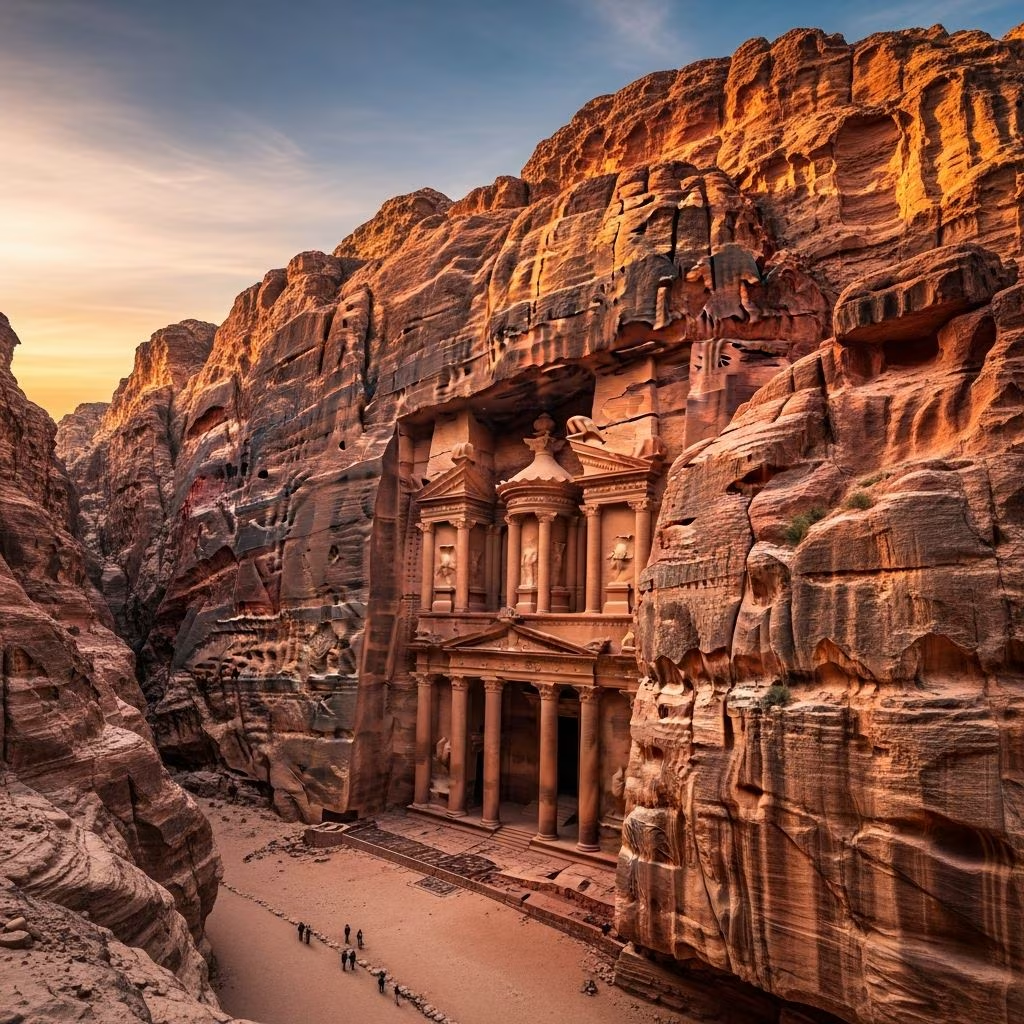
Enter Petra through the Siq, a dramatic 1.2 km gorge opening to the Treasury (Al-Khazneh), a Nabatean masterpiece carved in 1st century AD.
Explore the Royal Tombs, Hellenistic Theater, and Monastery (Ad-Deir), reached via 800 steps. Petra, a UNESCO site, was the Nabateans’ thriving caravan capital.
Venture into Wadi Rum, the ‘Valley of the Moon,’ for a Jeep safari amid crimson dunes, natural arches, and Lawrence of Arabia’s haunts.
Overnight in a Bedouin camp: share zarb (underground-cooked lamb), listen to rababa music, and stargaze under unpolluted skies. Bedouins, Jordan’s nomadic guardians, offer insights into resilient desert life.
Float in the mineral-rich Dead Sea, Earth’s lowest point, then visit Bethany Beyond the Jordan, a baptism site revered by Christians.
Return to Amman, perhaps shopping for crafts like intricate mosaics or embroidered textiles.
Jordanian culture emphasizes hospitality (diyafa), family, and respect. Greet with ‘As-salaam alaikum.’ Women may cover heads at religious sites; modest dress is appreciated everywhere.
Cuisine features mansaf (lamb in yogurt sauce), falafel, and knafeh dessert. Tea and coffee rituals foster connections.
Amman’s west side buzzes with malls, international cuisine, and nightlife, while the east preserves souks and historic mosques. It’s a hub for Jordan’s youth culture, blending hip-hop scenes with ancient echoes.
Yes, Jordan is among the safest Middle Eastern destinations, with low crime and welcoming locals. Stick to tourist paths.
Basic visit is moderate; Monastery hike is strenuous—wear good shoes.
Layered clothing, hat, sunscreen, closed shoes for sands.
Absolutely—hummus, fattoush, and veggie stuffed grape leaves abound.
Modest attire: shoulders and knees covered, especially at sites.
Support local economies by buying artisan goods. Avoid single-use plastics in deserts. Choose operators committed to sustainable tourism, like those following Leave No Trace in Wadi Rum.
This itinerary not only showcases Jordan’s past but invites you to partake in its living culture, creating memories amid timeless beauty.
