

 Travel Essentials
 Travel Essentials

Discover Naples, ancient Pompeii, volcanic Mount Vesuvius, and the breathtaking Amalfi Coast through a week-long hiking adventure combining history, nature, and coastal beauty.
 Travel Essentials
Southern Italy offers some of Europe’s most captivating combinations of natural beauty, ancient history, and coastal splendor. A week-long journey through this region combines rigorous hiking experiences with cultural immersion, archaeological exploration, and culinary delights. This comprehensive guide outlines how to experience the best of Italy’s southern coast through an expertly curated hiking adventure that connects four remarkable destinations.
A seven-day hiking tour of southern Italy typically encompasses multiple geographic zones, each offering distinct hiking challenges and cultural experiences. The itinerary weaves together metropolitan exploration in Naples, volcanic crater hiking near Pompeii, island trekking on Capri, and coastal path adventures along the famous Amalfi Coast. This combination allows travelers to experience Mediterranean landscapes at varying elevations and difficulty levels while maintaining a logical geographic progression.
Most tours of this nature are specifically designed for active travelers seeking meaningful engagement with their destinations. Guided hikes typically range from moderate to moderately challenging, featuring elevation gains that prepare participants for sustained physical activity across multiple days. Professional guides provide interpretation of geological, historical, and cultural significance, transforming each trail into an educational experience rather than simply a physical endeavor.
Naples serves as the logical entry point for most Italian hiking adventures. This bustling Mediterranean city provides an important cultural and logistical foundation before venturing into more remote areas. Upon arrival, travelers typically spend their first day acclimating to local rhythms while exploring the historic city center.
Naples functions as more than a starting point—it represents the modern face of a region shaped by millennia of history. Wandering through the centro storico (historic center), visitors encounter narrow streets, authentic trattorias, and the energy that characterizes one of Europe’s oldest continuously inhabited cities. This initial urban immersion helps travelers understand the regional context before experiencing more remote natural areas.
The second day typically involves ascending Mount Vesuvius, the volcano responsible for one of history’s most significant archaeological moments. Standing at this dramatic landscape provides immediate perspective on the region’s geological significance. The standard hiking route covers approximately 2.5 miles along a well-maintained trail known as Il Gran Cono (The Great Cone), a moderate-difficulty path ascending roughly 718 feet to the crater’s rim.
The hike to Vesuvius’s summit presents multiple layers of fascination. Geologically, hikers traverse volcanic terrain, observing pumice deposits and the distinctive rocky landscape created by past eruptions. Historically, each step leads toward understanding the catastrophic 79 CE eruption that transformed Pompeii and Herculaneum into archaeological treasures. Physically, the sustained elevation gain builds endurance for subsequent days while offering increasingly expansive views across the Bay of Naples.
The crater rim experience itself justifies the physical effort. Standing at the summit, visitors peer into the volcanic depression while contemplating the power of natural forces. On clear days, vistas extend across the entire region, providing geographic context for the week ahead. This position literally and figuratively elevates understanding of the landscape’s dramatic geological history.
After descending Vesuvius, the itinerary transitions to maritime travel with a ferry journey to Capri. This island has captivated visitors for centuries with its dramatic cliffs, hidden grottos, and ineffable Mediterranean charm. The ferry crossing itself offers a contemplative moment between intense physical exertion and new hiking experiences.
Capri presents a unique hiking environment compared to mainland areas. The island’s terrain features steep cliffs, rocky pathways, and trails that frequently descend toward the sea. Typical Capri hikes incorporate elevation changes of 600-700 feet over 3-4 mile distances, providing rigorous challenge while maintaining visual rewards throughout the experience.
Capri offers multiple hiking opportunities, with routes typically incorporating the island’s most significant geographical and cultural features. One prominent trail incorporates passage near three historic forts, remnants of Napoleonic-era military infrastructure, before descending to a distinctive coastal landmark—the Faro di Punta Carena (white and coral lighthouse) positioned on Capri’s southwestern point.
This four-mile trek includes substantial elevation variations, totaling approximately 656 feet of climbing and descending. The trail composition mixes packed earth, rocky sections, and stone pathways, requiring sturdy footwear and reasonable fitness levels. However, physical challenge is tempered by extraordinary visual rewards. The route frequently offers unobstructed Mediterranean vistas, opportunities to observe endemic island vegetation, and the profound satisfaction of reaching prominent coastal features on foot rather than by vehicle.
Following morning hiking activities, many itineraries include afternoon leisure time. This permits personal exploration of specific island features. The famous Grotta Azzurra (Blue Grotto) attracts many visitors, though access depends on weather and sea conditions. Alternatively, travelers might explore Capri’s charming villages, sample local cuisine, or simply rest before continuing their journey.
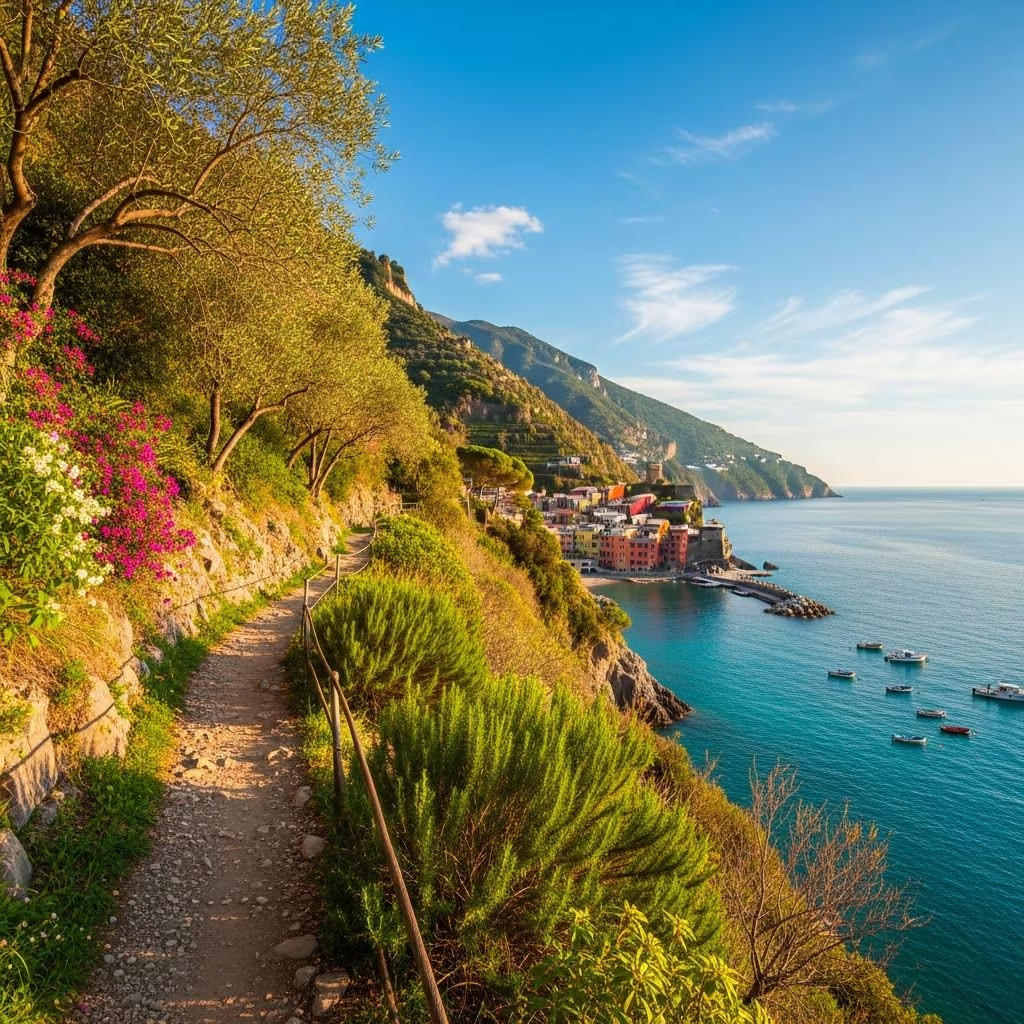
Days four and five typically concentrate on the Amalfi Coast’s most celebrated hiking route, often called Sentiero degli Dei (Path of the Gods). This legendary trail represents the pinnacle of Mediterranean coastal hiking, combining dramatic elevation changes with uninterrupted sea vistas. The standard route covers approximately 2.5 miles but incorporates significant elevation change—roughly 1,312 feet of cumulative climbing and descending—distributed across numerous irregular stone stairs and winding paths.
The Path of the Gods connects the hillside villages of Praiano and Positano, though variations exist depending on starting and ending points. The trail traverses high above the coastline, frequently offering perspective on popular tourist towns below while maintaining a sense of dramatic separation from the crowds. Lemon terraces, olive groves, and Mediterranean wildflowers accompany hikers throughout the route, illustrating the agricultural traditions that shaped this landscape.
Hiking this route demands preparation and physical capability. The extensive stair climbing—both ascending and descending—stresses knee joints and requires strong leg endurance. Most outfitters strongly recommend trekking poles to reduce joint stress and improve stability on irregular terrain. Many hikers find that hiking poles transform the experience from grueling to manageable, permitting fuller attention to the extraordinary scenery surrounding each switchback and vista point.
Beyond the primary Path of the Gods experience, the Amalfi Coast region offers complementary hiking opportunities. The Sentiero dei Limoni (Path of Lemons) provides an alternative or additional trekking option, featuring similar distance but varied topography. This route emphasizes the agricultural heritage that shaped the region, passing through cultivated lemon groves that produce the famous limoncello liqueur.
Itineraries often include stays at distinctive coastal accommodations positioned to maximize geographical accessibility and provide cultural immersion. Cliffside hotels with room balconies overlooking the Gulf of Salerno offer appropriate rest locations following rigorous hiking days. These strategic positions permit evening relaxation while absorbing Mediterranean atmosphere, and morning preparation for subsequent day’s adventures.
A return journey to the mainland typically incorporates dedicated time exploring Pompeii’s archaeological wonders. While not primarily a hiking destination, Pompeii demands sustained walking across uneven ancient streets and through multiple excavated structures. This experience complements the week’s physical activities while providing irreplaceable historical context.
Pompeii represents one of archaeology’s greatest gifts—a Roman city preserved in remarkable detail by the 79 CE Vesuvius eruption. In mere hours, pyroclastic flows buried buildings, streets, and civic infrastructure under 19-23 feet of ash and pumice. This catastrophe, while devastating for ancient inhabitants, created conditions enabling extraordinary preservation. Modern visitors traverse preserved streets, examine shops and residences, and contemplate daily life in an ancient society frozen in time.
The archaeological site encompasses bars, temples, public baths, administrative buildings, an amphitheater, and sophisticated aqueduct systems. Even the smallest details—preserved loaves of bread, skeletal remains, graffiti on walls—communicate human presence across nearly two millennia. Walking through Pompeii transforms understanding of Roman civilization from abstract historical knowledge to visceral appreciation of real individuals navigating similar daily challenges as modern travelers.
The final days typically involve return to Naples for departure travel. This transition period permits reflection on the week’s diverse experiences—the physical exertion of crater climbing, island coastal trails, and coastal path trekking; the historical immersion of Pompeii; the gastronomic delights encountered throughout; and the Mediterranean light and scenery that accompanied each day.
Many itineraries conclude with group dinners featuring regional cuisine, creating communal celebration of shared experiences. These meals often incorporate local specialties including fresh seafood, handmade pasta, and wines from regional producers. Such gatherings transform individual hiking experiences into collective memories, as participants process and share interpretations of their week in southern Italy.
Successful participation in a week-long Italian hiking adventure requires appropriate preparation. Regular cardiovascular conditioning in the months preceding departure significantly enhances enjoyment and capability. Stair climbing, hill running, or intensive gym sessions prepare leg muscles for steep elevation changes. Regular long walks with full backpacks acclimate feet and lower legs to sustained activity.
Appropriate equipment substantially affects comfort and safety. Sturdy hiking boots with ankle support protect feet on rocky terrain and irregular paths. Moisture-wicking clothing layers accommodate Mediterranean temperature variations. Trekking poles, as previously mentioned, significantly reduce strain on joints during steep descents. Sun protection—including high-SPF sunscreen, hat, and sunglasses—prevents weather-related discomfort in the intense southern Mediterranean sun.
Water consumption requires special attention. Hikers should carry adequate hydration capacity for each day’s activities, as opportunities to refill water supplies vary depending on specific routes and locations. Most experienced hikers recommend carrying minimum 2-3 liters of water capacity per person for full-day hikes in Mediterranean climates.
Seasonal timing significantly affects hiking comfort and safety. Spring (April-May) and fall (September-October) generally offer ideal conditions—moderate temperatures, lower humidity, and reduced crowds compared to peak summer months. Summer hiking in the region can be challenging due to extreme heat, crowded trails, and challenging conditions for physical exertion. Winter presents different challenges including reduced daylight hours, occasional rainfall, and periodic closure of certain routes.
Weather conditions can rapidly change, particularly near coastlines and elevated areas. Morning fog sometimes obscures views on summit hikes but typically clears by mid-morning. Sudden weather pattern changes—particularly sea conditions affecting ferry schedules—can require flexible itinerary adjustments. Most professional tour operators build appropriate contingency into their schedules, recognizing that Mediterranean weather occasionally demands adaptive planning.
Italian hiking adventures incorporate food exploration as deliberately as physical activity. Regional specialties vary by location—Neapolitan pizza and seafood pastas in coastal areas, fresh mozzarella tastings at working farms, limoncello produced from local lemon harvests. Many itineraries intentionally schedule lunch breaks at scenic locations or family-run restaurants, transforming meal times from functional necessities into cultural experiences.
Local food experiences deepen understanding of landscape and livelihood. Visiting working farms producing mozzarella, wine, or olive oil illustrates agricultural traditions sustaining the region. Conversely, recognizing how volcanic soils produce distinctive wines or agricultural products connects geological history to contemporary culinary traditions, creating intellectual frameworks for understanding place through multiple sensory dimensions.
Most itineraries accommodate active travelers with moderate fitness levels. Participants should comfortably walk 5-10 miles with elevation changes and maintain activity across multiple consecutive days. Pre-departure conditioning significantly enhances enjoyment.
Professional tour operators provide expert guides who navigate routes, interpret cultural and historical contexts, and ensure group safety. Guides transform physical activities into educational experiences.
Essential items include sturdy hiking boots, moisture-wicking clothing in layers, trekking poles, sun protection, water containers, and a small backpack. Check specific tour operator recommendations for complete packing lists.
Many operators specifically design itineraries welcoming solo travelers and couples. Group-based experiences provide social interaction while maintaining individual autonomy.
Communicate any physical concerns with tour operators before booking. Most offer modified routes or alternative activities accommodating varying capability levels.
A seven-day hiking adventure through southern Italy combines physical challenge, historical immersion, natural beauty, and cultural connection into cohesive experience. Each component—volcanic crater climbing, island coastal trekking, legendary path hiking, archaeological exploration—contributes distinct dimensions to comprehensive understanding of place. The week-long format permits sustained engagement rather than rushed tourism, allowing participants to develop genuine familiarity with landscapes and communities encountered throughout the journey.
The lasting value extends beyond physical accomplishment or photographs collected. Participants develop deeper appreciation for Mediterranean geography, ancient Roman civilization, regional culinary traditions, and the human effort required to create and maintain agricultural landscapes in challenging terrain. The shared experience of physical exertion, discovery, and cultural immersion creates memories and connections that continue resonating long after departure from Italy’s southern coast.
