

 Travel Essentials
 Travel Essentials

Explore stunning yet lesser-known U.S. national parks that rival popular destinations. From ancient ruins to alpine wilderness, find your next perfect getaway.
 Travel Essentials
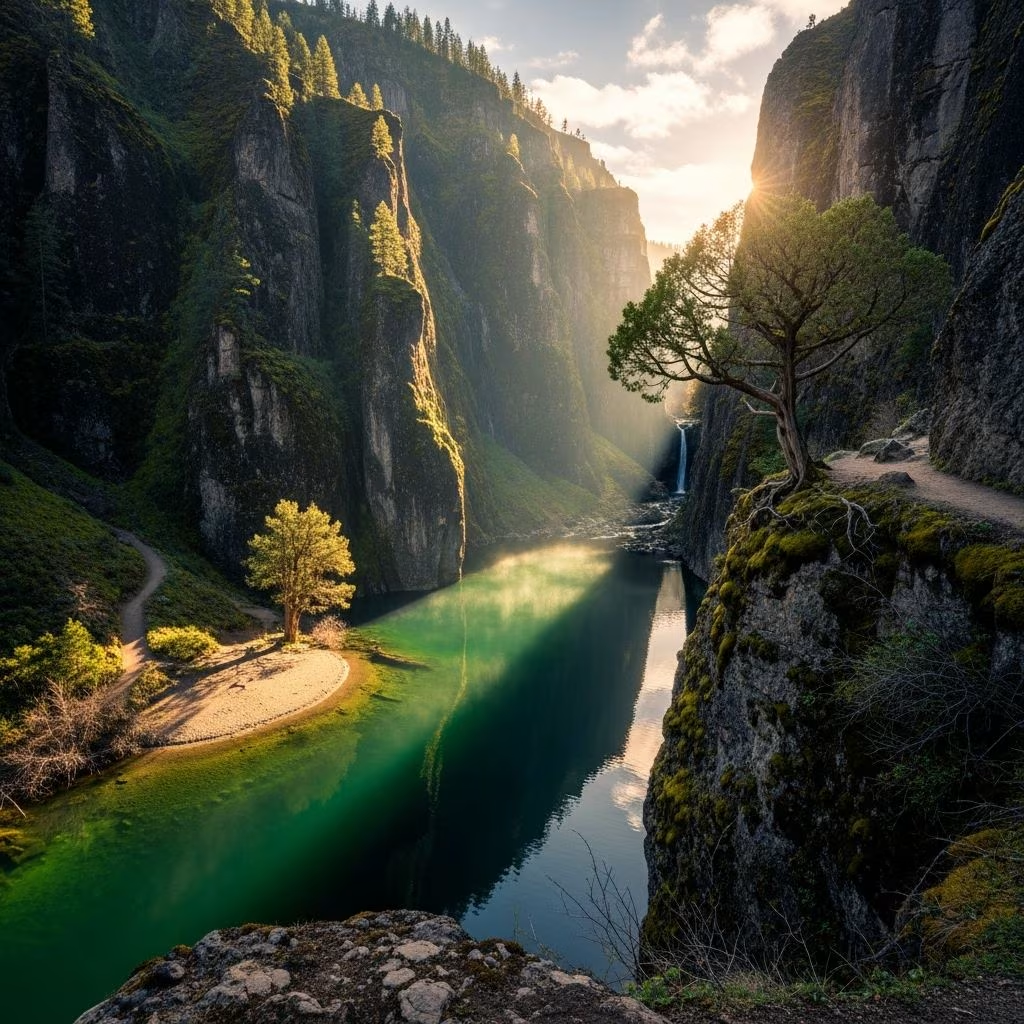
The United States national park system protects some of the world’s most extraordinary landscapes, yet many visitors flock to the same handful of iconic destinations. While Yellowstone, the Grand Canyon, and Yosemite deservedly attract millions of admirers each year, numerous parks of equal or comparable magnificence remain refreshingly uncrowded. These lesser-known destinations offer the same geological wonders, rich cultural heritage, and outdoor recreation opportunities—often with a fraction of the congestion. Discovering these hidden gems provides an opportunity to experience authentic wilderness while supporting conservation efforts in parks that desperately need visitor engagement.
Washington’s North Cascades National Park represents a striking example of how geography and accessibility can determine a park’s popularity rather than its inherent beauty. Despite encompassing some of the most dramatic mountain scenery in the continental United States, North Cascades ranks among the least visited parks in the entire system. The park’s remote location and limited direct road access contribute to its relative obscurity, yet these same factors preserve its pristine character and solitude.
The park divides into two distinct geographical units separated by the North Cascades Highway (State Route 20), offering visitors diverse ecosystems and landscape types. Jagged peaks, cascading waterfalls, and glacier-fed alpine lakes create a landscape reminiscent of European mountain ranges. The primarily wilderness designation means that exploration requires genuine outdoor commitment, rewarding hikers and backpackers with unparalleled scenery and exceptional wildlife viewing opportunities. For those willing to venture beyond mainstream tourist routes, North Cascades delivers an extraordinary Pacific Northwest experience.
Mesa Verde National Park stands as a unique institution within the national park system, being the only park created primarily to preserve the archaeological and cultural heritage of a specific people—the Ancestral Puebloans. Located in southwestern Colorado’s high desert, this park contains nearly 5,000 archaeological sites and approximately 600 remarkably preserved cliff dwellings. These extraordinary structures were constructed between 550 and 1300 A.D. by the Ancestral Puebloans, who inhabited the region for more than seven centuries.
Among Mesa Verde’s most iconic structures are Cliff Palace, the sprawling ceremonial complex that remains the largest cliff dwelling in North America; the Sun Temple, a ceremonial structure whose precise purpose continues to intrigue archaeologists; and Oak Tree House, shrouded in cultural mystery. Unlike many Southwestern archaeological sites, Mesa Verde provides extraordinary accessibility to these ancient communities. Visitors can walk directly among the dwellings and explore the layouts of residential, ceremonial, and storage areas, creating an intimate connection to Ancestral Puebloan life ways. The park’s creation in 1906 represents a pivotal moment in American conservation, establishing the principle that cultural preservation constitutes a valid national park mission.
The Colorado Plateau region encompasses multiple underrated parks, each offering distinct geological narratives. Canyonlands National Park frequently assumes a secondary role to more famous neighbors like the Grand Canyon, Zion, Bryce, and Arches, despite offering equally compelling landscapes. The park’s deeply incised canyons, towering spires, and labyrinthine slot canyons create a landscape of extraordinary complexity and visual drama. Similarly, the Black Canyon of the Gunnison in Colorado presents steep, narrow gorges carved by water erosion over millions of years, creating some of the continent’s most dramatic vertical relief.
Great Sand Dunes National Park in Colorado presents an entirely different geological environment. The park boasts a 30-square-mile dunefield representing one of North America’s largest sand dune systems, surrounded by diverse ecosystems including grasslands, wetlands, aspen forests, and tundra zones. This environmental diversity creates unexpected recreational opportunities and stark visual contrasts. Visitors should plan early morning explorations, as afternoon sand temperatures can reach 150°F during certain seasons, making midday visits uncomfortable. The High Dune trail provides an accessible introduction to this surreal landscape.
The eastern United States possesses mountain landscapes that deserve greater recognition among outdoor enthusiasts. Shenandoah National Park in Virginia combines natural beauty with historical significance often overlooked by travelers focused on western destinations. The park features the historic Old Rag summit, the scenic White Oak Canyon waterfalls, and the iconic Skyline Drive offering panoramic mountain vistas. Beyond scenic overlooks, Shenandoah provides more than 500 miles of hiking trails, including a substantial portion of the Appalachian Trail running through its heart. This accessibility to long-distance trail systems, combined with relatively easy driving access from eastern population centers, makes Shenandoah an ideal destination for eastern visitors seeking mountain experiences.
The Badlands of South Dakota present a completely different eastern landscape characterized by striking rock formations, extensive fossil displays, and exceptional wildlife viewing. The park’s distinctive striped buttes and eroded ridges create otherworldly scenery, while the geological record visible in exposed rock layers tells stories spanning millions of years. Visitors regularly encounter bison, prairie dogs, and bighorn sheep in their natural habitats. The Badlands rank among the few outdoor areas permitting off-trail hiking, enabling explorers to venture beyond designated pathways and discover secluded landscapes.
White Sands National Park in New Mexico occupies a surreal ecological niche within the American landscape. Once covered by Ice Age lakes and inhabited by now-extinct megafauna, the park has transformed into an otherworldly duneland of shimmering white gypsum crystals. This unique mineralogical composition creates visual effects fundamentally different from sand dunes elsewhere, producing landscapes that seem to belong to another planet. The park’s accessibility and diverse recreational opportunities, combined with its close proximity to Alamogordo, make it an ideal destination for desert enthusiasts seeking something genuinely different from typical southwestern experiences.
| Park Name | State | Primary Appeal | Key Challenge | Visitor Experience |
|---|---|---|---|---|
| North Cascades | Washington | Alpine wilderness | Remote location | Solitude, dramatic scenery |
| Mesa Verde | Colorado | Archaeological heritage | Limited access periods | Cultural immersion |
| Canyonlands | Utah | Canyon landscapes | Overshadowed by neighbors | Geological drama |
| Great Sand Dunes | Colorado | Unique dunefield | Extreme temperatures | Unique ecosystems |
| White Sands | New Mexico | Gypsum landscape | Desert conditions | Otherworldly vistas |
| Badlands | South Dakota | Fossils, wildlife | Eastern location | Off-trail exploration |
| Shenandoah | Virginia | Mountain heritage | Seasonal crowds | Hiking accessibility |
Multiple factors contribute to visitor disparities. Geographic location, regional accessibility, marketing prominence, and infrastructure development all influence visitation patterns. Parks in remote locations or requiring significant travel commitments naturally attract fewer visitors. Additionally, parks that lack the famous brand recognition achieved through decades of popular culture references tend to remain overshadowed.
Not necessarily. Many underrated parks offer excellent facilities and well-maintained trails. However, some parks intentionally maintain wilderness character through limited infrastructure, which appeals to experienced outdoor enthusiasts but deters casual visitors. Accessibility varies considerably between individual parks.
Timing depends on specific park characteristics. Alpine parks like North Cascades are most accessible during summer months when high-elevation snow melts. Desert parks like White Sands offer more comfortable conditions during spring and fall when temperatures moderate. Archaeological sites like Mesa Verde have seasonal access restrictions based on preservation concerns.
Stay on designated trails, pack out all waste, respect wildlife viewing distances, and limit group sizes. Underrated parks often maintain more fragile ecosystems due to fewer visitors, making individual responsibility particularly important for long-term preservation.
Yes, though considerations vary by park. Great Sand Dunes and White Sands offer family-friendly environments, while more remote parks like North Cascades require greater outdoor experience and physical capability. Mesa Verde provides accessible cliff dwelling viewing, though some areas involve ladder climbing unsuitable for very young children.
Visiting lesser-known national parks serves multiple purposes beyond personal enjoyment. Distributing visitor impact across the entire park system reduces strain on overtaxed popular destinations, supporting sustainable tourism practices. Directing visitor fees and engagement to underutilized parks funds essential conservation and maintenance work in areas that desperately need resources. Furthermore, discovering these hidden gems creates authentic travel experiences characterized by genuine wilderness immersion rather than commercialized tourism infrastructure.
The national park system was established to preserve extraordinary landscapes for all Americans. By venturing beyond the conventional circuit of megafamous destinations, travelers support the original conservation mission while discovering landscapes of equal or superior magnificence. These underrated parks await explorers willing to venture slightly beyond mainstream tourism routes, rewarding effort with memories of genuine wilderness and solitude.
