

 Travel Essentials
 Travel Essentials

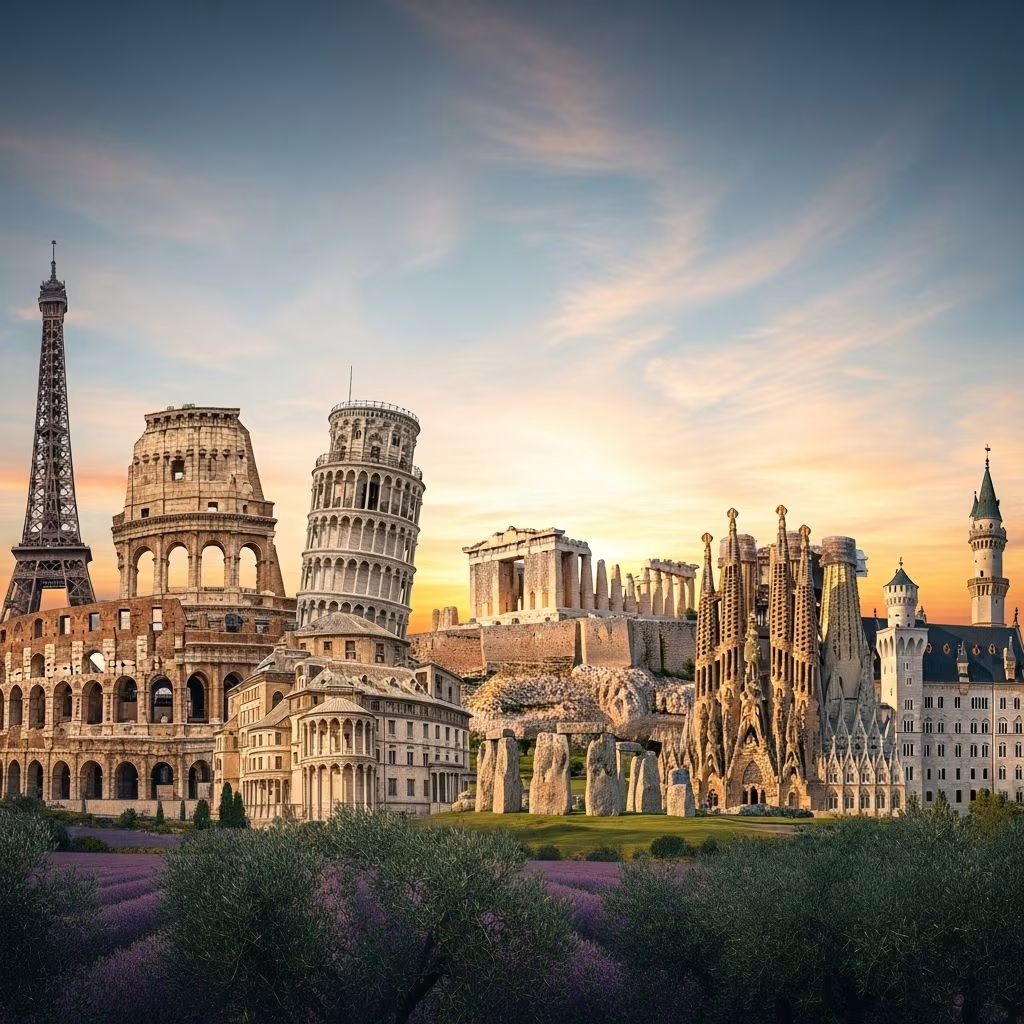
Explore Europe's iconic wonders including the Acropolis, Eiffel Tower, and Vatican City, with travel tips, history, and why they captivate visitors worldwide.
 Travel Essentials
Europe stands as a treasure trove of architectural marvels and historical landmarks that have shaped civilizations for millennia. These sites, often called the continent’s wonders, draw millions of travelers seeking to connect with the past while marveling at human ingenuity. This guide highlights seven standout destinations, blending ancient ruins, grand palaces, and modern icons, each offering unique stories and experiences.
The selection of Europe’s wonders emphasizes statistical popularity alongside historical depth, as determined by global visitor data and cultural impact. From Greece’s rocky citadels to France’s iron lattices, these locations represent diverse eras and styles. They are not ranked but presented for their collective draw, inviting exploration across borders.
Perched atop a limestone hill, the Acropolis symbolizes classical Greece’s golden age. Dating back to the 5th century BCE, this fortified hilltop houses the Parthenon, Erechtheion, and Propylaea, temples dedicated to Athena and other deities. The site’s name derives from Greek words meaning ‘high city,’ reflecting its elevated position overlooking Athens.
Visitors ascend via a winding path, rewarded with panoramic views and intricate marble sculptures. The Parthenon’s Doric columns, once adorned with friezes now in museums, showcase optical refinements for perfect proportions. Best visited early morning to avoid crowds, entry fees support preservation efforts amid ongoing restorations.
Gustave Eiffel’s 1889 creation for the World’s Fair, this lattice tower rises 330 meters, initially criticized but now Paris’s emblem. Engineered with 18,000 iron pieces, it withstands wind through flexible design. Nightly light shows transform it into a sparkling beacon.
Ascend via elevators to three levels, with the summit offering 360-degree city vistas. Summit tickets require advance booking during peak seasons. Combine with Seine River cruises for varied perspectives. The tower’s base hosts gardens and cafes, ideal for picnics.
| Level | Height | Highlights |
|---|---|---|
| 1st | 57m | Glass floor, restaurants |
| 2nd | 115m | Historical exhibits |
| Summit | 330m | Champagne bar, views |
Conceived by Nicolae Ceaușescu in the 1980s, this colossal building is the world’s heaviest at 4 million tons, spanning 12 stories above and 8 below ground. Intended as Romania’s political heart, it features vast halls, marble staircases, and crystal chandeliers.
Tours reveal the Palace of the People assembly room and balcony with city overlooks. Its scale overwhelms, symbolizing communist-era ambition. Free audio tours in multiple languages; photography permitted in most areas. Nearby Revolution Square adds historical context on regime change.
Louis XIV’s 17th-century expansion turned a hunting lodge into a sprawling palace with 700 rooms, 2,000 windows, and expansive gardens. The Hall of Mirrors hosted treaty signings, epitomizing absolutist monarchy.
Explore state apartments, king’s chamber, and Marie Antoinette’s hamlet. Garden fountains dance to music on weekends. Bike rentals navigate the 800-hectare grounds. Passport tickets grant multi-day access, essential for full appreciation.
Europe’s largest functioning royal palace boasts 3,418 rooms in Baroque style, built post-1734 fire on Madrid’s central site. Home to Spanish monarchs, it displays Stradivarius violins, frescoes by Giaquinto, and armory collections.
Open for self-guided tours except official events; opulent Throne Room impresses. Rooftop views and Sabatini Gardens provide serene escapes. Evening visits illuminate the facade spectacularly.
Enclosed within Rome, this sovereign state houses St. Peter’s Basilica, Sistine Chapel, and Vatican Museums. Michelangelo’s ceiling frescoes and Bernini’s baldachin define artistic peaks. Housing 800 works, museums trace papal history.
Early entry skips lines; climb basilica dome for views. Modest dress required. Papal audiences Wednesdays offer blessings. Museums’ long galleries lead to Raphael Rooms.
| Attraction | Capacity | Daily Visitors |
|---|---|---|
| St. Peter’s | 60,000 | 20,000 avg |
| Sistine Chapel | Limit | High demand |
Over 1,000 years old, this Thames-side fortress served 39 monarchs, including Queen Elizabeth II. State Apartments display art by Rembrandt; St. George’s Chapel holds royal tombs.
Changing of the Guard draws crowds; grounds include Frogmore House. Advance tickets advised; closures for royal events noted online. Nearby Eton College adds educational charm.
Traveling between sites requires efficient routes: Fly into Athens, train to Paris, then Bucharest. Rail passes cover Versailles, Madrid, Windsor. Budget for entries (€10-30/site), prioritize multi-attraction passes.
No fixed order; group by region: Greece/Italy, France/Spain, UK/Romania for efficiency.
Yes, most sites offer reduced rates for children; some free under 18 (e.g., Windsor).
Varies: Acropolis has ramps, Eiffel elevators; check official sites for wheelchairs.
Possible in 2-3 weeks via flights/trains; focus on 3-4 for depth.
Mediterranean mild winters, northern cooler; summers crowded/hot.
Opt for public transport, reusable water bottles; support UNESCO efforts. These sites thrive on responsible tourism preserving legacies for future generations.
