

 Travel Essentials
 Travel Essentials

Your complete guide to experiencing New York City in a weekend, featuring top attractions, dining recommendations, and insider tips for first-time and returning visitors.
 Travel Essentials
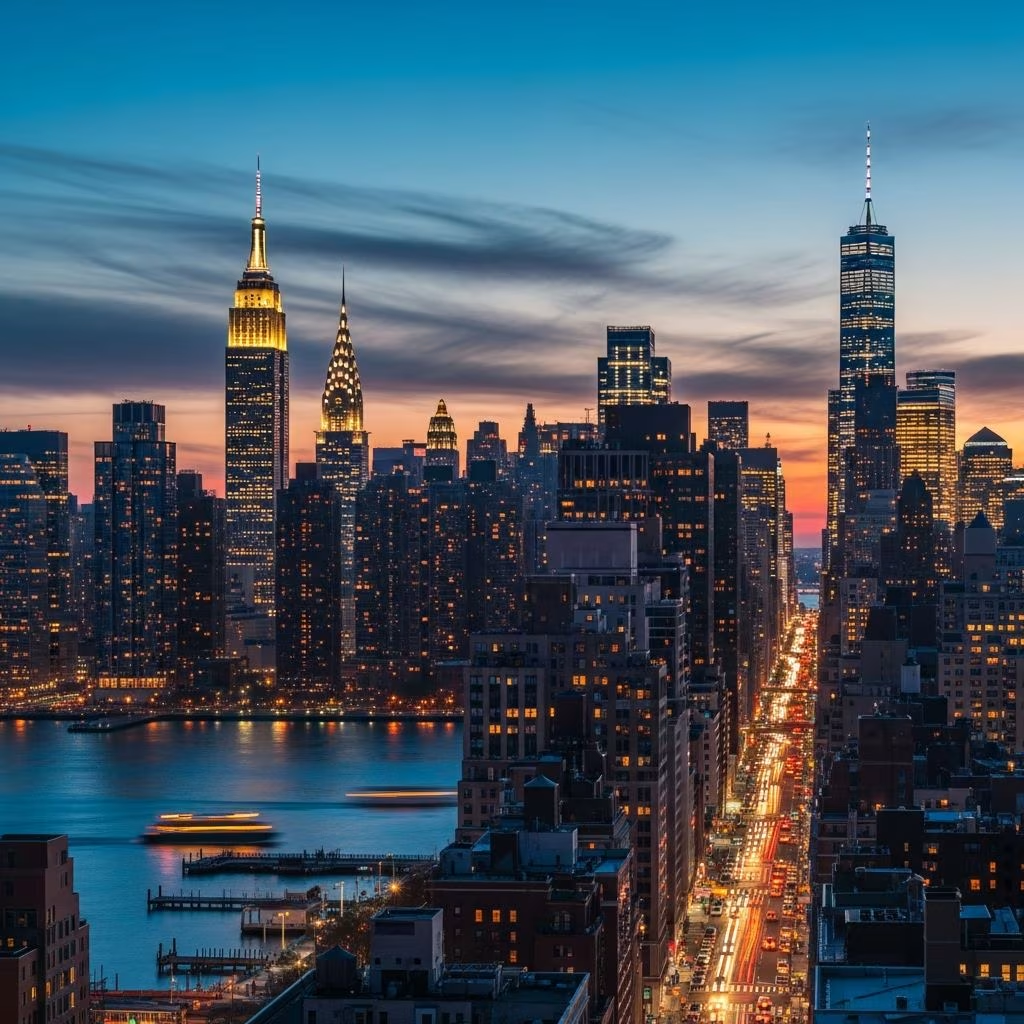
New York City offers an intoxicating blend of world-class culture, iconic landmarks, and vibrant neighborhoods that can overwhelm even the most seasoned traveler. Whether you have just a long weekend or a few days to explore, strategically planning your time allows you to experience the essence of Manhattan without exhausting yourself. This comprehensive guide walks you through how to maximize your 72-hour visit, combining the must-see attractions with local favorites and practical navigation strategies.
New York City’s geography can seem daunting, but understanding its basic structure makes navigation significantly easier. Manhattan is divided into distinct neighborhoods, each with its own character, dining scene, and attractions. The city’s layout follows a numbered grid system in many areas, making it relatively straightforward to find your way once you understand the pattern.
The best way to explore New York is by combining walking with subway travel. Walking allows you to discover hidden gems, observe neighborhood dynamics, and move at your own pace through different districts. The subway system, while occasionally crowded and requiring some learning, provides rapid transit between neighborhoods. Both methods reveal different aspects of the city’s personality, so alternating between them throughout your weekend creates a balanced experience.
Your accommodation choice significantly impacts your experience. Staying in Midtown puts you near major attractions but in the heart of tourist crowds. Downtown locations near Battery Park offer proximity to historical sites and waterfront views. Brooklyn accommodations provide a more local atmosphere while still offering easy access to Manhattan via subway or walking bridges. Consider your priorities—accessibility to specific attractions, neighborhood vibe, or budget—when selecting where to stay.
Begin your NYC adventure early to maximize your time and beat crowds at popular attractions. Your first morning should focus on obtaining elevated perspectives of the city before diving into street-level exploration.
Start by visiting viewing platforms that showcase Manhattan’s skyline. Top of the Rock at Rockefeller Centre provides 360-degree vistas of the city, offering particularly stunning views of the Empire State Building and surrounding neighborhoods. Arriving early, ideally when the venue opens around 8 AM, significantly reduces wait times. Book tickets in advance online to streamline entry and guarantee access during peak seasons. The experience of seeing the entire city spread below you, from Central Park’s green expanse to the Hudson River’s western edge, provides immediate orientation and a sense of the city’s scale.
After descending from your elevated vantage point, spend the late morning exploring Midtown’s architectural and cultural landmarks. Grand Central Station deserves more than a passing glance—its Beaux-Arts interior, ornate ceiling, and constant human flow make it a microcosm of New York itself. Nearby, the New York Public Library’s main branch showcases magnificent architecture and provides a respite from street-level energy. Bryant Park, just behind the library, offers seasonal activities and serves as a peaceful refuge amid urban bustle.
Times Square, despite its overwhelming commercialization, remains an essential New York experience. Most locals bypass this area entirely unless attending Broadway performances, but first-time visitors benefit from witnessing its towering screens and frenetic energy. Consider visiting in the evening when neon signs illuminate the streets, creating the visual spectacle that defines Times Square in popular imagination.
Conclude your first day with a Broadway performance, an quintessentially New York experience. Whether experiencing a long-running show or an innovative production, theater in New York represents artistic expression at its finest. Dine in a restaurant near your theater, selecting from the area’s abundant options ranging from casual to fine dining. This combination of performance and gastronomy captures the sophisticated entertainment culture that defines Manhattan’s evening scene.
Your second day transitions from skyline appreciation to exploring the city at ground level, focusing on its cultural institutions and natural spaces.
Central Park represents New York’s most essential green space—an 843-acre oasis that provides respite from urban intensity while offering iconic views and recreational opportunities. Enter through the southern park entrance to experience the General William Tecumseh Sherman Monument and gradually make your way through the park’s different zones, each offering distinct character and attractions.
Traverse the Mall and Literary Walk, a beautiful tree-lined promenade flanked by statues commemorating cultural figures including Shakespeare and pioneers of women’s rights. The pathway culminates at Bethesda Terrace, where the Angel of the Waters statue presides over Bethesda Fountain, creating one of the park’s most photographed and Instagram-worthy locations. The park’s design encourages organic exploration—follow winding pathways, discover hidden overlooks, and observe how locals recreate in their urban sanctuary. Visit during fall to witness the spectacular foliage, or in winter when the park takes on a peaceful, crystalline quality.
Allocate several hours to the Metropolitan Museum of Art, one of the world’s most comprehensive museums. With over 2 million works spanning 5,000 years of human creativity, you cannot see everything in one visit—nor should you try. Instead, identify specific collections or time periods that interest you, allowing for a meaningful engagement with artworks rather than superficial rushing through galleries. The museum’s diverse holdings range from ancient Egyptian artifacts to contemporary installations, ensuring something for every visitor regardless of artistic preferences.
The museum’s pay-what-you-wish admission structure (suggested donation with required ID) makes it accessible regardless of budget. Consider visiting during late evening hours when crowds thin and the atmosphere becomes more contemplative.
After museum time, venture into adjacent neighborhoods to experience local dining and culture. Explore the Upper West Side’s residential character, discovering brownstone-lined streets and neighborhood restaurants. Alternative neighborhoods like the Upper East Side, Morningside Heights, or areas near Central Park’s periphery offer different atmospheres and dining scenes. This neighborhood exploration reveals that New York exists not only in famous attractions but in the daily rhythms of residents’ lives.
Your final day balances major attractions with exploration of areas that offer different visual and cultural perspectives on the city.
The High Line represents one of New York’s most innovative recent developments—a 1.45-mile elevated park built on a former railroad line that once transported freight along Manhattan’s West Side. This unique public space combines park functionality with urban gardening, art installations, and spectacular views of the Hudson River and Manhattan’s skyline. The pedestrian-only pathway feels distinctly calmer than street-level Manhattan, making it an ideal location for contemplative walking or casual people-watching.
Walking the High Line from Chelsea northward leads to Hudson Yards, where the Vessel—an interactive architectural sculpture consisting of 154 interconnected staircases—provides contemporary art appreciation and a different type of elevated view. Same-day tickets are available, but booking online in advance guarantees entry and allows flexibility in your itinerary.
Dedicate afternoon time to Lower Manhattan, where American history intersects with modern rebuilding efforts. Battery Park offers waterfront walking and serves as the embarkation point for various water-based experiences, from the iconic Staten Island Ferry providing affordable Statue of Liberty views to formal Statue Cruises offering access to climb the monument or tour Ellis Island.
Walking tours through Lower Manhattan reveal the area’s transformation and historical importance. The 9/11 Memorial and Museum provide sobering but essential context for understanding recent American history and the city’s resilience. One World Trade Center, the Freedom Tower, stands as both memorial and symbol of renewal, its architectural presence dominating Lower Manhattan’s skyline. Trinity Church, where Alexander Hamilton is buried, offers historical depth and architectural beauty amid the downtown Financial District’s modern towers.
Walking the Brooklyn Bridge, one of the world’s most iconic bridges, provides unparalleled views of both Manhattan and Brooklyn while offering pedestrian access between boroughs. The bridge’s engineering, views, and historical significance combine to create a quintessential New York experience. Walking across at sunset yields particularly memorable views as daylight fades and Manhattan’s lights begin illuminating.
Reaching Brooklyn opens additional exploration possibilities. The DUMBO neighborhood offers the famous Manhattan Bridge view that appears in countless photographs and social media posts. Cobblestone streets, art galleries, boutique shops, and hipster-friendly cafes characterize this gentrified neighborhood. The Tenement Museum provides insight into the experiences of immigrants who shaped New York’s character and culture in earlier eras.
If your schedule allows flexibility or if you’re returning for an extended visit, consider these alternatives:
Visiting major attractions early or during off-peak hours significantly improves your experience. Mornings before 10 AM and weekday afternoons typically see fewer crowds than afternoons and weekends. Evening visits to some attractions, particularly museums with extended hours, offer contemplative experiences without overwhelming crowds.
Major attractions require budget planning. Purchase the New York Pass if visiting multiple paid attractions—it often provides savings while streamlining access through single-pass entry. Many museums operate on pay-what-you-wish models with specific hours, allowing flexible budgeting. Walking between neighborhoods costs nothing while revealing street-level character inaccessible from subway cars.
Purchase a MetroCard or use mobile payment for unlimited subway and bus access. A 7-day pass provides excellent value for weekend visitors. However, many Manhattan attractions are within walking distance of each other, allowing exploration without constant subway use. Strategic subway use for longer distances combined with neighborhood walking creates balanced transportation.
A weekend in New York City provides sufficient time to experience major attractions, explore diverse neighborhoods, and absorb the city’s unique energy. Success requires strategic planning balanced with flexibility for spontaneous discoveries. By combining iconic attractions with neighborhood exploration, water-based perspectives with elevated vantage points, and cultural institutions with natural spaces, your 72 hours in Manhattan will capture the essence of New York’s sophistication, diversity, and unmistakable character.
