

 Travel Essentials
 Travel Essentials

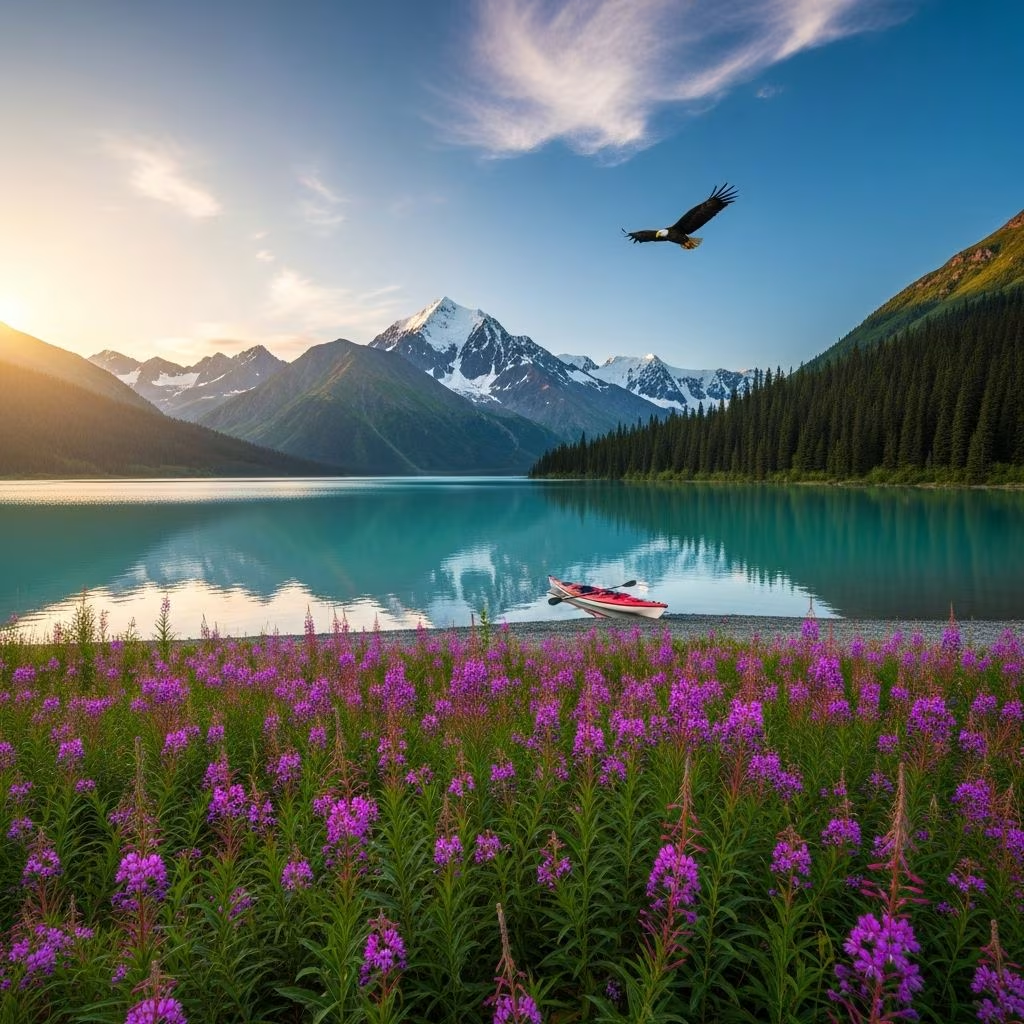
Plan your perfect Alaska week with this comprehensive 8-day itinerary covering Anchorage, Denali, Fairbanks, and coastal adventures.
 Travel Essentials
Alaska represents one of North America’s most remarkable destinations, offering visitors an unparalleled combination of pristine wilderness, abundant wildlife, and unique cultural experiences. An eight-day journey through this vast state provides the ideal timeframe to experience the diversity that makes Alaska so captivating. Whether you’re seeking adventure on glaciers, wildlife encounters, or Arctic exploration, this comprehensive guide will help you make the most of your Alaskan adventure.
A week-long Alaskan expedition allows travelers to venture beyond typical tourist circuits and truly immerse themselves in the state’s extraordinary landscapes. The eight-day structure provides sufficient time to combine major attractions like Denali National Park and coastal fjords with less-visited destinations that reveal Alaska’s authentic character. The journey typically covers significant distances—often exceeding 1,000 miles—so strategic planning ensures you maximize experiences while minimizing travel fatigue.
The best approach involves establishing a logical route that minimizes backtracking. Most itineraries begin in Anchorage, Alaska’s largest city and primary gateway, then branch northward toward Denali or eastward along the scenic Kenai Peninsula. The seasonal timing significantly impacts your experience, with summer months (June through August) offering extended daylight and accessible trails, while winter expeditions provide opportunities for Northern Lights viewing and unique cold-weather activities.
Your Alaskan adventure begins in Anchorage, a modern metropolitan area nestled between mountains and ocean. Rather than spending excessive time in urban settings, strategic use of your first two days allows you to establish a cultural foundation while accessing outdoor opportunities immediately.
Start by visiting cultural institutions that contextualize your upcoming wilderness experiences. Museums dedicated to Alaska’s indigenous heritage and natural history provide invaluable perspective on the ecosystems and peoples you’ll encounter. Simultaneously, venture into nature within easy reach of downtown—multi-use pathways weave through forests and along coastlines, offering immediate wildlife viewing opportunities.
Before leaving the Anchorage area, explore the Matanuska Valley to the north. This agricultural region represents Alaska’s farming belt and showcases the state’s diverse landscapes. The valley provides access to activities like horseback riding, zipline adventures, and visits to historical sites that connect visitors to Alaska’s pioneering heritage. The journey from Anchorage to this region introduces you to the driving rhythms and terrain transitions you’ll experience throughout your itinerary.
The central portion of your journey focuses on Denali National Park, one of Alaska’s crown jewels. This six-million-acre park protects some of North America’s most spectacular mountain scenery and abundant wildlife populations. The park’s single gravel road—stretching approximately 92 miles into the wilderness—serves as your primary access point for exploration.
A full day within the park allows for multiple experiences. Early morning excursions offer the best wildlife viewing opportunities when animals are most active. The Alaska Range dominates the landscape, with Denali itself standing as North America’s tallest peak. Designated visitor centers positioned along the park road provide interpretive information and serve as basepoints for short hiking excursions.
Wildlife encounters define the Denali experience. Grizzly bears, caribou, moose, dall sheep, and numerous bird species inhabit the park’s diverse ecosystems. Rather than expecting close encounters, wildlife viewing here emphasizes observing animals in their natural habitat from appropriate distances. The landscape transitions from forested valleys to open tundra as you progress deeper into the park, each zone hosting distinct animal communities.
Consider incorporating guided activities that enhance your understanding of the environment. Ranger-led programs, ranging from short nature walks to full-day explorations, provide expert interpretation and increase your likelihood of meaningful wildlife observations. These programs also emphasize Leave No Trace principles that protect this fragile ecosystem.
Continuing northward from Denali, your journey extends to Fairbanks and potentially beyond to the Arctic Circle. This segment represents one of Alaska’s most transformative experiences. Fairbanks serves as a logical hub for Arctic expeditions, providing essential services and cultural attractions while serving as your jumping-off point for extreme northern adventures.
A day trip to the Arctic Circle represents a quintessential Alaskan experience. The journey traverses the Dalton Highway, one of North America’s most remote roads, traveling through increasingly sparse landscape as latitude increases. Upon crossing the Arctic Circle, you receive official certification marking this geographic milestone. The Arctic tundra landscape—characterized by low-growing vegetation, permafrost features, and expansive vistas—differs dramatically from southern Alaskan forests.
Wildlife viewing in Arctic regions focuses on species adapted to extreme conditions. Caribou herds migrate across the tundra, and patient observers may spot grizzly bears, wolves, or musk oxen. The landscape’s apparent barrenness masks tremendous biological productivity during brief summer months when wildflowers bloom and animals rear their young.
After Arctic exploration, retreat to natural hot springs that provide physical and psychological restoration. These geothermally heated pools contrast dramatically with the surrounding landscape and offer relaxation after days of intensive travel. Many facilities provide sauna access and other amenities that enhance the restorative experience.
Your itinerary’s conclusion focuses on Alaska’s dramatic coastline, where tidewater glaciers descend directly into ocean waters. The Kenai Peninsula’s coastal regions provide access to some of Alaska’s most photographed landscapes and active glacial systems.
Boat-based exploration offers the optimal means for glacier viewing and marine wildlife observation. Fjord cruises position you at close range to calving glaciers, where massive ice chunks regularly break away and crash into the ocean. These glaciers represent remnants of the ice age, and their dynamic behavior—constantly advancing or retreating based on climate patterns—offers visible evidence of environmental change.
Marine ecosystems support abundant wildlife. Sea otters, seals, sea lions, and whales inhabit these waters, and many cruises incorporate wildlife viewing as central components. Puffins, eagles, and other seabirds add to the zoological richness of coastal environments.
Alternative activities in coastal regions include kayaking through protected bays, hiking to remote waterfalls, and fishing for salmon. Each option provides different perspectives on the same extraordinary ecosystems. Your final days provide opportunities to pursue activities that most resonated with your travel style and interests.
| Experience Type | Best Location | Duration | Difficulty Level |
|---|---|---|---|
| Guided Wildlife Tours | Denali National Park | 4-8 hours | Easy |
| Glacier Hiking | Kenai Peninsula | 3-5 hours | Moderate |
| Kayaking Expeditions | Coastal Fjords | 3-6 hours | Moderate |
| Arctic Circle Journey | Fairbanks Region | 10-12 hours | Moderate |
| Mountain Peak Climbing | Various Locations | Variable | Difficult |
| Backcountry Camping | Denali/Remote Areas | 2+ Days | Difficult |
Successfully executing this eight-day itinerary requires understanding Alaska’s transportation infrastructure. The Parks Highway connects Anchorage, Denali, and Fairbanks, serving as your primary north-south corridor. This highway transitions from paved urban roads to increasingly remote stretches as you venture northward. Winter conditions can significantly impact driving, with snow and ice creating hazardous situations even for experienced drivers.
Vehicle rental provides maximum flexibility for this itinerary, allowing you to explore at your pace and access trailheads and viewpoints independently. Standard sedans suffice for major highways, though sport utility vehicles offer advantages for rough side roads. Fuel availability becomes increasingly sparse as you venture into remote regions, necessitating strategic refueling.
Alternative transportation includes charter flights that bypass lengthy drives and provide aerial perspectives of landscapes otherwise inaccessible by road. Small-aircraft operators offer flightseeing tours of Denali, glacier landings, and remote bush locations. While more expensive than ground transportation, these experiences provide unparalleled access to Alaska’s vastness.
Alaska’s wildlife represents the primary draw for most visitors, yet successful wildlife encounters require realistic expectations and ethical behavior. Bears represent Alaska’s most iconic animals, yet many travelers complete their Alaskan journey without seeing them in the wild. Patient observation, early morning explorations, and strategic location selection increase encounter probabilities without guaranteeing sightings.
When wildlife encounters occur, maintaining safe distances protects both humans and animals. Park regulations specify minimum distances—typically 25 yards for most wildlife and 100 yards for bears and wolves. Binoculars and telephoto lenses allow close observation from safe distances. Photography enthusiasts should anticipate limitations; capturing trophy images often proves more challenging than expected.
Seasonal variations dramatically impact wildlife visibility. Summer months concentrate animals in accessible areas as they take advantage of abundant food resources. Winter restricts most wildlife viewing to specific locations like the Arctic or thermal hot spring regions where animals congregate.
Your eight-day itinerary’s success depends significantly on seasonal timing. Summer expeditions (June-August) offer extended daylight—the midnight sun phenomenon occurs in northern regions—and accessible trails. However, summer brings crowds and higher prices. Shoulder seasons (May and September) provide fewer crowds and pleasant weather, though some facilities may have limited operations.
Winter travel (December-February) dramatically transforms the Alaskan experience. Shorter days limit daylight exploration, yet winter enables Northern Lights viewing in Fairbanks and Arctic regions. Winter sports like snowmobiling and dog sledding become viable. Extreme cold requires specialized equipment and mental preparation.
Regardless of season, weather remains unpredictable. Temperatures can shift dramatically, and precipitation occurs year-round. Layered clothing allows adjustment to changing conditions. Waterproof outer layers protect against rain and snow. Insulated boots rated for extreme cold become essential in winter months.
Summer months (June-August) offer the most favorable conditions with extended daylight and accessible facilities. However, shoulder seasons (May and September) provide excellent weather with fewer crowds and lower prices. Winter enables Northern Lights viewing but requires specialized preparation.
Typical itineraries covering Anchorage, Denali, Fairbanks, and the Kenai Peninsula involve 1,000-1,200 miles of driving over eight days. This average of 125-150 miles daily allows time for sightseeing and activities rather than continuous driving.
Renting a car provides maximum flexibility and enables access to remote locations and trailheads. However, shuttle services, charter flights, and organized tours offer alternatives for travelers uncomfortable with extensive driving on remote highways.
Moose, caribou, dall sheep, and various bird species represent the most commonly observed wildlife. Grizzly bears, wolves, and other predators are less frequently sighted. Marine wildlife including seals, sea otters, and whales become visible during coastal excursions.
Summer season accommodations should be reserved 2-3 months in advance, particularly in popular locations like Denali. Shoulder seasons allow 4-6 week advance bookings. Winter offers more flexibility with last-minute availability.
Budget itineraries range from $2,000-3,500 per person including accommodations, car rental, and basic activities. Mid-range trips cost $4,000-6,000, while luxury expeditions with premium lodges and guided experiences exceed $8,000 per person.
Successful Alaska travel requires thoughtful preparation beyond typical vacation packing. Insect repellent becomes crucial during summer months when mosquitoes proliferate in vast numbers. Sunscreen protects against intense UV radiation at high latitudes. Quality hiking boots with ankle support prevent injuries on uneven terrain.
Photography equipment deserves consideration given Alaska’s spectacular scenery. Memory cards and backup batteries ensure you capture all memorable moments. Binoculars enhance wildlife viewing without disturbing animals. A quality headlamp enables early morning and evening explorations when wildlife activity peaks.
Document essential information including vehicle registration, insurance details, and emergency contact numbers. Digital copies stored on cloud services provide backup access if physical documents become lost. Travel insurance covering evacuation expenses provides peace of mind given Alaska’s remote nature.
Eight days in Alaska allows for transformative experiences that forever alter your perspective on wilderness and natural beauty. By strategically combining urban cultural exploration, mountain wilderness immersion, Arctic frontier adventures, and coastal glacier viewing, you create a journey encompassing the state’s remarkable diversity. The memories forged through wildlife encounters, landscape appreciation, and adventure pursuits will resonate long after your return home.
