

 Travel Essentials
 Travel Essentials

Explore Antarctica's untamed beauty through an 8-day expedition combining air travel and cruise experiences with expert-led excursions.
 Travel Essentials
Antarctica stands as one of Earth’s final frontiers, a continent of extreme beauty and remarkable isolation. An eight-day expedition to this icy realm offers the perfect balance between accessibility and immersion, providing enough time to experience genuine polar exploration without requiring excessive time away from home. Modern Antarctic tourism has evolved significantly, combining scientific expertise with logistical sophistication to create transformative journeys across some of the planet’s most extraordinary landscapes.
The eight-day Antarctic itinerary has emerged as the gold standard for polar exploration, striking an optimal equilibrium between comprehensive experience and practical feasibility. Unlike shorter five or six-day options that offer limited engagement with the continent, an eight-day program allocates approximately four full days for in-depth exploration of the Antarctic Peninsula and surrounding regions. This timeframe allows travelers to move beyond surface-level sightseeing and genuinely connect with the polar environment’s rhythms and wonders.
The extended duration permits expedition leaders to adapt to Antarctic’s unpredictable weather patterns and ice conditions, maximizing opportunities for meaningful wildlife encounters and shore-based activities. Travelers gain sufficient acclimation time to fully appreciate the landscape’s scale and isolation, transforming a vacation into a profound personal journey.
Most eight-day Antarctic expeditions commence in Punta Arenas, a Chilean city positioned at the southernmost reaches of Patagonia. This starting point serves as the gateway between civilization and wilderness, providing essential logistical services including accommodation, briefing sessions, and final supply acquisition.
The journey typically begins with an overnight stay in Punta Arenas, allowing travelers to adjust to the southern hemisphere environment and receive comprehensive pre-voyage orientation. During this preparatory phase, expedition organizers distribute detailed briefing materials, conduct equipment checks, and ensure all participants understand safety protocols essential for polar travel. This unhurried introduction proves invaluable for building confidence and establishing community among expedition members who will spend the subsequent week together in challenging conditions.
A defining feature of modern Antarctic air-cruise combinations involves a two-hour flight from Punta Arenas to King George Island, eliminating the notorious Drake Passage crossing that historically consumed two to three days of transit. This strategic flight path preserves valuable exploration time while reducing seasickness exposure for sensitive travelers. The flight itself provides extraordinary perspectives, offering aerial vistas of the Drake Passage’s turbulent waters and the Antarctic Peninsula’s jagged mountain ranges emerging from surrounding ice fields.
Upon arrival at King George Island, situated within the South Shetland Islands archipelago, travelers disembark into an environment of startling purity. The crisp Antarctic air, crystalline visibility, and omnipresent ice create an immediate sensory immersion unlike most terrestrial experiences. Brief exploration near research stations—including Chile’s Frei Station and Russia’s Bellingshausen Station—provides fascinating context about human scientific endeavors in these extreme environments before boarding Zodiac vessels for transfer to the expedition cruise ship.
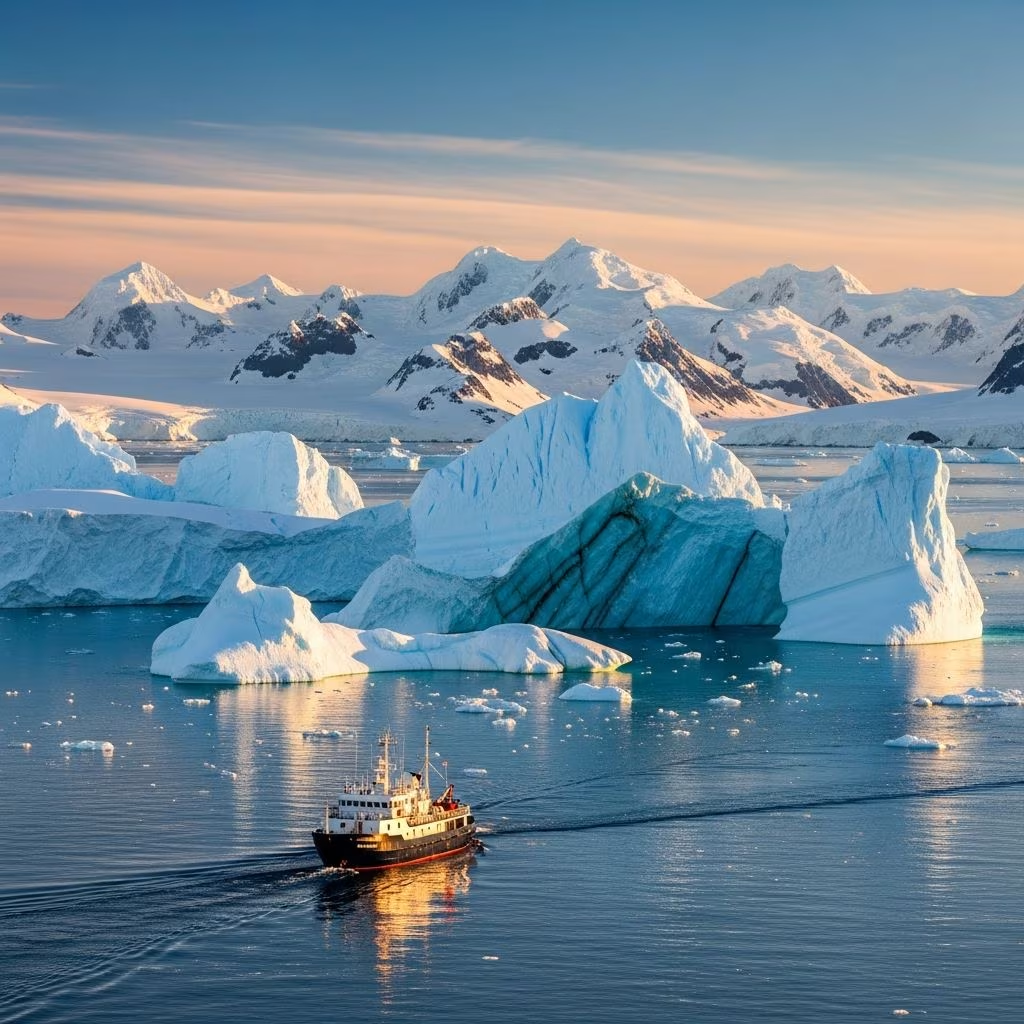
Days three through six constitute the expedition’s experiential heart, consisting of intensive cruising and shore-based exploration throughout the Antarctic Peninsula region and South Shetland Islands. During this phase, vessels navigate ice-choked fjords, circumnavigate colossal icebergs, and conduct daily excursions to landing sites selected based on real-time ice and weather assessments.
Antarctic fauna represent perhaps the most compelling reason travelers undertake polar journeys. The continent hosts multiple penguin species, each displaying distinctive behaviors and characteristics. Chinstrap penguins, identifiable by their thin black line running beneath their chins, navigate ice floes with surprising agility. Gentoo penguins, the fastest underwater swimmers among penguin varieties, demonstrate remarkable hunting prowess. Macaroni penguins, adorned with distinctive yellow crest feathers, create elaborate social hierarchies within their rookeries. Adélie penguins, named after Adélie Land, exhibit curious but wary temperaments around human observers.
Expedition teams conduct carefully controlled Zodiac approaches to penguin colonies, maintaining respectful distances while allowing wildlife observation and photography. Experienced polar guides possess intimate knowledge of penguin behavior patterns, identifying optimal viewing times and locations. Witnessing thousands of penguins engaged in grooming, feeding, and nesting behaviors provides profound insights into Antarctic’s intricate ecological systems.
Beyond penguin encounters, Antarctic expeditions frequently provide opportunities to observe larger marine creatures. Humpback whales migrate through Antarctic waters during specific seasons, displaying characteristic breaching behaviors and distinctive feeding patterns. Various seal species inhabit ice floes and coastal areas, ranging from the playful fur seals to the formidable leopard seals, apex predators adapted for hunting penguins and fish. Zodiac drivers, attuned to marine activity patterns, strategically navigate toward animal sightings, creating intimate encounters between humans and creatures rarely observed from close proximity.
Antarctica’s physical geography captivates visitors equally to its fauna. Monumental glaciers calve icebergs in constantly shifting variations, from warehouse-sized chunks to multi-story formations featuring ethereal blue coloration resulting from compressed ice density. The Lemaire Channel stands as a particularly celebrated passage, flanked by dramatic mountain peaks and featuring exceptionally scenic ice formations. Zodiac excursions navigate among icebergs, positioning travelers for optimal photography while maintaining safe distances from unstable ice structures.
Antarctic exploration encompasses not merely natural wonders but also compelling human narratives. Port Lockroy, accessible during many expeditions, presents a fascinating historical window into twentieth-century polar research. Established as a secret British military installation during World War II, this remote outpost now functions as a museum and operating post office, permitting travelers to mail postcards from one of Earth’s most isolated locations. The juxtaposition of ordinary communication infrastructure (a postal system) with an extraordinary setting (Antarctic Peninsula) creates memorable symbolic experiences.
Expedition vessels carry knowledgeable historians and scientists who contextualize these sites, explaining the logistical challenges, geopolitical significance, and scientific achievements associated with Antarctic exploration. Evening lectures supplement daily experiences, deepening understanding of polar ecosystems, climate systems, and ongoing environmental research conducted across the continent.
While shore-based activities consume the primary focus, the expedition ship itself serves as an essential component of the experience. Modern polar vessels combine robust ice-capable construction with passenger comfort, featuring observation lounges with panoramic windows, dining facilities offering nutritious cuisine, and cabin accommodations ranging from basic to premium configurations.
Expedition schedules typically organize morning and evening Zodiac explorations, with afternoon periods reserved for rest, onboard lectures, or flexible scheduling accommodating weather and ice conditions. This dual-excursion structure maximizes wildlife observation opportunities, as many Antarctic creatures display heightened activity during early morning and late afternoon periods. Between excursions, travelers decompress in ship lounges, process photographs, exchange experiences with fellow passengers, and attend educational presentations.
Contrary to assumptions about extreme environments necessitating austere conditions, modern Antarctic expedition vessels provide surprisingly comfortable accommodations and substantial meals. Professional chefs prepare varied cuisine accommodating dietary preferences and restrictions, utilizing fresh provisions loaded in Punta Arenas before departure. Substantial breakfasts fuel morning activities, packed lunches support extended Zodiac excursions, and evening dinners provide social opportunities for passengers to share daily experiences.
Antarctic conditions remain inherently unpredictable, making rigid itineraries unsuitable for polar exploration. Expedition leaders possess authority to modify routes, reschedule excursions, and adjust timing based on evolving meteorological and ice conditions. This adaptive approach occasionally disappoints travelers anticipating predetermined experiences, but fundamentally ensures safety while optimizing genuine exploration opportunities.
Paradoxically, unexpected weather events frequently generate the expedition’s most memorable moments. Sudden wind changes revealing previously obscured glaciers, unanticipated wildlife aggregations, or dramatic lighting conditions transforming icebergs into crystalline sculptures often provide more profound experiences than scripted itineraries could deliver.
Antarctic expeditions require moderate physical fitness rather than elite conditioning. Zodiac boarding involves stepping across small gaps between vessels, and some shore landings necessitate walking across uneven ice or rocky terrain. Travelers should possess reasonable cardiovascular endurance and joint flexibility, though expedition staff provide assistance for individuals with mobility limitations.
The extreme cold demands appropriate clothing, with modern expeditions providing guidance on layering strategies and equipment specifications. Contrary to common misconceptions, quality insulated clothing maintains comfort even in temperatures reaching minus twenty Celsius, though mental preparation for prolonged cold exposure benefits most travelers.
Antarctic’s brief austral summer, spanning November through February, provides optimal exploration conditions with extended daylight hours and slightly moderated temperatures. This seasonal window accommodates maximum iceberg presence while minimizing severe weather disruptions.
Pricing ranges substantially depending on vessel category, cabin configuration, and included amenities, typically spanning from fifteen thousand to forty thousand USD per person. Premium vessels with enhanced naturalist programs and superior accommodations command premium pricing.
The Drake Passage crossing historically created significant seasickness challenges. Modern air-cruise combinations eliminating this transit substantially reduce motion sickness occurrences, though onboard stabilization systems and preventive medications further mitigate concerns.
Antarctic expeditions welcome participants regardless of prior polar experience. Comprehensive briefings, experienced expedition staff, and established safety protocols ensure suitable experiences for first-time polar travelers.
Contemporary Antarctic tourism operates within strict environmental frameworks established by international agreements. Expedition operators adhere to visitor protocols limiting shore landing sizes, maintaining prescribed distances from wildlife, and preventing contamination of pristine ecosystems. Travelers participate in these conservation efforts, contributing to polar environmental protection while experiencing its wonders.
Eight-day Antarctic expeditions transcend conventional vacation parameters, often producing lasting personal transformation. Exposure to extreme environments, engagement with remarkable wildlife, and immersion in unspoiled wilderness frequently generate profound shifts in environmental consciousness and life perspectives. Travelers return home with expanded understanding of Earth’s remaining wild places and deepened commitment to their preservation.
