

 Travel Essentials
 Travel Essentials

Discover an immersive eight-day journey through Tuscany combining Renaissance art, ancient architecture, and authentic regional experiences.
 Travel Essentials
Tuscany stands as one of Europe’s most captivating destinations, offering travelers a profound connection to centuries of artistic achievement, architectural innovation, and regional heritage. An eight-day journey through this Italian region provides the ideal timeframe to move beyond surface-level sightseeing and develop a genuine understanding of the forces that shaped Western culture. Rather than rushing through popular attractions, this extended itinerary allows visitors to participate in immersive experiences that reveal how local traditions continue to thrive in contemporary Tuscany.
The region’s appeal extends far beyond its famous landmarks. Tuscany represents a living museum where Renaissance principles of beauty and proportion remain embedded in urban design, where culinary techniques passed down through generations continue to define regional identity, and where skilled artisans maintain craft traditions spanning centuries. This journey moves progressively from the complexity of Florence’s urban landscape through smaller medieval settlements toward the wine regions that define Tuscany’s modern cultural economy.
The progression from Florence through Siena toward the southern Tuscan hill towns creates a natural narrative arc. Florence serves as the intellectual and artistic foundation, where understanding the city’s role in Renaissance development becomes essential context for appreciating smaller towns encountered later. The journey then expands outward geographically while narrowing in scale, moving toward intimate medieval communities where architectural patterns and urban planning reflect different historical periods and social structures.
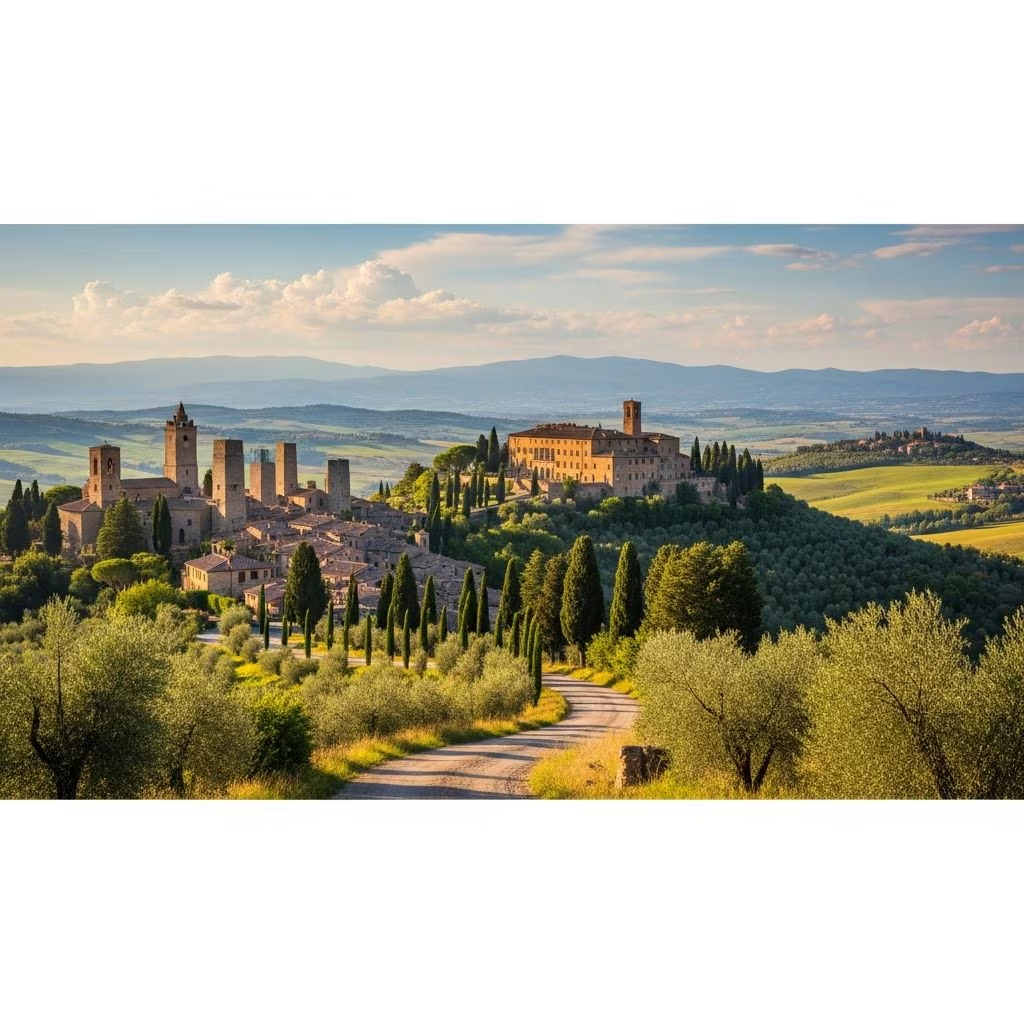
This routing decision offers practical advantages beyond mere aesthetics. Rather than attempting to cover maximum ground through daily relocations, the itinerary includes extended stays in strategic locations, allowing travelers to understand how daily life functions in destinations rather than simply consuming visual experiences. The gradual southward movement also positions travelers to experience landscape transformations, from the dense urban fabric of a major city through the organized countryside of the Chianti wine region toward the distinctive clay hills of the Val d’Orcia.
Florence demands more than a cursory visit. The opening days establish foundational knowledge about Renaissance principles, artistic movements, and architectural developments that recur throughout the journey. Rather than following a typical tourist route constrained by time limitations, dedicated time permits exploration of less-crowded museums, observation of how local residents navigate the city, and understanding of how historical preservation coexists with contemporary urban functions.
A guided exploration of Florence’s historic center provides structured understanding of how civic spaces were intentionally designed to reinforce social hierarchies, spiritual authority, and commercial power. Walking through major squares and past significant monuments, visitors begin recognizing recurring architectural elements and compositional principles. The cathedral complex—comprising the dome, bell tower, and baptistery—exemplifies Renaissance achievement in engineering and aesthetics, while surrounding structures demonstrate how religious institutions accumulated resources and cultural influence.
Beyond famous monuments, Florence’s secondary sites often reveal more intimate aspects of daily life during the Renaissance. Smaller chapels, neighborhood workshops, and merchant residences indicate how artistic patronage extended through multiple social strata, not exclusively concentrated in grand public commissions. This broader perspective enriches subsequent encounters with art and architecture, as visitors develop frameworks for understanding stylistic choices and cultural values reflected in visual forms.
The movement from Florence toward secondary destinations involves traversing landscapes that have inspired artists for generations. Rather than treating transportation as an obstacle to tolerate, this portion of the journey offers opportunities to observe how terrain, settlement patterns, and land use evolved across different historical periods. The Tuscan countryside displays distinctive character in each region, from the rolling hills and wine estates of Chianti through the dramatically eroded clay formations of the southern valleys.
This transition section includes meaningful stops that interrupt what might otherwise be a long drive. Small medieval villages positioned strategically along historic routes retain characteristics from their origins as fortified settlements, market towns, or monastic communities. Brief visits to these settlements provide contrast with larger cities while demonstrating how similar architectural and planning principles were adapted to different scales and geographic contexts.
Siena represents a distinct historical period and urban vision compared to Florence. While Florence emphasizes Republican civic structures and Renaissance innovations, Siena displays characteristics of medieval urban development, where defensive considerations, religious authority, and merchant power created different spatial arrangements. The famous central plaza functions not merely as a landmark but as evidence of how civic leaders strategically created spaces for public gathering, commercial activity, and ceremonial display.
The cathedral illustrates Siena’s particular artistic trajectory, distinct from Florence’s aesthetic. Understanding these regional variations deepens appreciation for how Italian cities developed competitive artistic traditions, with local patrons commissioning works that reflected both genuine aesthetic vision and civic pride. The marble patterns, sculptural programs, and decorative elements convey messages about the city’s economic power and cultural ambitions.
Extending beyond Siena’s urban core to encounter smaller medieval settlements reveals how architectural and planning principles operated across settlements of different scales. These villages frequently occupy hilltop locations chosen for defensive advantages, with building orientation and street patterns designed around visibility and fortification concerns. Later Renaissance interventions in some communities created tension between medieval military logic and Renaissance ideals of geometric harmony and visual perspective.
Tuscan culture cannot be separated from its culinary traditions and agricultural systems. The region’s food reflects available ingredients, historical trade patterns, social structures, and preservation techniques developed across centuries. Participating in cooking classes or dining experiences organized around seasonal ingredients and traditional preparations connects food to landscape, history, and contemporary community practices.
The relationship between wine production and landscape transformation warrants attention. Vineyards covering Tuscan hillsides represent deliberate land use choices extending back to Roman times, with different grape varieties and production methods emerging through regional experimentation. Wine tastings accompanied by knowledge about terroir, production philosophy, and family histories transform consumption from mere tasting into understanding of how human choices and natural conditions interact to create distinctive products.
Agricultural diversity extends beyond viticulture. Olive oil production, grain cultivation, and livestock raising have shaped settlement patterns, architectural forms, and resource distribution. Contemporary agritourism enterprises frequently combine accommodation with culinary experiences, allowing visitors to participate in harvests, processing, or meal preparation while learning directly from producers invested in maintaining traditional practices.
Tuscany maintains active communities of artisans working in traditions with centuries of continuity. Jewelry-making, textile production, ceramic creation, and woodworking persist not as museum exhibits but as active economic activities. Opportunities to observe craftspeople at work or participate in workshops provide insight into how technical knowledge transmits across generations and how contemporary practitioners balance tradition with innovation.
These encounters with skilled makers reveal the complexity involved in producing items that appear simple but require extensive training and refined judgment. A jewelry workshop demonstrates not just technique but aesthetic principles, material knowledge, and problem-solving approaches developed through years of practice. Such experiences often prove more memorable than consuming finished products in retail contexts, as visitors develop appreciation for the decisions and labor involved in creation.
Successful travel through Tuscany requires attention to transportation logistics, accommodation coordination, and booking strategic experiences in advance. Multiple transportation options exist for different travel philosophies. Visitors prioritizing spontaneity and exploration beyond main routes benefit from vehicle rental, accepting responsibility for navigating unfamiliar roads but gaining flexibility in timing and destination selection. Those preferring predetermined routes and reduced driving stress can utilize regional buses, though this approach requires advance planning to coordinate schedules with other activities.
Transportation Considerations:
Accommodation selection significantly influences travel experience. Historic properties within medieval town centers immerse visitors in local atmosphere but may involve challenging parking and narrow pedestrian access. Countryside estates provide peaceful settings and often include dining facilities but reduce proximity to urban attractions. Strategic positioning of overnight locations around the itinerary determines daily activity scope without excessive driving.
Tuscany experiences significant seasonal variations affecting both practical travel conditions and visual atmosphere. Spring and autumn offer moderate temperatures and fewer visitors compared to peak summer months, though certain regional events occur during specific seasons. The famous Palio horse races in Siena attract massive crowds but create unforgettable atmospheric experiences. Harvest seasons in wine regions align visits with active production, though accommodation may be more challenging to secure during peak tourist periods.
Q: Is eight days sufficient for a meaningful Tuscany experience?
A: Eight days permits development of genuine connections with places and communities, moving beyond superficial sightseeing. This duration balances depth of experience with practical travel constraints, allowing extended stays in strategic locations rather than constant relocation.
Q: Should I rent a vehicle for this itinerary?
A: Vehicle rental offers flexibility for visiting smaller settlements and taking scenic routes, though driving on Italian roads requires comfort with European traffic conventions. Public transportation adequately connects primary destinations if preferred.
Q: What time of year offers the best experience?
A: April through May and September through October provide moderate temperatures, fewer crowds than summer, and excellent weather for walking and exploration. These shoulder seasons offer optimal balance between comfort and accessibility.
Q: How much advance booking is necessary?
A: Major attractions and dining experiences benefit from advance reservations, particularly during peak seasons. Specialized experiences like cooking classes or artisanal workshops require scheduling weeks ahead.
Q: Can this itinerary be completed without extensive Italian language ability?
A: English-language tourism infrastructure in primary destinations supports visitors with limited Italian proficiency, though basic phrases enhance interactions and demonstrate cultural respect.
The distinction between tourism and genuine travel becomes apparent through this itinerary’s approach to cultural engagement. Rather than collecting photographic evidence of famous landmarks, structured experiences with local specialists—whether art historians, chefs, winemakers, or craftspeople—provide frameworks for understanding how cultural practices function within contemporary communities.
Expert-guided experiences reveal dimensions invisible to independent exploration. Walking through Florence Cathedral’s upper reaches with architectural knowledge transforms the experience from visual appreciation to structural understanding. Cooking classes with traditional practitioners connect recipes to seasonal availability, economic history, and family memory. Wine tastings with producers elucidate decisions about production methodology, market positioning, and regional identity.
This eight-day journey demonstrates how extended travel permits psychological transition from external observation toward internal engagement. Initial days devoted to primary attractions establish baseline knowledge. Subsequent days in smaller communities and specialized experiences deepen understanding and reveal complexities that superficial visits overlook. Departing Tuscany, travelers possess not simply memories of beautiful places but frameworks for understanding how artistic achievement, practical necessity, environmental conditions, and human creativity intersect to create distinctive cultural expressions.
