

 Travel Essentials
 Travel Essentials

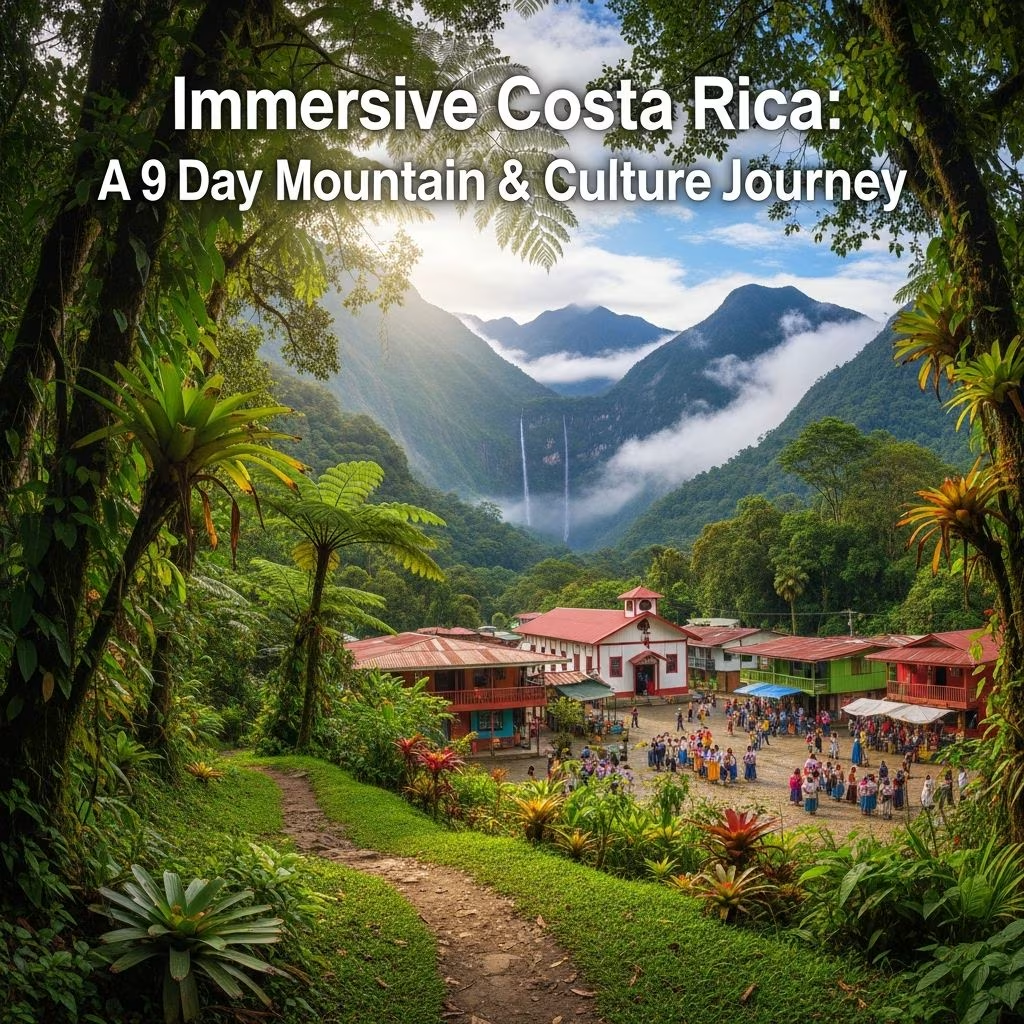
A comprehensive 9-day Costa Rica itinerary focusing on mountain regions, authentic cultural experiences, and natural wonders beyond coastal tourism.
 Travel Essentials
Costa Rica has long captivated travelers with its pristine beaches and tropical climate, yet the country’s true treasures often lie beyond the coastal resorts. A carefully planned nine-day expedition through the nation’s interior reveals a landscape transformed by elevation, weather patterns, and centuries of human settlement. This journey prioritizes authentic engagement with local communities, exploration of biodiverse ecosystems, and hands-on participation in the activities that define rural Costa Rican life.
The topography of Costa Rica dramatically shifts as you move inland from the coasts. The Central Valley, nestled at approximately 3,800 feet elevation, creates a temperate climate that contrasts sharply with the humid lowlands. Moving further into the mountains, cloud forests emerge—unique ecosystems where constant moisture and cooler temperatures foster extraordinary biodiversity. According to the World Wildlife Fund, cloud forests represent only 3% of tropical forest area globally yet harbor nearly 10% of all terrestrial species. Understanding these environmental variations helps travelers appreciate why each region supports distinct wildlife populations and offers different experiential opportunities.
The transition from dry season to wet season profoundly affects travel planning and activity availability. The dry season, running from December through April, provides optimal conditions for mountain hikes and outdoor activities. However, the green season from May through November transforms the landscape into lush vegetation corridors, offering equally compelling though sometimes challenging travel experiences.
Beginning in San José establishes geographic orientation and allows for acclimatization before ascending into cooler elevations. The capital city, often underestimated by travelers focused solely on natural attractions, offers architectural heritage and culinary sophistication. The National Museum of Costa Rica, housed in a former military barracks, provides historical context for understanding the nation’s peaceful political trajectory and indigenous heritage.
The drive from San José toward the highland regions takes travelers through transforming landscapes. Passing through agricultural zones reveals the economic foundation of rural Costa Rica—pineapple plantations, banana farms, and increasingly, sustainable cacao cultivation. This journey toward the mountains introduces the concept of elevational gradients and their ecological significance.
One defining characteristic of inland Costa Rica is the concentration of agricultural heritage and artisanal production centered in specific regions. The highland communities have maintained traditional practices across generations, creating opportunities for visitors to participate in rather than merely observe agricultural processes.
Coffee cultivation represents perhaps the most celebrated agricultural heritage in Costa Rica. The nation produces approximately 3 million bags of coffee annually, with higher-altitude farms yielding beans with distinctive flavor profiles. Visiting working coffee estates allows visitors to understand the complete production cycle—from shade-grown cultivation practices to fermentation and roasting techniques. Participating in selective harvesting, even briefly, conveys the physical demands and seasonal rhythms governing this agricultural sector.
Artisanal craft traditions, particularly in oxcart painting and decorative ceramics, represent another avenue for cultural engagement. These crafts, rooted in colonial-era traditions, continue through family workshops where masters teach apprentices. Hands-on workshops allow visitors to create functional artwork while supporting artisans who maintain these heritage skills.
The mid-elevation forests supporting diverse mammal, bird, and amphibian populations constitute the heart of Costa Rica’s biodiversity. Cloud forest reserves protect ecosystems characterized by constant moisture, low temperatures, and minimal seasonal variation. These forests filter moisture from passing clouds, creating unique hydrological conditions supporting plant species found nowhere else on Earth.
Professional naturalist guides elevate wildlife observation from casual sightseeing to structured environmental education. Ornithology-focused morning walks, timed to coincide with peak bird activity at dawn, yield observations of resplendent quetzals, three-wattled bellbirds, and hundreds of smaller species. Mammal viewing requires patience and luck—sloths, coatis, porcupines, and various monkey species inhabit the canopy and mid-story levels, yet their cryptic behavior demands trained observation skills.
The regeneration of secondary forest in abandoned agricultural lands demonstrates the ecological resilience of tropical ecosystems. Areas cleared decades ago have reforested naturally, though with different species composition compared to primary forest. This recovery process offers insights into forest succession and the capacity of degraded landscapes to restore ecological function.
Water features dominate the scenic landscape and provide both recreational and scientific interest. Waterfalls cascading through cloud forest canopies create microenvironments supporting specialized plant and animal communities. The mist zones around major falls maintain humidity levels supporting ferns, bromeliads, and mosses during drier periods.
Geothermal activity in volcanic regions creates natural hot springs, where mineral-rich water emerges at elevated temperatures. These thermal features, located particularly near Arenal Volcano, provide both relaxation opportunities and geological education regarding plate tectonics and volcanic processes.
Wetland systems, particularly those in lowland regions accessible from mountain bases, represent biodiversity hotspots supporting water birds, caimans, and specialized plant communities adapted to seasonal flooding. Navigating these systems by boat allows observation of wildlife in their natural habitat while minimizing disturbance.
Authentic cultural immersion extends beyond scenic observation to direct interaction with communities that have inhabited these regions for generations. Family-operated farms welcome visitors to participate in daily activities—hand-feeding livestock, observing traditional food preparation, and learning about multi-generational land management practices.
Costa Rican cuisine reflects both indigenous traditions and Spanish colonial influences, adapted to available local ingredients. Traditional dishes prepared from farm-to-table ingredients provide nutritional value alongside cultural significance. Meals prepared in family kitchens using wood-burning stoves or traditional clay ovens convey cooking methods that have remained relatively unchanged for decades.
Learning traditional food preparation techniques, from corn tortilla making to sugar production using colonial-era methods, connects visitors to historical practices and the physical labor underlying food systems. These hands-on experiences generate appreciation for subsistence agriculture and the knowledge required to produce nutritious meals from locally available resources.
A well-designed nine-day itinerary balances activity intensity, travel time, and acclimatization requirements. The following structure addresses these considerations:
Days One and Two: Arrival and Mountain Introduction
Arrival in San José and transfer to mountain accommodations allows adjustment to elevation and time zone changes. Initial activities prioritize moderate-intensity exploration and rest.
Days Three and Four: Cloud Forest Immersion
Extended time in cloud forest reserves permits multiple wildlife observation sessions and participation in artisanal workshops. Accommodation in lodge facilities within forest reserves maximizes accessibility to natural features and specializes guide availability.
Days Five and Six: Wetland and Agricultural Focus
Transition to lowland agricultural regions and wetland systems introduces different ecosystems and community engagement opportunities. Boat-based exploration of waterways provides wildlife viewing while minimizing physical exertion.
Days Seven, Eight, and Nine: Return and Reflection
The journey concludes with travel back toward San José, incorporating scenic viewpoints and final community interactions. The return journey provides opportunity for reflection and consolidation of experiences accumulated throughout the expedition.
Lodging choices significantly influence the quality of travel experiences and environmental impact. Facilities operating within or adjacent to protected areas often implement sustainability practices including renewable energy, water conservation, and waste management protocols. Smaller, locally-owned accommodations typically employ community members and direct revenues toward local economies more effectively than large international hotel chains.
Mountain lodges situated within private nature reserves provide direct access to forests without requiring travel time, maximizing productive hours for wildlife observation and activity participation. The trade-off involves more rustic conditions and limited amenities compared to larger commercial facilities.
Ground transportation between locations requires 2-4 hour driving periods, typically scheduled during morning or late afternoon hours. Travel timing accommodates wildlife activity patterns and avoids midday heat. Road conditions range from well-maintained highways to unpaved mountain roads requiring high-clearance vehicles.
Private vehicle transportation with bilingual guides provides flexibility for unscheduled stops and customized experiences compared to group tour buses. However, this option involves higher costs than shared transportation alternatives.
Wildlife observation walks vary in difficulty from leisurely 1-2 hour nature strolls to strenuous 4-5 hour hikes traversing steep terrain. Forest trails demand careful footing, particularly during wet season when conditions become slippery. Participants should maintain reasonable cardiovascular fitness and come prepared with appropriate footwear.
Other activities including coffee harvesting, agricultural participation, and cooking classes involve standing, bending, and repetitive motions. While generally accessible to individuals with varying fitness levels, these activities require awareness of personal physical limitations.
December through April offers dry conditions, clear skies, and optimal visibility for scenic photography. Temperatures in mountain regions remain cool, typically ranging from 50-70 degrees Fahrenheit, requiring light layers and rain jackets.
May through November brings afternoon rain showers, but also dramatically increased vegetation and animal activity. Green season travel offers lower costs and fewer tourists, creating more intimate community interactions.
Responsible wildlife tourism requires guides trained in animal behavior and conservation ethics. Observation distances should be maintained to avoid stressing animals or altering natural behaviors. Photography practices should prioritize animal welfare over obtaining dramatic images.
Many animals in Costa Rica remain threatened by habitat loss and illegal trade. Tourist revenues supporting conservation efforts and community livelihoods provide economic incentives for habitat protection and anti-poaching enforcement.
United States and most international citizens require valid passports but do not need visas for tourist visits to Costa Rica lasting up to 90 days. Travel insurance covering medical evacuation proves prudent given remote locations. Vaccinations for routine diseases and malaria prevention in lowland regions warrant consultation with travel health professionals.
Cellular service becomes limited or unavailable in remote forest regions. Internet connectivity varies significantly between locations. Travelers should adjust expectations regarding constant digital connectivity and embrace periods of reduced electronic communication.
What is the best time to visit for wildlife observation?
Early morning hours during dry season (December-April) offer optimal conditions. However, green season (May-November) brings increased animal activity despite rainy afternoons.
Do I need specialized hiking experience?
Most cloud forest walks accommodate individuals with moderate fitness levels. Guides adjust pace and distance based on group capabilities.
What should I bring for packing?
Waterproof layers, sturdy hiking boots, binoculars, insect repellent, and sun protection constitute essential items. Pack light, as luggage space in mountain lodges remains limited.
How much Spanish language ability is required?
English-speaking guides manage most activities. Basic Spanish phrases enhance interactions with community members, though not required.
What is the approximate cost range?
Nine-day trips with accommodations, meals, and activities typically cost $2,500-$5,000 per person, varying based on lodging selections and group size.
