

 Travel Essentials
 Travel Essentials

Explore unique winter sports from snow polo to shovel racing. Learn about creative cold-weather activities that push boundaries.
 Travel Essentials
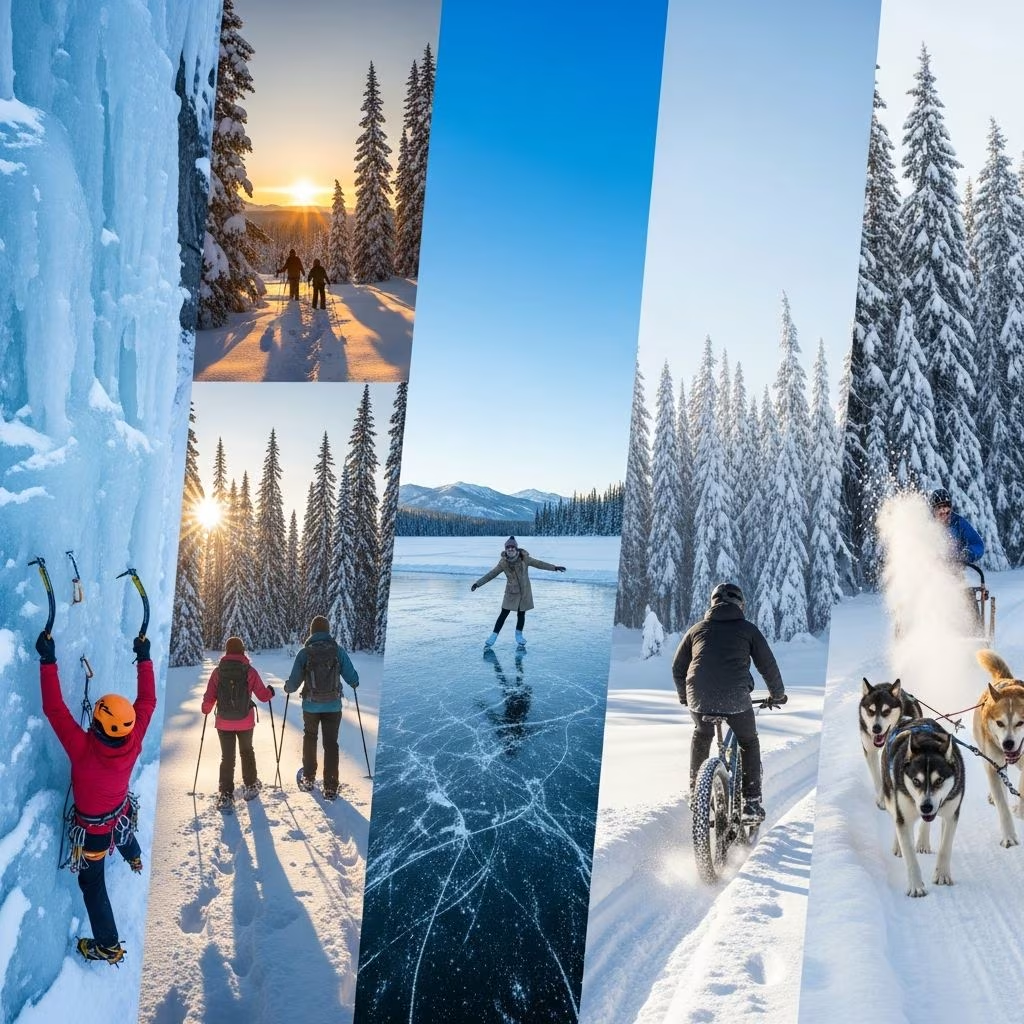
When temperatures drop and snow blankets the landscape, most enthusiasts default to familiar pursuits like downhill skiing or snowboarding. However, a growing community of adventurers and athletes has embraced far more imaginative approaches to winter recreation. These alternative sports reimagine traditional warm-weather activities within frozen environments or invent entirely new disciplines. Whether combining equestrian skill with alpine conditions or transforming everyday objects into competition equipment, these unconventional winter pursuits demonstrate that cold-weather fun extends well beyond groomed slopes.
One of the most distinctive categories of winter athletics involves horses navigating snowy terrain. These sports blend horsemanship with winter conditions, creating unique challenges that traditional riders rarely encounter.
Alpine polo represents a sophisticated adaptation of the classic equestrian sport. The inaugural snow polo tournament took place on a frozen lake in St. Moritz during 1985 and has evolved into an annual gathering of elite players and spectators. Unlike traditional polo played on grass, this winter variant introduces additional complexities. Horses require specialized footwear to maintain traction on icy surfaces, while players must navigate wind resistance and deep powder. The sport maintains polo’s fundamental structure—teams attempting to propel a ball through goal posts—but the environmental obstacles create substantially different tactical considerations. Powder accumulation can obscure the playing surface, and temperature extremes demand enhanced physical conditioning from both equine and human participants.
This ancient Nordic practice transforms cross-country skiing into a high-speed towing event. Athletes strap on skis while remaining connected to horses, dogs, ponies, or snowmobiles that propel them across frozen terrain. The sport originated in Norway and Sweden, where such techniques emerged from practical transportation needs during harsh winters. Modern skijoring competitions vary considerably—some events occur on flat oval tracks, others navigate obstacle courses, and precision-based variants test technical control rather than pure speed. The discipline demands exceptional balance and quick reflexes, as skiers must anticipate the direction changes initiated by their animal partners. Despite its dramatic appeal, skijoring appeared as an Olympic demonstration sport only once, in 1928.
Winter’s frozen landscape has become a venue for team-based games that emphasize strategy, coordination, and competitive intensity.
This Japanese-origin sport transforms casual snowball fights into structured athletic competitions with defined rules and objectives. Teams comprising up to seven players face off during three-minute matches, each armed with precisely 90 snowballs. Victory conditions mirror dodgeball mechanics—completely eliminating the opposing team through direct hits—or capturing the adversary’s flag. The sport requires accuracy, strategic positioning, and rapid snowball construction between rounds. Yukigassen has developed international followings, with dedicated players training year-round for competitive tournaments.
Several unconventional sports harness gravity and downhill momentum in unexpected ways, transforming ordinary objects or everyday experiences into competitive pursuits.
This distinctly American creation emerged from improvisation and playful experimentation. Participants compete by sledding downhill while seated on modified snow shovels, using hand-held steering mechanisms to navigate courses. The sport gained sufficient recognition to appear at the 1997 Winter X Games before organizers discontinued it following a participant injury. Today, the World Championship Shovel Races continue annually at Angel Fire Resort in northern New Mexico, typically scheduled for January or February. Competitors achieve remarkable speeds on these unconventional sleds, with races combining elements of technical skill and daring.
This innovative discipline uses kayaks on snow rather than water. Athletes wax kayaks similarly to skis and launch from elevated slopes, using paddles for directional control. The concept originated in Austria, where local kayakers organized the first official race in 2002. The sport has expanded considerably, now featuring world championship events held on dedicated courses. Some competitors enhance their runs by incorporating parachutes, which catch air and add vertical lift to their descents. Snow kayaking demonstrates how creative adaptation of familiar equipment can generate entirely new sports.
Wind energy has become central to several contemporary winter sports, particularly through the application of large controllable kites. These disciplines emphasize the interaction between weather conditions and athletic performance.
Snowkiting evolved from kiteboarding, applying the same principle of kite-powered movement to snowy environments instead of water surfaces. Athletes wear specialized snow gear rather than wetsuits and utilize large controllable kites to propel themselves across open terrain, performing aerial tricks and maneuvers. The sport has gained substantial global popularity, with the Red Bull Ragnarok representing the premier annual competition. Held in Hardangervidda, Norway, this event draws approximately 350 competitors who navigate a fixed course while managing their kites amid challenging wind conditions. Snowkiting requires no proximity to mountains, making it accessible to winter sports enthusiasts in flat, windy regions.
Some unconventional winter disciplines emphasize artistic expression and choreographed movement, blending athletic achievement with performance aesthetics.
This sport combines freestyle skiing with dance elements, featuring athletes performing predetermined routines while descending snowy slopes. Competitors execute jumps, twists, flips, and even moonwalking movements, sometimes wearing elaborate costumes with puffy sleeves. Ski ballet appeared in Olympic programming during 1988 and 1992 but generated limited sustained interest. The discipline requires extraordinary coordination and spatial awareness, as performers maintain choreographic precision while navigating variable snow conditions and gravitational forces.
Beyond conventional ice hockey and figure skating, frozen water surfaces support several distinctive athletic pursuits.
This uniquely Canadian tradition enables sailors to continue pursuing their sport throughout winter months. Participants attach metal skate blades to small boats, allowing vessels to glide across large frozen lakes powered by wind. The activity demands considerable nautical skill and understanding of ice conditions, as operators must navigate both wind patterns and variable ice stability. Ice sailing remains relatively niche outside Canada but represents a creative solution for extending maritime sports into winter seasons.
Several sports emphasize competitive speed or endurance within winter-specific environments.
Snow gauntlet running and similar events combine obstacle course elements with winter-specific challenges. These competitions integrate rope climbs, snow tunnels, icy water immersion, and varied terrain navigation. The Quebec Winter Carnival hosts such events, while organizations like Tough Mudder incorporate winter variants into their annual programming. These competitions challenge participants’ physical conditioning, mental resilience, and adaptability to extreme conditions.
| Sport | Origin Region | Primary Equipment | Participant Count | Skill Level |
|---|---|---|---|---|
| Snow Polo | Switzerland (1985) | Horses, mallets, ball | 8 per team | Advanced |
| Yukigassen | Japan | Snowballs | 3-7 per team | Intermediate |
| Skijøring | Norway/Sweden | Skis, harness, equine | Individual | Advanced |
| Snowkiting | Global Evolution | Kite, skis/board | Individual | Advanced |
| Shovel Racing | United States | Modified shovel | Individual | Intermediate |
| Ski Ballet | Alpine Regions | Skis, course | Individual | Advanced |
These unconventional winter sports vary significantly in their accessibility and required prerequisites. Snow polo demands equestrian expertise, substantial financial investment, and access to trained horses and suitable terrain. Conversely, yukigassen requires only snow, basic coordination, and willingness to participate in organized competition. Snowkiting necessitates windy open areas but no mountainous terrain. Shovel racing needs only gentle slopes and basic sledding equipment. Most sports accommodate various skill levels through competitive tiers or recreational variants, allowing enthusiasts to participate regardless of expertise.
Unconventional winter sports present distinct safety challenges requiring proper preparation. Skijoring involves speeds exceeding typical skiing conditions and reduced control, demanding experienced participants and appropriate protective equipment. Snow polo exposes horses to unfamiliar icy conditions and specialized equipment needs. Snowkiting requires understanding of kite control and awareness of wind patterns to prevent accidents. Shovel racing initially proved sufficiently dangerous that the Winter X Games discontinued it after injuries occurred. Participants should invest in proper instruction, appropriate protective gear, and realistic assessment of personal skill levels before attempting these activities.
Yukigassen and shovel racing on gentle slopes represent relatively accessible options. Both allow novices to participate with minimal prior experience, though proper instruction and protective equipment remain essential.
Snow polo demands substantial investment including trained horses, specialized winter footwear for equines, mallets, playing gear, and access to suitable venues. This sport remains primarily accessible to affluent participants.
Yes, snowkiting’s primary requirements are open snowy terrain and consistent wind conditions. Flat prairies and tundra regions often provide ideal snowkiting environments.
Ski ballet appeared in the 1988 and 1992 Winter Olympics but no longer features in contemporary Games programming due to limited spectator appeal and difficulty in judging performances fairly.
Snowkiting instruction is available through international organizations and Red Bull-sponsored events. Skijoring clinics operate in Nordic regions. Shovel racing events at Angel Fire Resort provide competitive opportunities and informal learning environments.
Unconventional winter sports reflect humanity’s creative adaptation to environmental constraints and desire for novel experiences. Rather than accepting winter’s limitations, participants throughout Europe, North America, and Asia have developed sports that embrace frozen landscapes and cold-weather conditions. These activities attract athletes seeking distinction from mainstream sports, environmental enthusiasts who celebrate winter’s unique characteristics, and adventurers pursuing new challenges. As climate conditions shift and global communication facilitates idea exchange, winter sports continue evolving, with new disciplines emerging regularly and traditional activities gaining international recognition.
The world of winter athletics extends far beyond skiing and snowboarding. From snow polo’s elegant equestrian traditions to shovel racing’s playful improvisation, unconventional winter sports demonstrate boundless creativity in adapting human activities to frozen environments. These disciplines require varying skill levels, equipment investments, and physical conditioning, making them accessible to diverse participant populations. Whether experienced athletes seeking novel challenges or recreational enthusiasts exploring winter recreation beyond traditional slopes, these sports offer opportunities for adventure, competition, and appreciation of winter’s distinctive characteristics. As winter sports culture continues evolving, these unconventional pursuits remain at the forefront of innovation and experimentation.
