

 Travel Essentials
 Travel Essentials

Explore South Melbourne's rich heritage through an immersive walking journey discovering historic landmarks, vibrant markets, and centuries-old cultural sites.
 Travel Essentials
South Melbourne stands as one of Melbourne’s most captivating neighborhoods for pedestrians seeking authentic urban experiences. This inner-city district, located just south of the central business district, offers visitors and locals alike an opportunity to experience the layered history, architectural diversity, and cultural richness that defines contemporary Australian cities. Unlike more heavily trafficked tourist destinations, South Melbourne rewards those willing to slow their pace and explore its tree-lined streets, heritage buildings, and intimate alleyways at a leisurely tempo.
The neighborhood’s appeal lies not in singular iconic monuments, but rather in the accumulation of discoveries that emerge during an unhurried exploration. From Victorian-era commercial buildings to contemporary cultural institutions, from bustling weekend markets to serene religious spaces, South Melbourne presents a complex portrait of urban development spanning more than a century and a half.
A comprehensive walking tour through South Melbourne typically covers approximately 3.5 kilometers and can be completed comfortably in one hour, though most visitors benefit from allocating additional time to pause, observe, and absorb the neighborhood’s character. The terrain throughout South Melbourne remains notably flat, making it accessible for walkers of varying fitness levels and ages. This accessibility factor has contributed to South Melbourne’s popularity among residents seeking regular pedestrian routes and casual visitors exploring the city.
The optimal experience involves beginning your journey in the morning when local cafés are actively serving, allowing you to establish an energetic rhythm before midday heat becomes a consideration. Comfortable walking shoes prove essential, as the route incorporates both conventional sidewalks and historic cobblestone passages that characterize Melbourne’s oldest neighborhoods. South Melbourne benefits from comprehensive public transportation connections, with tram lines providing convenient access points for journey commencement and conclusion.
Commencing your exploration along Coventry Street introduces visitors to South Melbourne’s commercial heart. This thoroughfare evolved during the late nineteenth century as a primary shopping and business avenue, and contemporary visitors can still observe architectural remnants from this prosperous era. The street maintains its retail character while incorporating modern businesses alongside heritage shopfronts, creating a temporal layering that characterizes many inner-Melbourne neighborhoods.
Progressing along Coventry Street naturally leads toward South Melbourne Market, an institution that has served the local community for generations. This market represents more than a commercial venue; it embodies the neighborhood’s social fabric and serves as a gathering point for residents conducting weekly shopping rituals. The market’s rhythmic opening schedule—operating Wednesdays through Saturdays and Sundays—structures the neighborhood’s temporal experience, with weekday quietude contrasting sharply with weekend vibrancy.
Moving south along Cecil Street transitions the walking experience from commercial to predominantly residential character. This avenue showcases the architectural diversity characteristic of inner-Melbourne’s housing stock, with Victorian terrace houses interspersed with early twentieth-century apartment buildings and more recent residential developments. Observant walkers notice subtle details—ornamental ironwork on balconies, decorative tile patterns adorning facades, timber window joinery reflecting different construction periods—that collectively narrate the neighborhood’s evolution.
Particular attention rewards examination of individual properties that exemplify specific architectural movements. The domed tower structure at Cecil Street number 155 represents a distinctive architectural feature uncommon in typical residential streetscapes, suggesting its original construction as a more significant institutional or commercial building subsequently converted to residential use. Similarly, faded vintage signage at the Cecil and Bank Street intersection preserves visual records of South Melbourne’s commercial past, with painted advertisements and shop names often remaining legible beneath decades of weathering.
Bank Street terminates at one of South Melbourne’s most visually striking structures: the South Melbourne Town Hall. This edifice exemplifies late nineteenth-century civic architecture when prosperous municipalities invested substantially in monumental public buildings reflecting community aspirations and economic success. The town hall’s wedding-cake aesthetic—characterized by ascending tiers of increasingly ornate decoration culminating in a prominent central feature—represented architectural preferences of the Victorian era emphasizing verticality, ornamentation, and visual dominance within streetscapes.
The building’s siting within the neighborhood landscape reflects deliberate urban planning decisions prioritizing civic monuments as neighborhood anchors. The surrounding streetscape was intentionally designed to provide approaches to the town hall that emphasized its architectural significance, with the structure visible from multiple approach vectors.
Proceeding south along Park Street reveals an example of nineteenth-century industrial architecture adapted for contemporary cultural use. The former Patross Knitting Mills building, distinguished by its notably Venetian-Gothic architectural language, transitioned from manufacturing facility to cultural institution housing the Australian Tapestry Workshop. This adaptive reuse exemplifies urban regeneration strategies increasingly common in established neighborhoods where industrial economic functions have relocated to peripheral industrial zones.
The building’s architectural vocabulary—Gothic arches, decorative stonework, distinctive facade treatment—suggests ambitious design aspirations for what was fundamentally an industrial facility. The architect’s choice to employ Gothic Revival styling for a manufacturing building indicates aspirational pretensions, with factory owners seeking to elevate their commercial enterprises through distinctive architectural expression rather than austere functional minimalism.
Church Street continues the southward trajectory through increasingly residential areas where individual house characteristics become more pronounced and varied. Specific properties gain local recognition through distinctive features or cultural associations. The diminutive residence at Church Street number 8 achieves local notability through proportions and styling evoking storybook imagery, creating an affectionate nickname comparing its aesthetic to illustrations from children’s literature. Such informal naming practices reflect how residents and regular visitors assign personal cultural meanings to neighborhood physical features.
These smaller scale residential properties contrast sharply with the monumental civic and industrial buildings encountered earlier in the walking route, demonstrating the neighborhood’s architectural diversity and multiple economic classes that historically inhabited the district simultaneously.
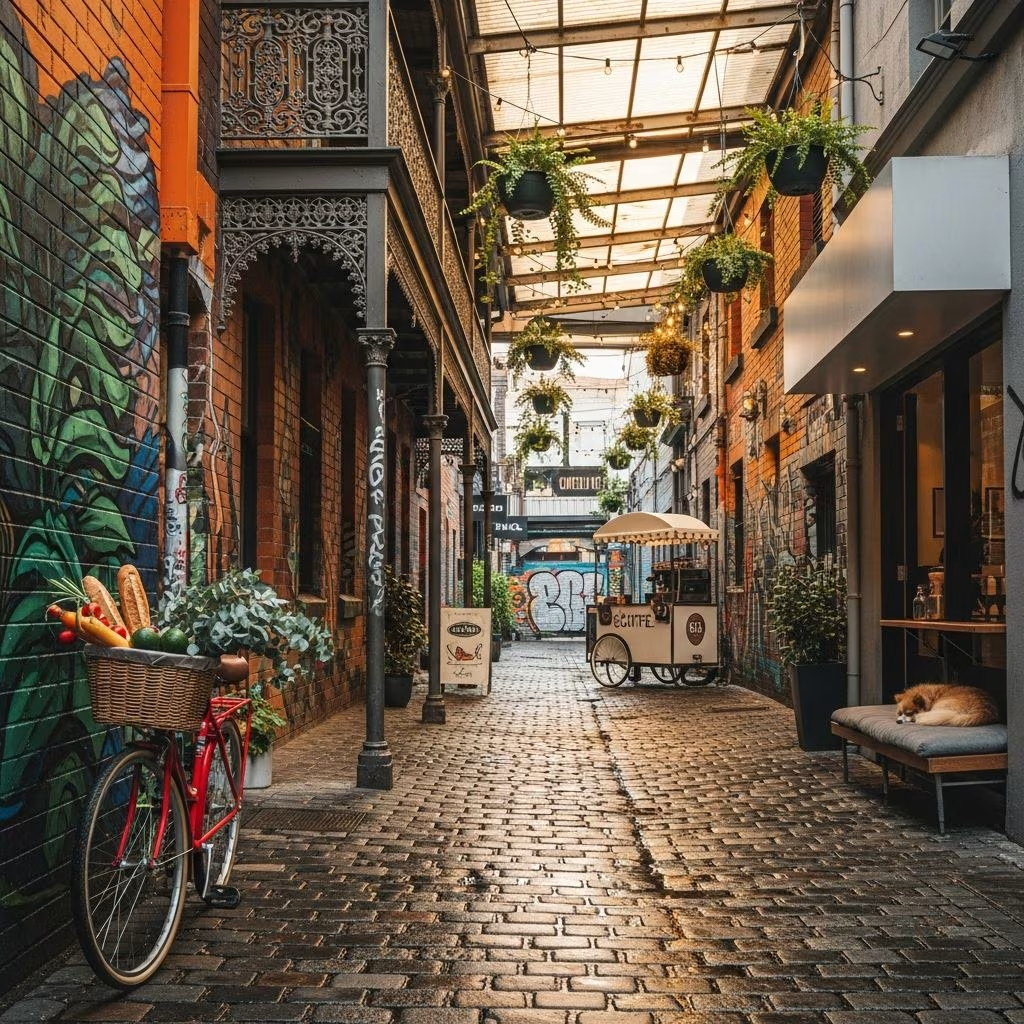
The walk’s culmination involves discovering one of Melbourne’s most surprising and significant cultural heritage sites. Following an unobtrusive cobblestone alleyway emerging after Cobden Street reveals the See Yup Temple, an exquisitely carved Chinese temple functioning continuously since 1866. This location represents an extraordinary concentration of cultural, historical, and architectural significance within a structure that remains largely unknown to casual visitors unfamiliar with Melbourne’s hidden religious and cultural spaces.
The temple’s construction during the nineteenth century reflects the substantial Chinese population that immigrated to Australia during gold rush periods and subsequently established permanent communities in major cities. The temple’s survival through subsequent demographic changes, urban development, and evolving neighborhood character testifies to both the community’s cultural commitment and the broader Australian society’s capacity for cultural pluralism, albeit imperfectly realized historically.
The temple’s architectural elaboration—featuring intricate carved stonework, distinctive roof treatment, decorative elements reflecting Chinese aesthetic traditions—contrasts dramatically with the understated Protestant institutional architecture encountered elsewhere in South Melbourne. The building’s positioning within a narrow alleyway, separated from primary streetscapes, reflects historical social geographies where culturally distinct communities inhabited marginal urban spaces.
Contemporary visitors encountering the temple’s elaborate carved facade and ornamental interior experience immediate sensory displacement from Melbourne’s broader urban landscape. The olfactory, visual, and spatial characteristics dramatically differ from preceding route sections, creating a climactic experiential punctuation to the walking journey.
| Consideration | Details |
|---|---|
| Route Duration | Approximately 1 hour walking, or 2-3 hours with stops |
| Distance Covered | Approximately 3.5 kilometers |
| Terrain Type | Flat streetscapes with historic cobblestones |
| Accessibility | Suitable for most fitness levels |
| Refreshment Options | South Melbourne Market, local cafés |
| Best Days | Wednesday-Sunday when market operates |
Physical preparation enhances the walking experience considerably. Comfortable footwear accommodating both contemporary pavements and historic cobblestones prevents discomfort and allows extended exploration. Sun protection—including sunscreen, hat, and water bottle—addresses Melbourne’s variable climate, particularly during warmer months when afternoon heat intensifies.
South Melbourne’s neighborhood character shifts substantially across seasons and times of day. Weekend mornings bring increased pedestrian activity as residents conduct market shopping, creating a vibrant, socially dense environment. Weekday afternoons, conversely, offer quieter exploration opportunities with fewer pedestrians competing for streetscape attention. Seasonal variations affect tree canopy density and light angles illuminating architectural facades, with autumn and spring generally offering optimal visual conditions for architectural photography and detailed observation.
South Melbourne functions as a node within Melbourne’s broader pedestrian infrastructure network. The neighborhood connects via tram routes to adjacent districts, enabling extended walking experiences incorporating multiple neighborhoods within single excursions. Walking routes through South Melbourne can be combined with explorations of adjacent Albert Park, providing access to lakeside pathways, formal gardens, and expanded heritage precincts.
The City of Port Phillip actively supports pedestrian exploration through comprehensive walking plan initiatives and designated trail infrastructure. This institutional commitment reflects growing recognition that walkable neighborhoods enhance quality of life, support local commerce, and foster community engagement. South Melbourne’s accessible design, convenient public transportation, diverse refreshment options, and abundance of seating accommodates both casual walkers and those requiring frequent rest intervals.
What is the best time of day to walk through South Melbourne? Early mornings offer pleasant temperatures and quieter conditions, while late afternoons provide dramatic lighting for architectural observation. Weekends bring increased pedestrian activity and open markets.
Are there restroom facilities available along the route? South Melbourne Market provides facilities during operating hours. Numerous cafés and shops throughout the neighborhood also accommodate visitor needs.
Can the route be modified for shorter timeframes? Yes, focusing on specific street sections (Coventry Street, Cecil Street, or the temple area) allows abbreviated experiences within 30-45 minute parameters.
Is the walking route suitable for children? Yes, flat terrain and multiple points of interest maintain younger pedestrians’ engagement. Market areas particularly appeal to children.
How does this route connect to other Melbourne walking experiences? Adjacent neighborhoods, tram connections, and interconnected pathways enable integration with broader urban exploration strategies.
