

 Travel Essentials
 Travel Essentials

Explore Transylvania’s abandoned castles, fortified villages, and industrial ruins—and the restoration projects bringing them back to life.
 Travel Essentials
Transylvania, a region in central Romania renowned for its dramatic landscapes and medieval heritage, harbors a collection of abandoned buildings that whisper tales of bygone eras. These forsaken structures, ranging from derelict castles to empty villages, offer intrepid explorers a glimpse into the area’s turbulent history marked by wars, migrations, and economic shifts. While popularized by vampire lore, the real allure lies in their architectural splendor and the ongoing efforts to revive them.
Many of Transylvania’s abandoned sites trace their origins to the Saxon settlers who arrived in the 12th century, fortifying villages against invasions. Over centuries, these communities thrived but faced decline during the 20th century due to communist-era policies, post-1989 emigration, and industrial collapse. Empty factories and homes dot the landscape, remnants of a time when populations dwindled rapidly.
For instance, rural villages saw residents leave for urban opportunities or abroad, leaving behind sturdy stone houses with ornate facades. In urban areas like Sibiu, medieval towers stand as silent guardians amid modern life, their isolation a stark contrast to bustling streets.
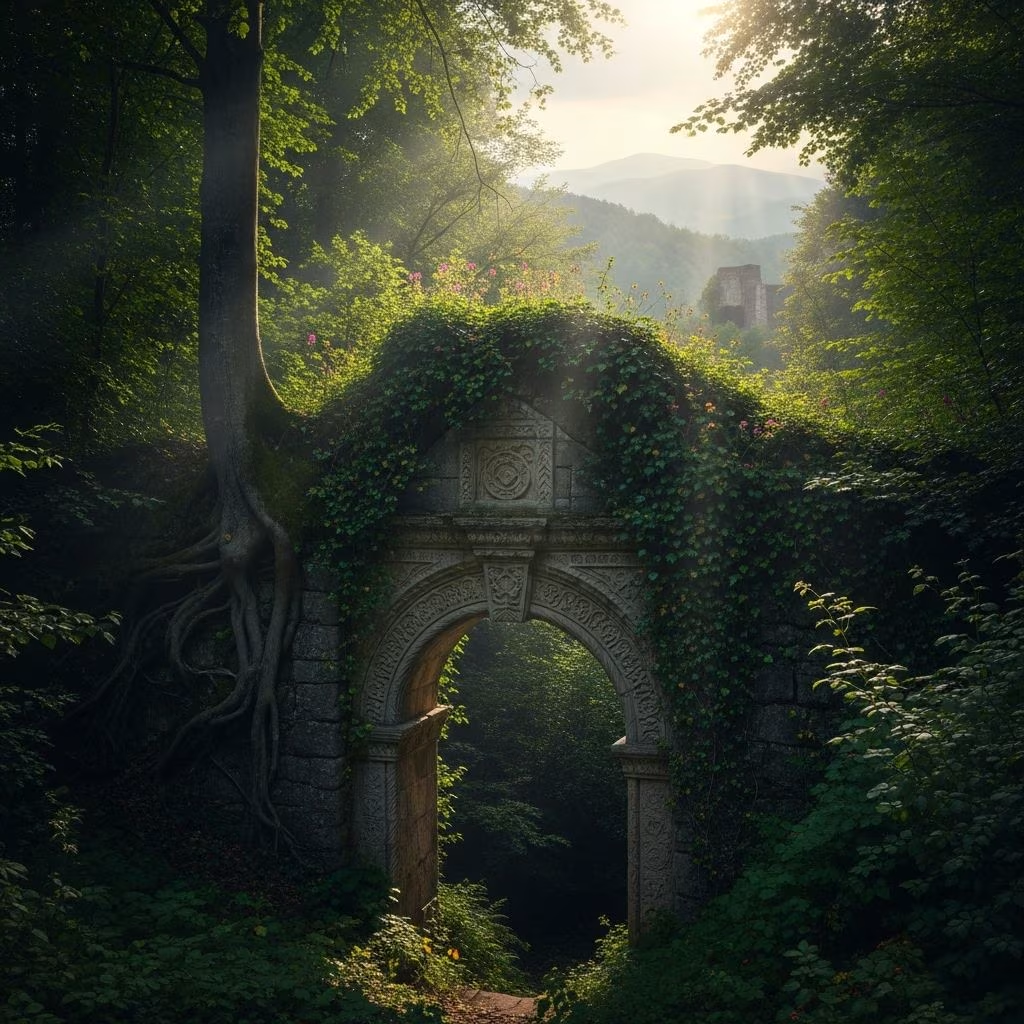
Transylvania boasts several striking abandoned castles that evoke Gothic fantasies. One prominent example is a hilltop fortress overlooking verdant valleys, its walls cracked by time yet imposing. These sites often feature hidden chambers and panoramic views, drawing photographers and historians.
Visitors report eerie atmospheres, with overgrown vines reclaiming stonework and wildlife nesting in turrets. Accessing these requires sturdy footwear and caution against unstable structures.
Scattered across Transylvania are fortified churches and villages, UNESCO-recognized for their unique church-citadel designs. Some hamlets stand nearly empty, their homes frozen in time with preserved interiors like wooden beams and frescoes. These sites highlight the Saxon influence, where communities built walls around churches for protection.
| Village Type | Key Features | Abandonment Cause | Visitor Appeal |
|---|---|---|---|
| Fortified Church Villages | Thick walls, bell towers | Population exodus post-1990 | Historical tours, photography |
| Rural Hamlets | Stone houses, barns | Economic migration | Peaceful hikes, authenticity |
| Industrial Outskirts | Factories, worker housing | Factory closures | Urban exploration vibes |
These villages provide a time capsule, with some houses still containing period furniture, offering profound insights into daily life centuries ago.
Hope flickers amid decay through restoration projects. In places like Criş village, family-led initiatives are transforming ancestral properties into boutique stays. The Bethlen Estates project, spearheaded by Gladys and Nikolaus Bethlen, revives a medieval castle and surrounding homes, blending heritage preservation with community support. Funds from tourism fund education and local jobs, proving sustainable models work.
Artists have repurposed abandoned factories into cultural hubs, fostering social experiments in forgotten spaces. Government and NGO efforts also stabilize key sites, preventing total loss.
Visiting abandoned sites demands preparation. Public transport is limited; renting a car is ideal for remote areas. Best seasons are spring and autumn to avoid summer crowds and winter ice.
Combine visits with nearby attractions like Bran Castle or Sighişoara’s medieval center for a fuller itinerary.
Beyond history, these sites fuel legends. Dracula associations amplify the thrill, though real history involves figures like Vlad the Impaler. Local folklore speaks of restless spirits in moonlit ruins, enhancing nighttime adventures for the brave.
Photographers capture decaying elegance, while filmmakers scout locations for atmospheric shots. The blend of melancholy and majesty creates unforgettable experiences.
Restoration battles weather, vandalism, and funding shortages. Emigration continues, with youth preferring cities over rural life. Climate change accelerates decay through erosion and floods. Yet, tourism’s rise offers salvation if managed sustainably.
Initiatives like Bethlen Estates demonstrate how private enterprise can lead, employing locals and training artisans in traditional crafts.
To visit responsibly, support ethical operators. Stay in restored guesthouses, hire local guides, and avoid littering. Digital mapping apps aid navigation without physical trails.
Future prospects include eco-lodges in revived villages, promoting low-impact stays amid nature.
Exercise caution: structures may be unstable. Go with groups, inform others of plans, and heed warning signs.
Primarily post-communist emigration and industrial decline, leading to depopulation.
Yes, in popular areas like Sibiu; for remote spots, join urban exploration groups or hire private guides.
No, for safety and legal reasons. Opt for nearby restored accommodations.
Projects create jobs, preserve culture, and boost economy through tourism.
Transylvania’s abandoned gems offer raw, unfiltered history before full commercialization. As restorations progress, these sites evolve from ruins to treasures. Plan your trip to witness the transformation firsthand, contributing to their legacy.
