

 Travel Essentials
 Travel Essentials

Explore Transylvania’s abandoned villages, Saxon heritage, and restored historic homes—where forgotten ruins reveal history, decline, and renewal.
 Travel Essentials
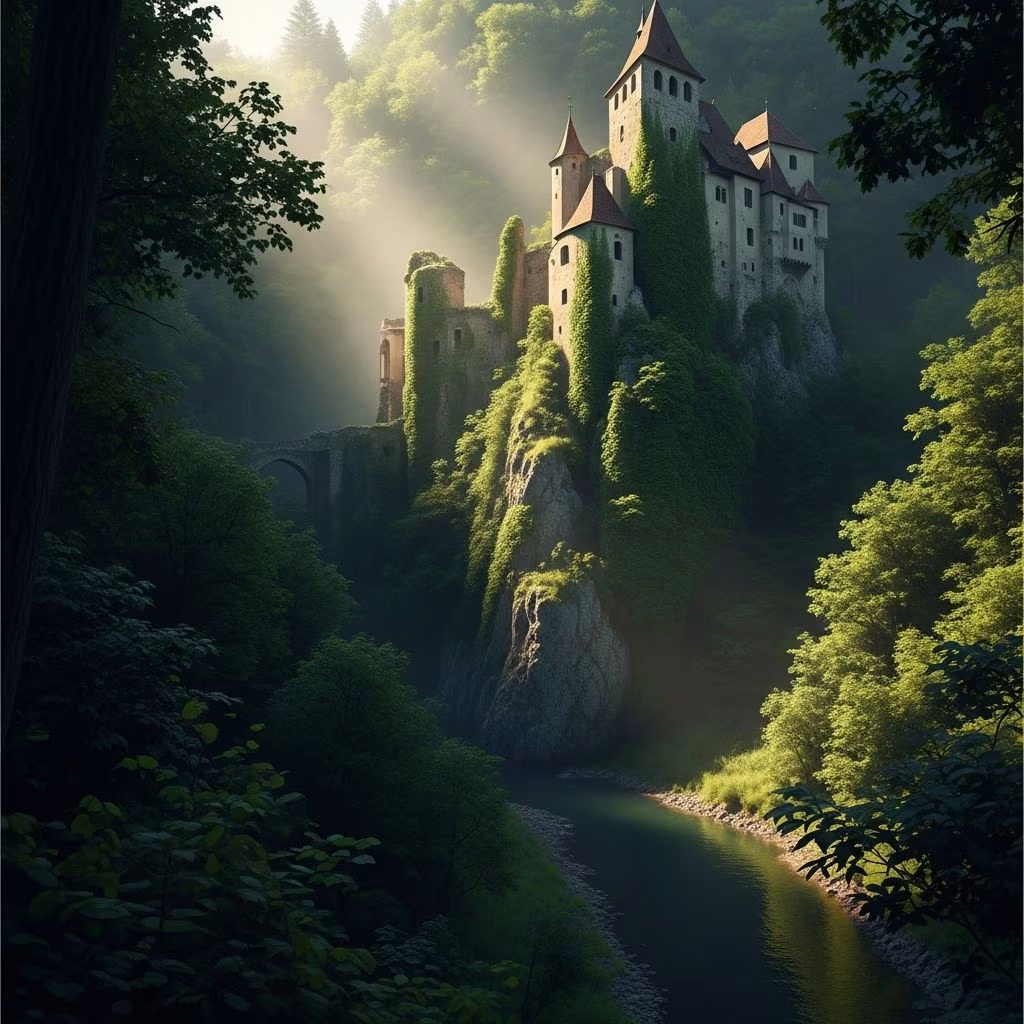
Transylvania, the rugged region in central Romania, captivates with its medieval fortresses, dense forests, and whispers of vampire lore. Yet beyond the crowded Dracula tours lies a quieter intrigue: a landscape dotted with abandoned buildings that tell tales of demographic shifts, economic hardship, and cultural evolution. These forsaken structures—from isolated farmhouses to entire ghost villages—offer a poignant glimpse into the area’s Saxon heritage and post-communist transformations. While some decay silently, others are being revived through innovative conservation projects, blending history with sustainable tourism.
Transylvania’s abandoned sites stem from centuries of migration and upheaval. Ethnic Germans, known as Saxons, settled here in the 12th century, constructing fortified churches and sturdy homes that defined rural life. After World War II, communist policies forced many to leave, and the 1990s saw mass emigration to Germany amid economic collapse. Villages emptied as young people sought opportunities abroad, leaving behind homes frozen in time.
Take the ghost village of Gherdeal, where nearly all residents departed, preserving a snapshot of Transylvanian village life with intact facades and overgrown paths. These sites highlight how rural depopulation has reshaped the region, turning vibrant communities into relics amid the Carpathian Mountains.
Adventurers drawn to urban exploration find Transylvania rich with photogenic ruins. Remote valleys hide crumbling manor houses, forgotten schools, and dilapidated mills, often accessible via winding dirt roads. One standout is the cluster of Saxon cottages in lesser-known hamlets, their thick stone walls defying time despite leaky roofs and shattered windows.
Explorers report intact interiors in some spots, like hay-strewn barns that appear merely paused rather than ruined, adding to the eerie realism.
Not all abandonment spells doom. In the village of Criş, the Bethlen Estates initiative exemplifies heritage revival. Led by Gladys and Nikolaus Bethlen, this family-driven project restores ancestral properties, including a caretaker’s house, a manor, and an old school. Starting in 2007, they’ve transformed ruins into luxury accommodations, employing locals and funding community programs.
These efforts channel tourism revenue into preservation, with restored homes featuring original facades paired with modern interiors crafted by local artisans. Guests enjoy private stays amid wild meadows, supporting education and jobs in a region starved of opportunities.
Transylvania safeguards its past beyond wild ruins. Cluj-Napoca’s National Ethnographic Park relocates and reassembles historic buildings from across the region. Founded in 1929, it houses structures dating to 1678, including homesteads, workshops, and churches, offering an immersive look at traditional life without venturing into decay.
Summer events here recreate village fairs, blending education with celebration. Such institutions underscore Romania’s commitment to Saxon legacy, contrasting the raw abandonment elsewhere.
Visiting these sites demands caution and ethics. Romania’s terrains are rugged—wear sturdy boots, carry maps, and inform someone of your plans. Respect private land; many ruins are on farms. Avoid trespassing signs, and never remove artifacts, as this harms preservation.
| Essential Gear | Why It Matters |
|---|---|
| Flashlight & First-Aid Kit | Dark interiors and remote locations pose risks. |
| Drone (with permit) | Capture aerial views ethically from above. |
| Weatherproof Clothing | Mountain weather shifts rapidly. |
| Local Guide App | Navigate off-grid areas safely. |
Combine visits with nearby attractions like fortified churches in Biertan or Sibiu’s old town for a fuller itinerary.
Transylvania’s abandonment reflects broader trends. Post-1989, over 90% of Saxons repatriated, hollowing villages. Today, EU mobility accelerates youth exodus, but initiatives like Bethlen Estates reverse this by creating jobs. Government programs also incentivize returns, blending tradition with modernity.
Responsible travel sustains these gems. Opt for low-impact stays in restored homes, minimizing environmental footprint. Support local crafts and farms, ensuring benefits stay in communities. This model proves abandonment can fuel regeneration, attracting eco-conscious travelers to Transylvania’s wild heart.
Yes, on public land, but private properties require permission. Always prioritize safety and leave no trace.
Mass Saxon emigration after communism, followed by economic migration.
Limited, but local operators in Cluj or Sibiu offer customized urban exploration trips.
Book via projects like Bethlen Estates for exclusive, authentic experiences.
Spring or autumn for mild weather and fewer crowds; summers host park events.
Climate change threatens these structures with erosion, while overtourism risks sensitive sites. Yet optimism prevails: EU funds bolster restorations, and digital mapping aids preservation. Transylvania’s forgotten gems could become models for global rural revival, marrying adventure with cultural stewardship.
(Word count: 1678)
