

 Travel Essentials
 Travel Essentials

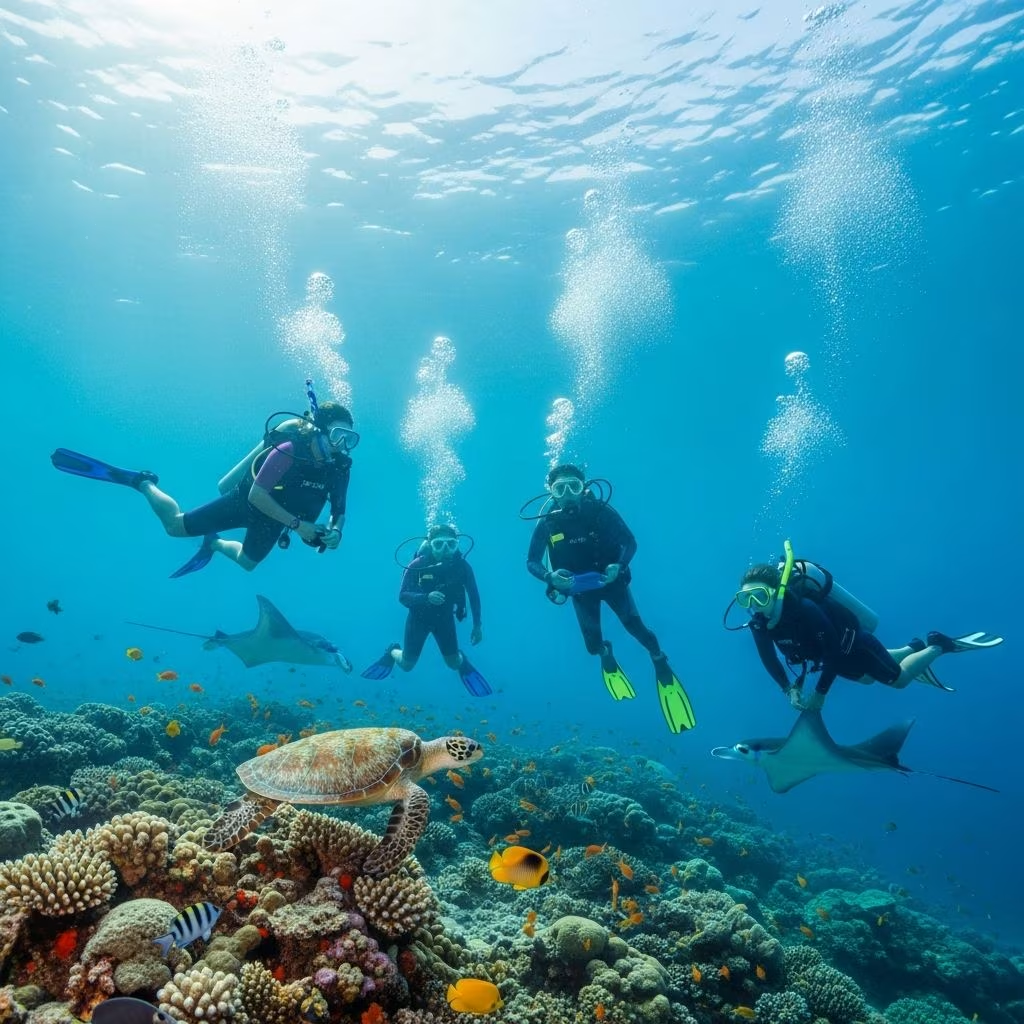
Explore the ABC Islands' premier diving spots, from Bonaire's shore dives to Curaçao's wrecks and Aruba's boat trips, ideal for all levels.
 Travel Essentials
The ABC Islands—Aruba, Bonaire, and Curaçao—stand out as premier scuba destinations in the southern Caribbean, boasting consistent warm waters around 85°F (29°C) and protection from hurricanes due to their location south of the storm belt. These Dutch territories offer diverse diving experiences, from shore entries to boat-accessed sites, catering to novices and seasoned divers alike.
Positioned off Venezuela’s coast, the ABCs combine arid landscapes above water with thriving marine ecosystems below. Visibility often exceeds 50-100 feet (15-30m), revealing healthy corals, sponges, and abundant fish life. Unlike hurricane-prone northern islands, these spots ensure reliable conditions year-round, with minimal seasonal disruptions.
Aruba’s diving emphasizes boat outings due to its rocky eastern and northern shores, where stronger currents challenge intermediates and experts. Leeward sites feature vibrant reefs with elkhorn coral and schools of tropical fish. Visibility shines at 50-100 feet, ideal for drift dives along the southern tip.
Key attractions include industrial-backdropped lagoons near San Nicolas, where divers enter shallows, snorkel through rock breaks, and explore healthy coral stands. Currents here require caution, often ending dives at adjacent beaches like Rogers Beach.
| Site | Depth | Highlights | Level |
|---|---|---|---|
| San Nicolas Lagoon | 20-60ft (6-18m) | Elkhorn, brain coral; tarpon | Intermediate |
| Southern Drifts | 30-80ft (9-24m) | Strong currents, fish schools | Advanced |
Resorts provide guided boat trips, making Aruba a balanced choice for diving paired with beaches and windsurfing.
Bonaire earns its title as the shore diving capital, with nearly 75% of its 85+ sites reachable from land—no boats needed. The entire coastline forms the Bonaire National Marine Park, protected since 1979, ensuring pristine reefs accessible 24/7, including night dives.
Beginners thrive here, with resorts offering unlimited shore access. Sites like Angel City feature double reefs, sandy bottoms teeming with stingrays, and calm entries suitable for all levels. Drive the main road to truck-accessible spots, tagging dives via park buoys.
Bonaire’s infrastructure supports self-guided exploration, though rentals and air fills are mandatory via tagged systems.
Curaçao delivers variety with shore and boat options island-wide. Sites span coral mesas, drop-offs, and wrecks, attracting all skill levels. Resorts like Curaçao Marriott offer on-site shore dives, PADI courses, and trips to beacons and producers.
Standouts include Double Reef’s shallow-to-deep gradients with crabs, puffers, and angelfish; and Mushroom Forest’s surreal coral formations near Playa Santa Cruz. The Superior Producer wreck buzzes with history and marine life, while Tugboat combines wreck, reef, and macro in one outing—perfect for photographers with its sponge-covered pilings and 45-degree slopes.
| Site | Access | Features | Marine Life |
|---|---|---|---|
| Double Reef | Shore/Boat | Reef mesa, sandy patches | Angelfish, puffers |
| Mushroom Forest | Boat | Mushroom corals | Wrasses, eagle rays |
| Tugboat | Boat | Wreck + reef + macro | Tube sponges, cup corals |
| Superior Producer | Shore | Intact wreck | Groupers, morays |
Coral spawning peaks seven days post-full moon in September/October, drawing unique sightings like creole wrasses and cornetfish.
Each island shines uniquely: Aruba for boat drifts and topside fun; Bonaire for unlimited shore freedom; Curaçao for mixed terrains.
| Aspect | Aruba | Bonaire | Curaçao |
|---|---|---|---|
| Shore Access | Limited | Excellent (75% sites) | Good (many sites) |
| Boat Dives | Primary | Optional | Balanced |
| Best For | Drifts, families | Shore enthusiasts | Diversity seekers |
| Visibility | 50-100ft | 100ft+ | 60-100ft |
Bonaire leads for pure shore diving, Curaçao for variety, Aruba for adventure combos.
Pack a reef-safe sunscreen, dive computer, and surface marker buoy. Obtain park tags ($25-45 annual) for air and site access. July offers calm seas, though trade winds persist.
Expect turtles, sharks, rays, and macro wonders. Healthy elkhorn, brain corals, and sea fans host hawkfish, frogfish, and barracuda. Night dives reveal octopuses and Spanish dancers.
Conservation efforts sustain biodiversity; avoid touching corals and follow no-take zones.
Yes, its calm shore sites like Angel City suit novices with easy entries and shallow depths.
Limited; most require boats due to terrain, but lagoons offer some access.
Superior Producer, a shore-accessible ship teeming with life.
Absolutely; warm waters and low hurricane risk make it reliable.
Easily via short flights or ferries for the ultimate ABC experience.
