

 Travel Essentials
 Travel Essentials

Explore Aboriginal Australia through authentic cultural journeys, from urban walks to remote art centers, guided by Indigenous voices and traditions.
 Travel Essentials
Australia’s Aboriginal peoples represent the world’s oldest living cultures, with knowledge systems and spiritual connections to the land spanning tens of thousands of years. For travelers seeking meaningful engagement beyond conventional sightseeing, experiencing the continent through Indigenous perspectives offers transformative opportunities to understand both the ancient wisdom and contemporary reality of Aboriginal Australia. This guide explores pathways to genuine cultural connection, ethical tourism practices, and the profound significance of learning from those who maintain unbroken traditions across this ancient continent.
Aboriginal tourism represents far more than commercial activity—it embodies the deliberate choice of Indigenous communities to share their heritage, knowledge systems, and contemporary lives with respectful visitors. When Aboriginal people guide tours, lead art classes, or share ceremonies, they become educators and cultural ambassadors, connecting travelers to landscapes, stories, and worldviews that predate European settlement by millennia.
The significance of visiting Aboriginal Australia lies not in viewing Aboriginal culture as historical artifact, but in recognizing it as a living, evolving reality. Aboriginal Australians navigate contemporary society while maintaining deep spiritual and practical connections to traditional knowledge. By engaging with Aboriginal guides and experiences, visitors gain insight into how Indigenous wisdom addresses modern challenges and enriches understanding of human relationship with environment.
Major Australian cities offer accessible starting points for cultural immersion without requiring extensive travel to remote areas. Urban Aboriginal experiences provide authentic engagement while acknowledging that Aboriginal people increasingly live in metropolitan centers.
Sydney presents layered opportunities for Aboriginal engagement. The Rocks area, where European settlement began, becomes a space of profound meaning when explored with Aboriginal guides who contextualize the landscape from Indigenous perspectives. These guided walks through historically significant urban terrain reveal how Aboriginal Sydney existed long before colonial architecture and how Aboriginal communities continue maintaining presence and cultural practice in the city.
The Burrawa Aboriginal Climb Experience offers distinctive perspective—literally and figuratively—on Aboriginal Sydney. Ascending Sydney Harbour Bridge with First Nations guides transforms a tourist activity into cultural education, as climbers learn about Aboriginal place names, the spiritual significance of the landscape, and Aboriginal presence throughout Sydney’s geography.
Melbourne’s award-winning Aboriginal Heritage Walk through the Botanic Gardens provides immersive experience in spaces with profound cultural significance. Aboriginal guides traverse the traditional camping and meeting grounds of the Kulin nation, explaining how the landscape functioned as social, ceremonial, and resource hub for thousands of years. This walk transforms manicured gardens into archaeological and spiritual testimony.
King’s Park (Karrgatup in the Noongar language) represents an oasis within Perth where Aboriginal cultural significance becomes visible despite surrounding urban development. Walking tours led by Noongar guides reveal how this green space maintained sacred and practical importance for Indigenous people across millennia, and how Aboriginal cultural practice continues there today.
Beyond cities, Australia’s diverse regions offer distinct Aboriginal cultural expressions tied to specific landscapes, languages, and traditions.
The Daintree Rainforest represents Earth’s oldest tropical rainforest, and the Kuku Yalanji Aboriginal people maintain unbroken cultural practice within this ancient ecosystem. Tours from Port Douglas and Cairns immerse visitors in Kuku Yalanji culture, with guides explaining bush medicine, food procurement, hunting techniques, and spiritual relationships with the rainforest environment. These experiences demonstrate how Aboriginal knowledge systems represent sophisticated ecological understanding developed over millennia of close environmental observation.
Western Australian tours incorporate bush walks, cave exploration, and practical demonstrations of traditional tools and techniques. The Ngilgi Cave represents sacred space within Aboriginal cosmology, and Aboriginal guides playing the didgeridoo within these caves connect visitors to sound, spirituality, and archaeological continuity. Spear and boomerang demonstrations illustrate practical technologies developed through generations of refinement.
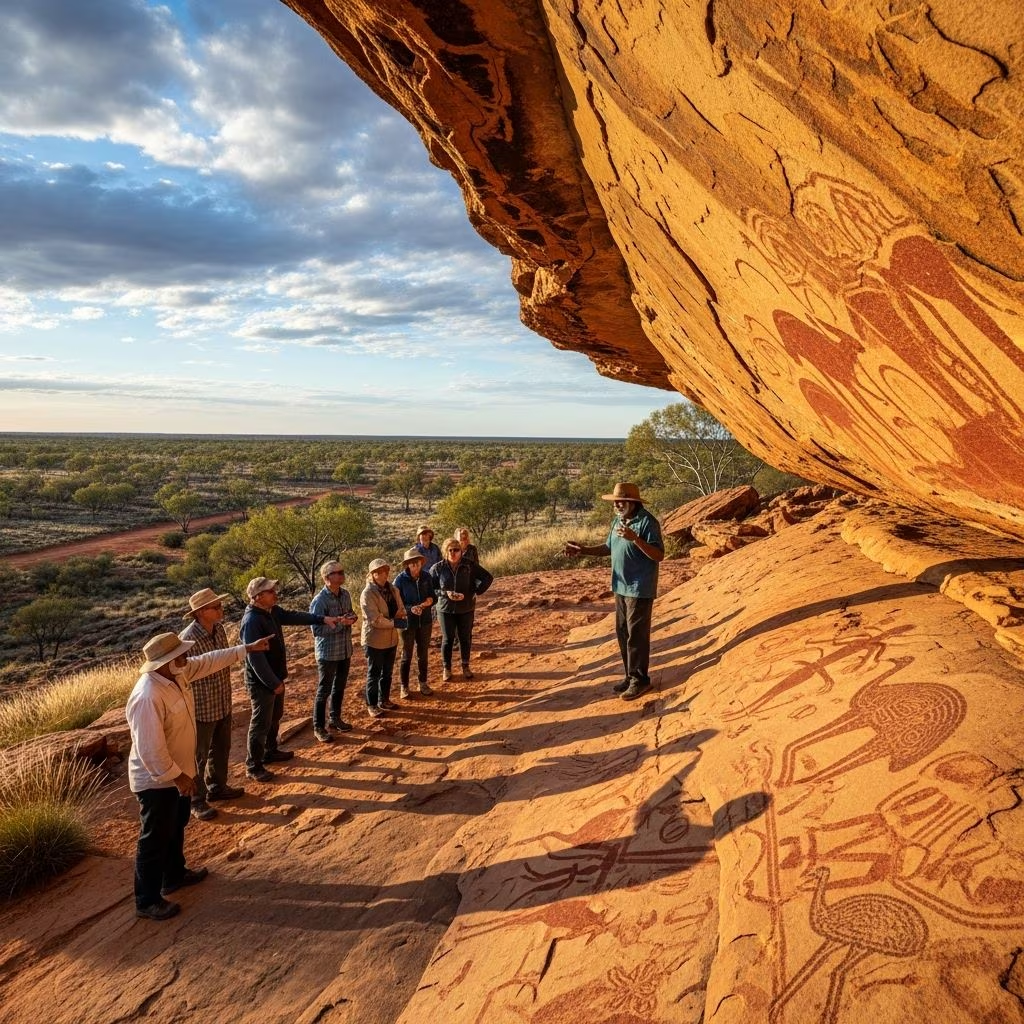
Aboriginal-guided 4WD adventures through remote Australian landscapes transform wilderness exploration into cultural education. Aboriginal guides narrate Creation stories connected to specific geological formations, waterholes, and rock features, explaining how the landscape functions as living library of spiritual knowledge and practical survival wisdom. These experiences reveal how Aboriginal people read the environment through multiple layers of meaning—geological, ecological, spiritual, and historical.
Aboriginal art represents one of humanity’s longest continuous artistic traditions, and engaging with contemporary Aboriginal artists and art centers provides direct connection to cultural creativity and economic self-determination.
Visiting remote Aboriginal art centers allows interaction with artists creating works that maintain traditional aesthetic and technical principles while engaging contemporary artistic questions. Aboriginal artists explain techniques, materials, symbolic systems, and stories embedded in visual work. Purchasing directly from artists provides economic benefit to communities and ensures ethical compensation for cultural knowledge sharing.
Some communities offer art workshops where visitors learn techniques under Aboriginal artist guidance—dot painting, boomerang decoration, bark painting, or basket weaving. These hands-on experiences develop appreciation for the technical skill, patience, and aesthetic sophistication required in Aboriginal artistic practice.
Aboriginal spirituality remains inseparable from landscape, art, and daily practice. Respectful engagement with ceremony and song requires understanding protocols and limitations around knowledge sharing.
Aboriginal guides explain the Dreaming—the spiritual framework explaining creation, law, and cultural identity—and songlines, the pathways of stories connecting landscape across vast distances. Understanding these concepts transforms how visitors perceive Australian geography; mountains, rivers, and rock formations become nodes in networks of sacred narrative and spiritual significance.
Some experiences include participation in corroboree or other ceremonial performances, though protocols vary between communities. Respectful visitors understand that certain knowledge remains restricted, specific ceremonies require initiation to witness, and photography or recording may be prohibited. Guides explain these boundaries, helping visitors appreciate that protective restrictions on knowledge sharing reflect legitimate cultural governance.
Aboriginal relationship with the Australian environment generated sophisticated knowledge systems for food procurement, medicine preparation, and sustainable resource management.
Culinary tourism increasingly includes Aboriginal guides explaining traditional food sources—bush tucker—and demonstrating food preparation. Visitors may taste native Australian foods and learn about nutritional sophistication of traditional diets, seasonal variation in food availability, and ecological knowledge required to identify edible plants and hunt game sustainably.
Bush medicine walks introduce visitors to medicinal plants, their preparation, and their therapeutic applications. These experiences reveal Aboriginal pharmaceutical knowledge developed through generations of observation and experimentation, often predating Western scientific understanding of plant chemistry.
Respectful engagement with Aboriginal culture requires visitors to understand ethical frameworks and community priorities.
Before traveling, research Aboriginal history of specific regions, learn basic language greetings where possible, and understand local protocols. Many communities provide visitor guidelines explaining respectful behavior and photography policies.
| Region | Key Experience Type | Cultural Focus |
|---|---|---|
| Sydney/Urban NSW | Urban walks, bridge climbs | Contemporary Aboriginal presence, colonial history |
| Melbourne/Victoria | Botanic garden heritage walks | Kulin nation history, landscape significance |
| Perth/Western Australia | Cave systems, bush walks | Noongar culture, tool technology |
| Far North Queensland | Rainforest immersion | Kuku Yalanji culture, ecological knowledge |
| Northern Territory | Outback safaris, art centers | Creation stories, songlines, remote communities |
Aboriginal experiences range from 90-minute urban walks to multi-day immersive programs. Consider your comfort level, physical capabilities, and genuine interest in cultural learning when selecting duration and type.
Photography policies vary significantly by location and community. Always ask guides before photographing people, ceremonies, or sacred sites. Many communities prohibit photography of certain activities or restrict image use. Respecting these boundaries demonstrates cultural respect and honors community governance of their own representation.
Book directly with Aboriginal-owned tour companies, purchase art from Aboriginal artists rather than retailers, and ask tour operators to explain how revenue is distributed. Certification programs increasingly identify genuinely Aboriginal-owned and operated tourism businesses.
Many Aboriginal experiences welcome families. However, some knowledge is age-restricted or requires specific maturity levels. Discuss children’s ages and interests when booking to ensure appropriate experience selection.
Urban Aboriginal walks often accommodate mobility limitations. Discuss specific physical needs when booking—many guides can modify experiences to ensure access while maintaining cultural authenticity.
Engaging with Aboriginal Australia through Indigenous perspectives transforms how visitors understand landscape, spirituality, human community, and sustainable living. Rather than consuming Aboriginal culture as historical curiosity, authentic experiences connect visitors to living traditions and contemporary Aboriginal voices. The warmth, humor, and generosity that Aboriginal guides bring to their storytelling creates genuine human connection transcending typical tourism dynamics.
Australia’s Aboriginal peoples maintain unbroken cultural practice across one of Earth’s most diverse continents. When visitors approach this encounter with genuine respect, cultural humility, and willingness to learn, they gain access to wisdom systems addressing fundamental human questions about belonging, responsibility, and relationship with the natural world. Aboriginal tourism, when conducted ethically and authentically, becomes mutual exchange—visitors deepen their understanding of human possibility while Aboriginal communities maintain cultural vitality and secure economic self-determination.
