

 Travel Essentials
 Travel Essentials

Explore England's finest accessible attractions featuring world-class facilities, inclusive design, and exceptional visitor experiences for travelers with disabilities.
 Travel Essentials
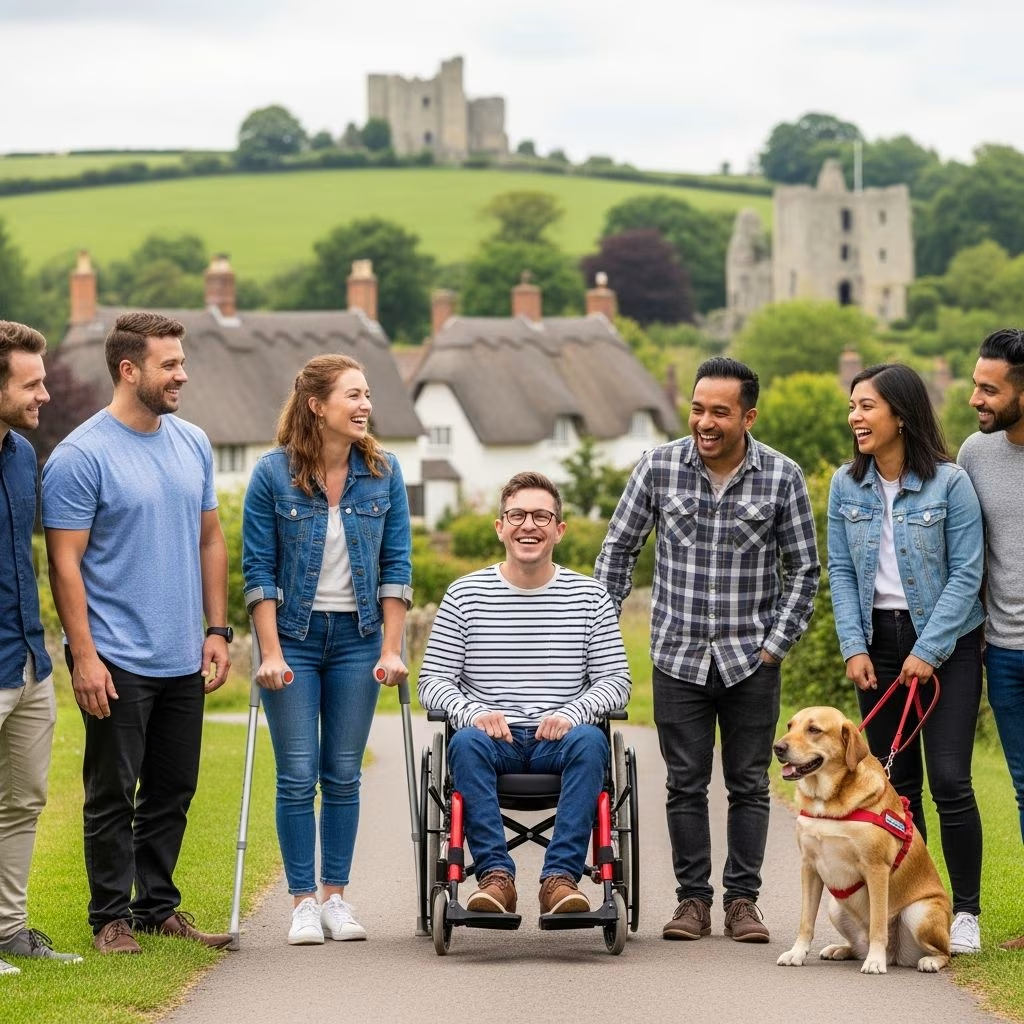
Traveling with mobility challenges or disabilities should never limit your ability to experience the natural beauty, cultural heritage, and vibrant attractions England has to offer. The country has made significant strides in recent years to ensure that world-class destinations remain accessible to everyone, regardless of physical ability or sensory requirements. This comprehensive guide highlights some of England’s finest locations that combine spectacular experiences with thoughtfully designed accessibility features.
Modern accessibility goes far beyond basic wheelchair ramps and accessible toilets. Today’s inclusive destinations recognize that visitors have diverse needs—from those requiring mobility assistance to individuals with sensory impairments, neurodivergent visitors, and families with young children. Progressive facilities now offer adapted transportation, tactile navigation systems, audio descriptions, hearing loops, and trained staff dedicated to ensuring every visitor feels welcome and supported.
The shift toward universal design has transformed how attractions operate, with many facilities receiving recognition from tourism bodies for their commitment to accessibility. This evolution reflects a broader understanding that accessible design benefits not just those with permanent disabilities, but also elderly visitors, parents with strollers, and anyone temporarily managing an injury.
One of England’s most remarkable achievements in accessible attraction design can be found in Cornwall, where a former industrial site has been transformed into a botanical paradise. This sprawling complex features enormous climate-controlled structures housing thousands of plant species from around the world, creating distinct ecosystems visitors can explore.
The facility demonstrates exceptional commitment to inclusivity through multiple thoughtful features. Manual and powered wheelchairs are available for visitors who need them, while complimentary admission for carers ensures family members and support people can accompany visitors without financial burden. The venue has received prestigious awards recognizing its inclusive tourism approach, implemented through careful route planning that accommodates various mobility levels.
While some pathways feature natural gradients, three distinct routes provide alternative paths ensuring all visitors can experience the major attractions. Visitors with hearing impairments benefit from hearing loop systems throughout the venue, while audio tours and Braille guidebooks serve those with visual impairments. One particularly celebrated feature—an elevated walkway through the tropical canopy—offers stunning perspectives of the botanical collections and remains fully accessible except for a single rope bridge section.
Facilities planning your visit can obtain advance access information, enabling you to prepare specifically for your needs and maximize your experience.
A magnificent 18th-century country estate in Worcestershire demonstrates how heritage properties can successfully blend historical preservation with contemporary accessibility standards. This National Trust property features grounds designed by England’s most celebrated landscape architect and represents a significant case study in retrofitting historic buildings for inclusive access.
Key accessibility features include:
The National Trust’s broader commitment to accessibility involves appointing specialists focused on equality and disability inclusion. These professionals work closely with disabled visitors and disability advocates to continuously improve access across properties, ensuring that architectural constraints never prevent meaningful engagement with England’s cultural heritage.
Newcastle’s science-focused attraction offers an exemplary model for educational facility design. The institution prioritizes accessibility throughout every exhibition and interactive space, making complex scientific concepts engaging for visitors with varying abilities.
The building features level flooring throughout most areas, with elevators providing access between levels. Designated spaces in the planetarium and theater accommodate wheelchair users and those requiring accessible seating, while the open layout prevents crowding and allows for comfortable navigation. Complimentary admission for carers removes financial barriers for visitors requiring support, while hearing loop systems assist those with auditory processing challenges.
Visitors with visual impairments benefit from printed guides and descriptive materials, creating a multi-sensory learning experience. The venue’s commitment extends beyond physical infrastructure to training staff in accessibility awareness and creating an atmosphere where all visitors feel genuinely welcomed.
England’s New Forest offers stunning natural landscapes that increasingly welcome visitors of all abilities. The Forestry Commission has invested substantially in accessibility infrastructure, recognizing that outdoor spaces should remain inclusive. Dedicated parking facilities positioned near major attractions prevent long distances requiring ambulation, while well-maintained restroom facilities serve visitors throughout the forest.
Nearby accommodations designed specifically for visitors with disabilities provide comfortable lodging options, completing the infrastructure needed for multi-day visits. Carefully developed trail networks feature surfaces suitable for wheelchairs and mobility scooters, enabling independent exploration of the forest’s natural beauty.
The Yorkshire Dales, renowned for dramatic moorland landscapes and picturesque valley scenery, might seem inaccessible to visitors with mobility limitations. However, an innovative program providing nearly twenty specifically designed walking routes demonstrates that spectacular natural scenery need not remain exclusively for vigorous hikers.
These carefully planned pathways enable wheelchair users to experience genuine countryside vistas without compromising on natural beauty or sense of accomplishment. The routes traverse varied terrain while maintaining manageable gradients, proving that thoughtful path design can reconcile conservation goals with accessibility objectives.
A major seaside resort has pioneered innovative beach access solutions transforming how people with mobility challenges experience coastal recreation. Specially adapted beach huts accommodate up to four wheelchair users simultaneously, with charging infrastructure for electric mobility devices ensuring visitors can extend their beach time without battery concerns.
Multi-terrain wheelchairs featuring balloon tires—specifically designed for sandy surfaces—enable beach exploration typically considered impossible for wheelchair users. Three seasonal cliff lifts provide panoramic viewing opportunities while remaining fully accessible, while a land train service suitable for wheelchair navigation offers an alternative for those preferring not to walk along promenades.
This comprehensive approach demonstrates that beach accessibility requires integrated solutions rather than isolated facilities—combining equipment provision, adapted structures, alternative transportation, and scenic viewpoints.
| Accessibility Feature | Purpose | Who Benefits |
|---|---|---|
| Hearing Loop Systems | Transmits audio directly to hearing aids | Those with auditory impairments |
| Audio Descriptions | Narrated explanations of visual content | Visitors with visual impairments |
| Braille Materials | Tactile text for independent reading | Blind and visually impaired visitors |
| Adapted Wheelchairs | Specialized equipment for specific terrain | Wheelchair users requiring terrain-specific access |
| Stairlifts | Mechanical devices enabling level access | Manual wheelchair users unable to navigate stairs |
| Hard-Surfaced Paths | Firm, level pathways suitable for mobility devices | Wheelchair and scooter users |
| Accessible Parking | Dedicated spaces positioned near entrances | Those with mobility limitations |
| Complimentary Carer Admission | Free entry for support persons | Visitors requiring assistance |
Successful accessible travel begins with thorough advance planning. Most major attractions now maintain detailed accessibility information on their websites, enabling visitors to understand specific features and identify potential challenges. This advance knowledge reduces anxiety and allows for strategic planning—selecting routes matching your abilities or requesting specific accommodations before arrival.
Contact venues directly with specific questions about your requirements. Staff members can often provide creative solutions to obstacles, arrange accessible parking in advance, or adjust opening protocols to accommodate your needs. Describing your exact mobility requirements enables more precise guidance than generic accessibility descriptions.
Many attractions provide shuttle services specifically designed for visitors with limited mobility. These services typically operate between parking areas and main attractions, preventing long ambulation requirements. Inquire about advance booking, whether companions can ride free, and specific accessibility features of the vehicles.
Some destinations offer specialized equipment including terrain-specific wheelchairs, accessible golf carts for estate exploration, and adapted transportation enabling participation in typically inaccessible activities. Advance rental booking ensures equipment availability and appropriate fitting.
England’s transformation into an increasingly accessible destination reflects broader recognition that inclusive design benefits everyone. Accessible facilities serve not only those with permanent disabilities but also elderly visitors, travelers temporarily managing injuries, families with young children in strollers, and parents managing multiple accessibility needs simultaneously.
Tourism organizations, heritage bodies, and individual attractions continue investing in accessibility improvements, recognizing both the moral imperative and economic benefits of inclusive travel. Awards recognizing excellence in accessible tourism drive continued innovation as facilities compete to offer increasingly sophisticated and thoughtful accessibility solutions.
This trajectory suggests England’s most notable attractions will continue enhancing accessibility, with forthcoming projects addressing previously challenging areas like historic staircases, stepped entrances, and difficult-to-access heritage spaces.
England’s combination of natural beauty, historic heritage, and cultural attractions need not remain inaccessible to those with disabilities. A growing network of thoughtfully designed facilities, trained staff, and specialized equipment enables meaningful exploration of the country’s finest destinations. By conducting thorough advance research, communicating your specific needs, and taking advantage of available services, you can experience England’s wonders with confidence and enjoyment.
