

 Travel Essentials
 Travel Essentials

Explore Whistler's adaptive sports, wheelchair-friendly lifts, and inclusive winter activities that make mountain adventures possible for all abilities.
 Travel Essentials
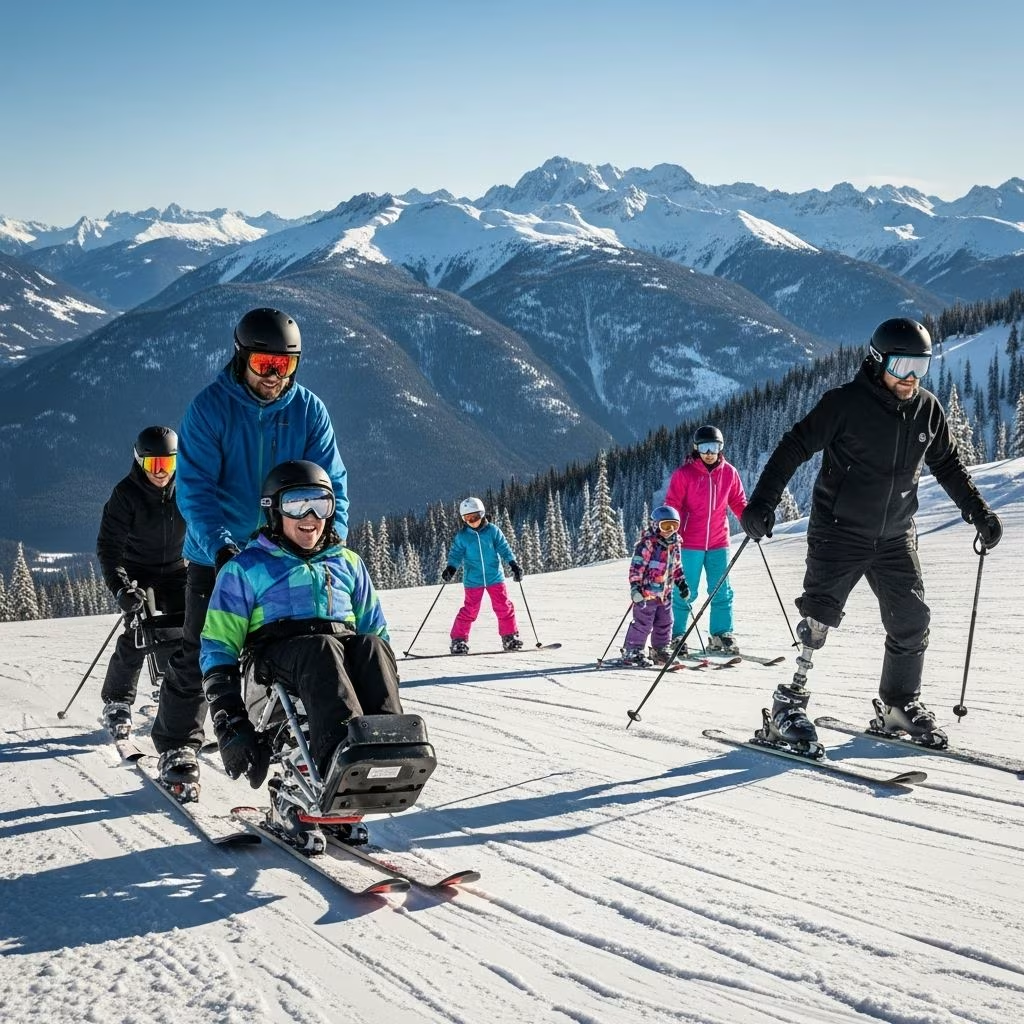
Whistler, nestled in Canada’s Coast Mountains, stands out as a premier destination where winter sports embrace inclusivity. Once known primarily for expert downhill runs, it has evolved into a hub for adaptive recreation, thanks to legacy improvements from hosting the 2010 Olympic and Paralympic Winter Games. Programs and facilities now cater to individuals with physical, cognitive, and sensory disabilities, ensuring that snowy thrills are available to all.
The 2010 Games catalyzed major upgrades in Whistler’s infrastructure. Venues like the Whistler Athletes’ Centre in Cheakamus Crossing provide 80 fully accessible lodge-style rooms and a gym open to athletes of all abilities. These facilities support training and stays, fostering a community of lifelong participants in outdoor pursuits.
Post-Games, the Resort Municipality of Whistler developed detailed accessibility maps highlighting barrier-free routes, accessible restrooms, and mobility-friendly paths. The pedestrian village features gentle grades, benches, and shops, making navigation straightforward even with mobility aids.
Whistler Blackcomb, with its dual peaks, offers tailored experiences for adaptive skiers. The resort’s Adaptive Ski & Snowboard Program, in partnership with Whistler Adaptive Sports Program (WASP), provides specialized lessons using equipment like bi-skis and mono-skis. These support users with limited lower body strength, paraplegia, quadriplegia, amputations, or developmental disabilities.
Whistler Mountain proves more accommodating for wheelchair users, with the Village Gondola allowing direct access to the summit and Roundhouse Lodge. Wheelchair storage is available at bases, and sit-skiers can navigate key areas. Blackcomb accommodates sit-skis via the Blackcomb Gondola, though Excalibur Gondola requires staff assistance with ramps like the Rupert Roller.
| Peak | Wheelchair Access | Sit-Ski Access | Key Facilities |
|---|---|---|---|
| Whistler Mountain | Full via Village Gondola | Yes, including Roundhouse | Restaurant, displays |
| Blackcomb Mountain | Limited | Yes via Blackcomb Gondola | Rendezvous Lodge, accessible restroom |
Instructors receive training for diverse needs, including visual impairments, cognitive disabilities like Autism Spectrum Disorder, Down Syndrome, and physical conditions such as Cerebral Palsy or Multiple Sclerosis. Lessons range from beginner group sessions to private instruction, with high demand requiring advance bookings.
The iconic Peak 2 Peak Gondola links Whistler and Blackcomb Mountains over 13.5 km, soaring 436 meters above the valley in 11 minutes. Glass-bottom cabins offer breathtaking views. For wheelchair users, access involves short snow crossings: 50m at 2% grade from Whistler’s Roundhouse and 80m at 6% from Blackcomb’s Rendezvous. Resort updates indicate planned improvements for the 2025-2026 season to ease these paths.
Beyond alpine skiing, Callaghan Valley’s Olympic Parks Regional Park provides free, crowd-free Nordic trails. WASP offers weekly lessons in classic and skate skiing for all ages, embodying their motto to “adapt the playground.” This serene setting builds skills amid stunning snowscapes.
WASP, a nonprofit, delivers inclusive programming across seasons: skiing, snowboarding, Nordic skiing, hiking, biking, canoeing, and kayaking. Serving locals and global visitors, they promote independence and confidence through tailored instruction.
Whistler’s appeal extends beyond slopes. The village boasts a wheelchair-accessible playground, while thrill-seekers enjoy modified ziplining, bungee jumping, or four-wheeled downhill biking. Paved Valley Trails suit hand-powered bikes, with maps noting steep sections.
Indoor options include the Athletes’ Centre gym. Tour operators adapt experiences; contacting them ensures suitability for specific needs.
Start with WASP’s website for lesson bookings and Whistler Blackcomb’s accessibility page for lift details. Download the accessibility map for village navigation. Budget for equipment rentals and lessons, and confirm snow conditions for path grades.
Yes, particularly Whistler Mountain via Village Gondola; Blackcomb suits sit-skis better. Gondola access and key lodges accommodate wheelchairs.
Bi-skis, mono-skis, outriggers, and more at the Adaptive Ski Center. Instructors assist with fitting.
Absolutely; programs cater to all levels with trained instructors for cognitive and physical needs.
Yes, including gondola rides, trails, playgrounds, and modified adventures like ziplining.
Via Whistler Adaptive Sports Program website or Whistler Blackcomb Snow School; advance reservation essential.
Whistler’s commitment shines through infrastructure, expert programs, and community spirit. From Olympic-enhanced venues to adaptive experts, it redefines mountain access, creating memories for diverse adventurers. Whether gliding down slopes or cruising gondolas, every visitor finds empowerment in the snow.
