


 Food & Culture
Food & Culture
Adventure in Tuscany: 15 Outdoor Experiences Beyond Wine Tours
Explore Tuscany's adrenaline-pumping activities, from truffle hunting to marble cave tours, hanging bridges, and forest trails for adventurers of all skill levels.
 Food & Culture
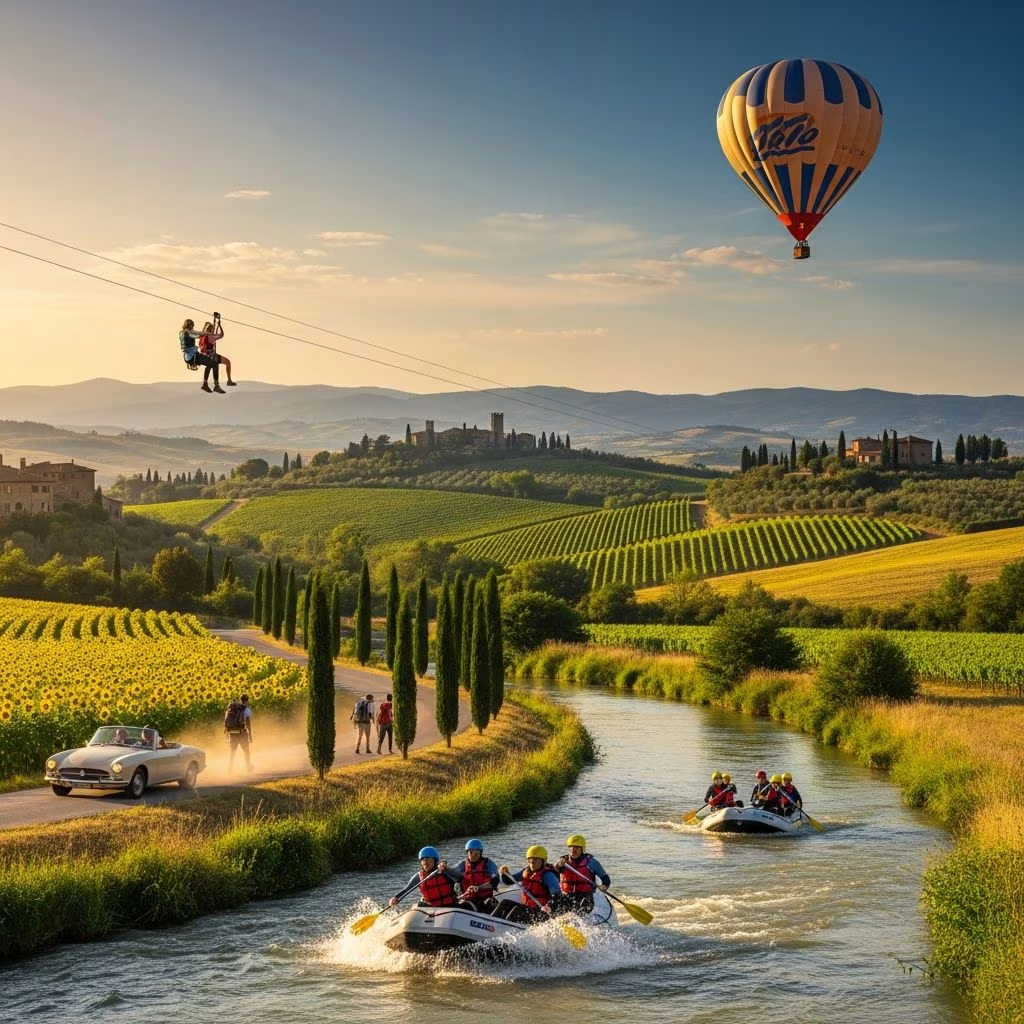
When most travelers think of Tuscany, images of rolling vineyards, Renaissance art, and leisurely wine tastings come to mind. Yet beneath this picturesque facade lies a landscape brimming with pulse-quickening experiences that cater to adventurers seeking something far more dynamic than museum visits and cellar tours. From the white marble mountains of Carrara to the hidden forests of Casentino, Tuscany reveals itself as a destination where thrill-seekers, nature enthusiasts, and curious wanderers can satisfy their craving for authentic, memorable encounters.
The Art of Truffle Hunting: Connecting with Ancient Traditions
Few experiences in Tuscany offer as intimate a connection to the land as truffle hunting with experienced local guides. This isn’t merely a stroll through picturesque woodlands; it’s participation in a centuries-old tradition that demands patience, observation, and partnership with specially trained dogs. The truffle hunter’s craft represents a deep cultural heritage, where knowledge of the forest floor, soil composition, and seasonal cycles has been passed down through generations.
When you embark on a truffle hunting expedition, you’ll find yourself traversing ancient oak groves under the guidance of seasoned professionals who can read the subtle signs that indicate truffle-rich soil. The trained dogs, bred specifically for their olfactory abilities, demonstrate an almost magical skill in uncovering these earthy treasures buried beneath the surface. Participants learn to spot the telltale signs—cracked earth, particular vegetation patterns, and soil characteristics—that signal a truffle’s presence. This sensory-rich experience transforms a simple walk into an archaeological dig of sorts, where each successful find carries the satisfaction of discovering nature’s hidden bounty.
Marble Mountains and Quarry Expeditions
The town of Carrara has supplied the world’s finest marble for centuries, and its significance extends beyond artistic heritage into the realm of geological wonder. The quarries represent not just an economic enterprise but a testament to human ingenuity and the raw power of nature’s stone formations. Visitors who venture into these white mountains gain perspective on the scale of extraction efforts and the craftsmanship involved in sourcing materials for some of history’s most famous sculptures.
Exploring the marble caves of Carrara through guided tours reveals the massiveness of the operation: enormous marble blocks, the constant hum of extraction machinery, and pathways carved through centuries of mining activity. The guides share narratives about how Michelangelo himself selected stones from these very quarries for his masterpieces, creating a tangible connection between art history and industrial geology. The white stone glows against the sky, creating an almost ethereal landscape that feels otherworldly compared to the green valleys surrounding it. For those interested in both art and geology, few experiences compare to standing within these marble monuments.
Hanging Bridges and Mid-Air Pathways
Tuscany’s adventure parks have revolutionized how visitors can experience the region’s forests and landscapes. Rather than observing nature from below, these facilities invite participants to move through the canopy on suspended walkways, Tibetan bridges, and elevated platforms designed with comprehensive safety protocols. The parks transform familiar woodland environments into three-dimensional playgrounds where perspective shifts dramatically.
Several renowned facilities dot the Tuscan landscape, each offering unique environments and experiences. Vincigliata, positioned on the hills surrounding Fiesole, provides sweeping views of Florence while participants navigate aerial obstacles. Indiana Park in Val di Chiana presents challenges within lush valley settings. Saltalbero, nestled in the woodlands of Monte Amiata, offers forest immersion at height. These destinations cater to families and individual adventurers alike, with difficulty levels scaled to different experience levels. The sensation of suspended movement—experiencing gravity’s pull while safely harnessed—creates an adrenaline rush that connects participants intimately with their surroundings in unprecedented ways.
Canyon Environments and Water-Based Thrills
The Canyon Park, established around the dramatic canyons of Val di Lima, represents a convergence of water sports, natural geology, and wellness practices. This location captures the essence of Tuscan adventure by combining multiple sensory experiences within a single setting. The canyon walls create a natural amphitheater where water, stone, and sky interact in constantly shifting patterns.
Visitors to this environment can experience the thrill of suspended travel via ropeway, the rush of water current interaction, and the meditative practice of stand-up paddleboarding and yoga. The juxtaposition of adrenaline-inducing activities alongside tranquil wellness practices reflects a sophisticated understanding of adventure tourism—recognizing that intensity and serenity both hold value for modern travelers seeking holistic experiences.
Underground Wonders: Karst Caves and Subterranean Exploration
Beneath Tuscany’s surface lies a hidden world of geological significance, particularly in the karst cave systems of Equi. These underground formations preserve millions of years of Earth’s history within their chambers, wells, and underground lakes. The caves function simultaneously as natural history museums and adventure destinations, offering both educational content and the thrill of subterranean exploration.
The archaeological evidence contained within these caves—bones of extinct species, including cave bears, alongside evidence of ancient human presence—transforms the experience from simple tourism into a journey through deep time. Walking through these chambers, visitors contemplate the vastness of geological processes and the relatively recent emergence of human civilization. The interplay of water, stone formation, and light creates an environment that feels disconnected from the surface world, offering psychological benefits alongside intellectual stimulation.
Two-Wheeled Journeys: Vespa Tours Through Countryside
There exists an undeniable romantic quality to navigating Tuscan roads on a classic Vespa scooter, yet the experience transcends mere nostalgia. Renting a vintage-style scooter provides both transportation and a sensory immersion unavailable through conventional vehicles. The exposure to elements—sun, wind, and the aroma of cypress trees—creates a visceral connection to the landscape that automobile travelers simply cannot access.
The routes through Tuscan countryside pass olive groves, vineyards, and small villages where local inhabitants acknowledge passing riders from doorways and sidewalks. This mode of travel encourages slower, more observant movement through the landscape, allowing for spontaneous stops at unmarked locations. The mechanical simplicity of Vespa scooters, contrasted with modern vehicles’ complexity, appeals to travelers seeking authentic, tactile engagement with their destinations.
Forest Hiking: Discovering Casentino’s Hidden Depths
While many visitors focus on Tuscany’s central and southern regions, Casentino represents an overlooked corner offering profound connection with unspoiled nature. The Casentino Forests, designated as a national park, present dense woodland environments ideally suited for extended hiking and contemplative walking. This area attracts those seeking solitude rather than spectacle, preservation rather than development.
The forests contain chestnut trees, ancient stone pathways, and wildlife including deer and wild boar, creating an environment where human presence feels secondary to natural processes. Hidden monasteries scattered throughout the region add cultural and historical dimensions to forest exploration. The meditative quality of forest walking—where rhythmic footsteps, rustling foliage, and birdsong create natural soundscapes—offers psychological benefits often overlooked in adventure travel discussions.
Culinary Adventures: Cooking Classes in Farmhouse Settings
Adventure extends beyond physical exertion into sensory exploration and cultural learning. Tuscan farmhouse cooking classes represent immersive educational experiences where participants engage with regional cuisine at its source. These classes typically occur within working agricultural environments, connecting food preparation directly to the landscape producing ingredients.
Participants learn not just techniques but also the philosophy underlying Tuscan cooking—respect for seasonal availability, ingredient quality, and preparation traditions. The collaborative nature of group cooking classes fosters connection between travelers and local instructors, facilitating cultural exchange that enriches understanding beyond guidebook information.
Artistic Immersion: The Tarot Garden’s Surreal Landscape
In Capalbio, artist Niki de Saint Phalle created an environment that defies conventional categorization. The Tarot Garden combines sculptural art, architectural design, and landscape intervention into a cohesive experience that challenges visitors’ perceptions and invites exploratory engagement. The environment consists of mirror surfaces, intricate mosaics, and enigmatic figures distributed throughout pathways and structures with deliberately unusual forms.
Rather than functioning as a traditional fortune-telling venue, the garden operates as a mirror reflecting visitors’ interpretations and reactions. Each Arcana representation invites individual meaning-making, transforming the experience from passive observation into active psychological engagement.
Coastal Discovery: The Etruscan Heritage Zone
Tuscany’s coastline, often overshadowed by inland attractions, offers archaeological significance and natural beauty combining beach relaxation with historical exploration. The Etruscan Coast preserves ancient cultural heritage while providing contemporary recreational opportunities. This region attracts those seeking adventure outside conventional mountain and forest environments, discovering instead how maritime environments shaped historical development.
Valley Hiking: The Val d’Orcia Experience
The Val d’Orcia represents one of Tuscany’s most photographed regions, yet the landscape rewards extensive exploration beyond scenic viewpoint visits. The carved hills and seasonally shifting colors create visual drama that evolves throughout the year. Hiking through this terrain provides cardiovascular challenge alongside aesthetic reward.
Lesser-known villages such as Pienza and Monticchiello offer authentic encounters with Tuscan life outside major tourist circuits. These settlements provide comfortable bases for exploring surrounding countryside while maintaining cultural immersion unavailable in mainstream tourist destinations.
Alpine Challenges: The Apuan Alps
For those possessing significant outdoor experience and fitness levels, the Apuan Alps present challenging terrain suitable for rock climbing and canyoning expeditions. These mountains demand respect and preparation, requiring local guide involvement for safety and optimal experience quality. The vertical geography creates dramatic scenery and genuine wilderness conditions within relatively close proximity to populated areas.
Multi-Day Journey Opportunities
Several established routes facilitate extended exploration of Tuscan landscapes. The Via Francigena, an ancient pilgrimage pathway, combines historical significance with contemporary hiking experience. The Chianti Wine Trail offers cycling or hiking through vineyards while connecting small communities. These routes provide structure for self-directed adventure, allowing travelers to establish personal pace and depth of engagement.
Family-Centered Adventure Parks
The Selva del Buffardello adventure park in the Garfagnana region, near the Apuan Alps, specifically designs experiences for family participation. The facility includes educational components introducing young participants to nature-based living through workshops and interactive exhibits. This approach recognizes that adventure tourism need not exclude younger travelers; rather, thoughtful design can facilitate meaningful multigenerational experiences.
Planning Your Tuscan Adventure
Successful adventure tourism in Tuscany requires matching experience levels with appropriate activities, considering seasonal variations in weather and accessibility, and researching safety credentials of guide services and commercial operations. Weather patterns affect hiking conditions, water-based activities, and outdoor accessibility. Spring and fall typically provide optimal conditions for most outdoor pursuits, while summer heat can be intense at lower elevations and winter precipitation affects some locations.
Professional guides enhance safety and interpretation across most adventure activities. Local experts provide contextual knowledge that deepens appreciation and understanding while ensuring appropriate precautions. Many activities require advance booking, particularly guided experiences during peak seasons.
Balancing Adventure with Cultural Context
Authentic adventure tourism in Tuscany connects thrill-seeking with cultural learning and environmental appreciation. The most memorable experiences typically combine physical challenge with historical understanding, creating layered engagement with place. Truffle hunting connects to agricultural heritage; marble quarry visits link to artistic history; forest hiking involves ecological awareness; cooking classes embed participants within food traditions.
This integration transforms adventure from simple recreation into meaningful travel experience, creating lasting personal transformation alongside temporary adrenaline surges.
Frequently Asked Questions
What is the best season for adventure activities in Tuscany?
Spring (April-May) and autumn (September-October) offer ideal conditions for most outdoor activities, with moderate temperatures and lower precipitation than winter months. Summer (June-August) brings heat that can be challenging for high-altitude activities, while winter limits accessibility in some regions.
Do adventure activities require significant prior experience?
Most commercial adventure facilities accommodate participants across experience levels, from beginners to advanced. However, specialized activities like rock climbing and canyoning in the Apuan Alps require fitness and experience. Consult with operators regarding specific prerequisites.
Are adventure activities safe for families with children?
Many adventure parks specifically accommodate families with children, implementing age and height restrictions alongside comprehensive safety protocols. The Selva del Buffardello and several hanging bridge parks offer family-friendly programming.
How much should I budget for adventure experiences?
Costs vary significantly by activity. Adventure park day passes typically range from moderate to mid-range pricing; guided truffle hunting and marble quarry tours fall in mid to premium ranges; multi-day hiking adventures vary by accommodation and guide services selected.
Can I combine adventure activities with cultural tourism?
Absolutely. Many travelers structure itineraries combining adventure pursuits with art museums, historical sites, and culinary experiences. This approach provides varied engagement with Tuscan regions.
References
- Exploring Tuscany: Ideas for Adventurers of All Ages — Visit Tuscany. 2024. https://www.visittuscany.com/en/ideas/exploring-tuscany-ideas-for-young-and-old-adventurers/
- The Best Things to Do in Tuscany — Macs Adventure. 2024. https://www.macsadventure.com/us/blog/the-best-things-to-do-in-tuscany/
- 7 Top Offbeat Adventures to Try in Tuscany (That Aren’t Wine Tours) — Nevermore Lane. 2024. https://nevermorelane.com/7-top-offbeat-adventures-to-try-in-tuscany-that-arent-wine-tours/
- Top 11 Things to Do in Tuscany: Must-See Attractions & Experiences — Adventure Life. 2024. https://www.adventure-life.com/italy/articles/top-11-things-to-do-in-tuscany-must-see-attractions-experiences
- A Local’s Guide to Val D’Orcia, Tuscany — Italy Segreta. 2024. https://italysegreta.com/discovering-val-dorcia/
On This Page
The Art of Truffle Hunting: Connecting with Ancient Traditions Marble Mountains and Quarry Expeditions Hanging Bridges and Mid-Air Pathways Canyon Environments and Water-Based Thrills Underground Wonders: Karst Caves and Subterranean Exploration Two-Wheeled Journeys: Vespa Tours Through Countryside Forest Hiking: Discovering Casentino's Hidden Depths Culinary Adventures: Cooking Classes in Farmhouse Settings Artistic Immersion: The Tarot Garden's Surreal Landscape Coastal Discovery: The Etruscan Heritage Zone Valley Hiking: The Val d'Orcia Experience Alpine Challenges: The Apuan Alps Multi-Day Journey Opportunities Family-Centered Adventure Parks Planning Your Tuscan Adventure Balancing Adventure with Cultural Context Frequently Asked Questions← Previous
Best Tel Aviv Markets: Carmel, Levinsky, Sarona & More
Next →
Mahane Yehuda Market Food Guide: Best Street Eats in Jerusalem
Related Reading
More in Food & Culture
Food & Culture Food & Culture
 Food & Culture
Best Places to Eat in Rome: Neighborhood Dining Guide
 Food & Culture
 Food & Culture