

 Travel Essentials
 Travel Essentials

Explore African literature from ancient oral traditions to contemporary voices, revealing stories of resistance, identity, and cultural pride.
 Travel Essentials
African literature encompasses a vast array of oral and written works produced across the continent, reflecting diverse cultures, histories, and languages. It spans from ancient Ethiopian texts dating back to the fourth century to contemporary novels addressing modern challenges.
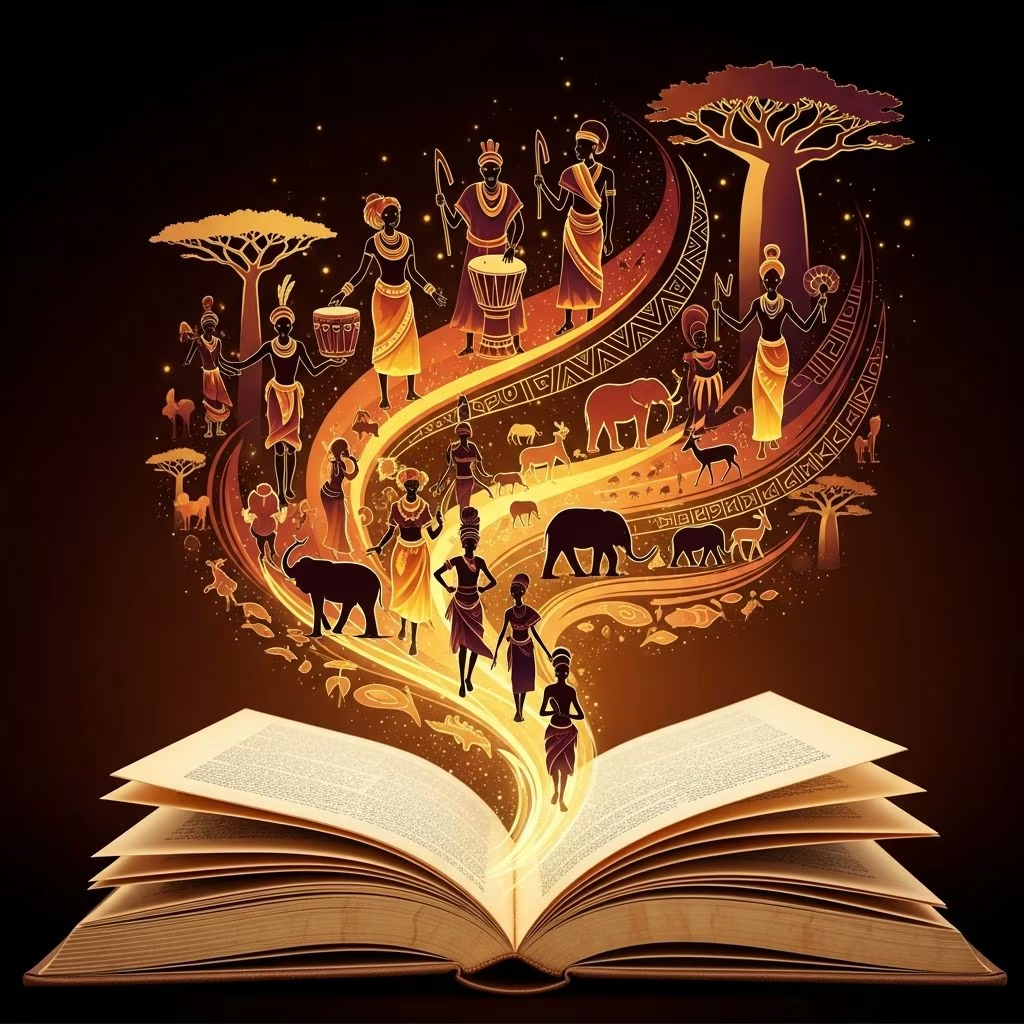
The foundation of African literature lies in oral traditions, often called “orature,” where stories, proverbs, folktales, and epics were passed down through generations by griots and storytellers. These narratives preserved history, morals, and cultural identity long before written forms dominated.
Scholars identify three key waves of literacy in Africa. The first emerged in Ethiopia, with works like the Garima Gospels around 500 AD in Ge’ez, predating many European texts, and the 14th-century Kebra Negast, or “Book of Kings.”
The second wave arrived with Islam’s spread from the seventh century, influencing North and West Africa. Arabic manuscripts, including epic poetry in Swahili from the 18th century and ajami literature in languages like Hausa and Wolof using Arabic script, flourished from the 14th century onward.
European colonization from the 15th century profoundly reshaped African literature. Powers like Britain, France, Portugal, and others imposed their languages and suppressed indigenous voices, leading to the transatlantic slave trade and cultural erasure.
Slave narratives emerged as early written protests, with enslaved Africans documenting their ordeals in English or French for Western audiences. These autobiographical accounts highlighted human suffering and resilience, gaining traction in Europe and America.
In the 20th century, African writers adopted colonial languages to critique imperialism. Newspapers became platforms for hymns, poetry, and essays voicing dissent. This period birthed the Negritude movement in the 1930s-1950s, led by francophone poets like Léopold Sédar Senghor and Aimé Césaire, who celebrated African heritage against colonial denigration.
| Colonial Power | Key Languages Imposed | Notable Early Impacts |
|---|---|---|
| Britain | English | Slave narratives, protest poetry |
| France | French | Negritude poetry, essays |
| Portugal | Portuguese | Oral-to-written transitions |
| Germany/Italy | German/Italian | Limited early literary output |
The mid-20th century saw an explosion of African literature amid independence struggles. Chinua Achebe’s Things Fall Apart (1958) marked a milestone, selling millions and portraying Igbo life pre- and post-colonization, challenging Western stereotypes.
Postcolonial works grappled with nation-building, corruption, and identity. Themes include clashes between tradition and modernity, indigenous vs. foreign influences, and women’s evolving roles. Female authors like Buchi Emecheta and Mariama Bâ gained prominence, addressing gender disparities.
Seven core conflicts often explored: past vs. present, tradition vs. modernity, individualism vs. community, and Africanity vs. humanity.
Today, African literature thrives in over 50 languages, including indigenous ones like Yoruba, Zulu, and Amharic, alongside English, French, and Portuguese. Magical realism, lyrical prose, and speculative fiction blend with folktales.
The diaspora contributes significantly, with authors like Teju Cole and NoViolet Bulawayo exploring migration and hybrid identities. Digital platforms and substack newsletters like AfroReads promote accessibility, emphasizing diversity across Africa’s 54 nations.
Reasons to engage include uncovering pre-colonial histories, epic storytelling, and fostering empathy. It counters the ‘Western Gaze’ with authentic narratives of kingdoms, resistances, and futures.
Despite growth, challenges persist: underrepresentation of non-anglophone works, translation barriers, and publishing biases favoring certain regions like Nigeria over Central Africa. Yet, initiatives like the Caine Prize boost visibility.
Emerging genres like Afrofuturism, seen in Nnedi Okorafor’s works, imagine African-centered futures, blending sci-fi with cultural elements.
It includes oral and written works in African, Afro-Asiatic, and European languages by Africans, emphasizing cultural preservation and resistance.
Chinua Achebe, for Things Fall Apart, which brought African perspectives to global audiences.
They provided storytelling techniques, proverbs, and themes that writers adapted into novels and poetry.
It revived African pride and aesthetics during colonial times, influencing poets and the independence era.
No, it spans hundreds of languages, though European ones dominate global readership.
African literature continues to evolve, offering profound insights into humanity’s shared struggles and triumphs. Its diversity mirrors the continent’s complexity, inviting readers worldwide to explore beyond stereotypes.
