

 Travel Essentials
 Travel Essentials

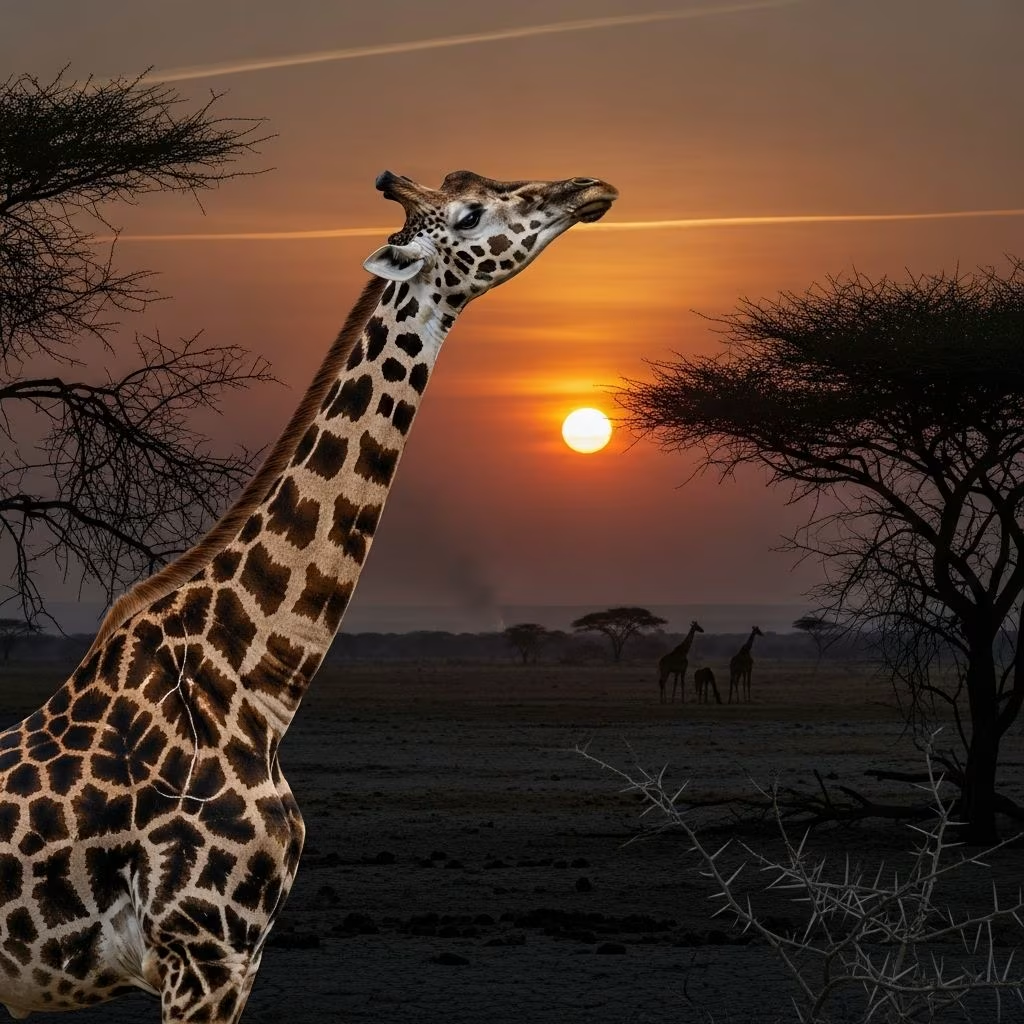
African giraffes face a silent extinction crisis with populations declining 40% in three decades. Learn about threats, conservation efforts, and what the future holds.
 Travel Essentials
Africa’s giraffe populations are experiencing what conservationists describe as a “silent extinction.” Unlike the high-profile campaigns surrounding rhinos, gorillas, and elephants, the decline of the world’s tallest land mammals has largely escaped global attention. Yet the numbers tell a sobering story: giraffe populations have plummeted by approximately 40% over the past three decades, with current estimates placing fewer than 150,000 individuals across the African continent. This dramatic decline has prompted international conservation organizations to classify giraffes as vulnerable to extinction, raising urgent questions about the future of these iconic creatures.
The collapse of giraffe numbers represents one of the most significant wildlife declines of recent times. Historical records from the 1980s documented over 155,000 mature giraffes roaming African savannas and woodlands. Today, that figure has shrunk to fewer than 70,000 mature individuals in some estimates, while other recent surveys suggest numbers between 80,000 and 150,000 depending on subspecies and regional variations. This represents a loss of tens of thousands of animals in just a few decades.
The situation becomes even more alarming when examining specific subspecies. The reticulated giraffe population has contracted from approximately 36,000-46,750 individuals historically to merely 8,661 today—a decline of nearly 80 percent. The Kordofan and Nubian subspecies together now number only around 4,500 mature adults, making them critically endangered. Meanwhile, giraffe populations have been completely eradicated from at least seven African nations, representing an irreversible loss of biodiversity from entire regions.
Multiple interconnected factors have combined to create a perfect storm for giraffe survival. Understanding these threats is essential for developing effective conservation responses.
The conversion of African woodlands and savannas into agricultural land, ranches, and residential developments represents the single largest threat to giraffe survival. As human populations expand across sub-Saharan Africa, giraffe habitats become increasingly fragmented into isolated patches. The charcoal industry, in particular, has intensified timber harvesting across regions where giraffes depend on acacia trees and other vegetation for nutrition. This habitat loss does more than simply reduce available space—it creates small, disconnected populations vulnerable to inbreeding and disease.
Giraffes face significant pressure from hunting, particularly in regions where rural communities struggle with poverty and food insecurity. During periods of drought or following displacement by civil conflict, local populations turn to hunting giraffes for bushmeat, creating additional survival pressures on already vulnerable herds. While some hunting occurs at subsistence levels, illegal poaching for trade in giraffe body parts represents an ongoing threat across multiple nations.
Africa’s increasingly unpredictable climate creates mounting challenges for giraffe populations. Droughts have intensified across sub-Saharan Africa, reducing the availability of vegetation and water sources that giraffes depend upon. During drought periods, giraffes must travel greater distances to find adequate forage, increasing encounters with human settlements and agricultural areas. Simultaneously, habitat degradation limits the ability of surviving populations to migrate to alternative feeding grounds.
Expanding infrastructure projects, including mining operations and oil development, further encroach upon remaining giraffe habitat. Roads and settlements fragment populations, while resource extraction directly destroys vegetation and water sources critical to giraffe survival.
Despite their vulnerable status, many African nations lack adequate legal frameworks and enforcement resources to protect giraffe populations from poaching and illegal habitat destruction. Political instability in some regions has made conservation efforts particularly challenging, with armed conflicts in countries like South Sudan and the Central African Republic driving giraffe populations toward extinction.
Giraffe populations do not decline uniformly across Africa. Regional patterns reveal both encouraging successes and alarming disparities.
| Subspecies | Current Population | Recent Trend | Conservation Status |
|---|---|---|---|
| Southern Giraffe | 68,837 | ↑ 49% since 2020 | Least Concern |
| Reticulated Giraffe | 20,901 | ↑ 31% since 2020 | Endangered |
| Northern Giraffe | 7,037 | ↑ 19% since 2020 | Endangered |
| Maasai Giraffe | 45,402 | Stable (↓ 3%) | Vulnerable |
Southern Africa presents the most positive picture, with southern giraffe populations increasing by 49% since 2020, reaching 68,837 individuals—more than double the number counted in 1995. This recovery reflects successful conservation programs and reintroduction efforts, particularly the successful reestablishment of giraffes in Mozambique where they had previously vanished entirely. In contrast, northern giraffes have experienced a devastating 70% population decline since 1995, largely due to armed conflicts and political instability in their ranges across central Africa.
The decline of giraffe populations has progressed largely outside the spotlight of international conservation awareness. While charismatic megafauna like rhinos, gorillas, and elephants have generated substantial funding and media coverage, giraffes have remained conspicuously absent from major conservation campaigns. Several factors explain this disparity: giraffes inhabit remote regions with limited accessibility for documentary filmmaking, their decline has been gradual rather than dramatic, and public perception may underestimate their conservation status.
Despite the grim statistics, conservation organizations have developed and implemented strategies showing measurable success in reversing population declines in specific regions.
Niger’s development of the first National Giraffe Conservation Strategy demonstrates the effectiveness of coordinated government action. The West African giraffe population increased nearly eightfold in two decades, rising from a low of just 50 individuals to approximately 400 animals. This unprecedented recovery illustrates what becomes possible when national governments prioritize giraffe protection through comprehensive planning and sustained commitment.
Conservation organizations have established protected havens where giraffes receive intensive management and monitoring. As of 2023, African Wildlife Foundation (AWF) conservation efforts have protected approximately 24% of Africa’s giraffe population, encompassing over 7,800 individuals through initiatives in regions like Tsavo and the Maasai Steppe. These protected areas combine habitat preservation with anti-poaching measures and community engagement programs.
Forward-thinking conservation programs focus on restoring degraded habitats and creating corridors connecting isolated giraffe populations. By replanting native vegetation and managing human land use, conservationists work to rebuild the ecological infrastructure giraffes require for long-term survival.
The Giraffe Conservation Foundation’s recent State of Giraffe 2025 report reflects improved survey techniques and more comprehensive data collection across African nations. This enhanced understanding of population dynamics enables more targeted conservation interventions and better-informed policy decisions. However, researchers acknowledge that political instability and security concerns continue to hamper accurate surveys in some regions.
Giraffes are classified as “vulnerable” to extinction by the International Union for the Conservation of Nature, meaning they face a high risk of extinction in the wild unless conservation efforts intensify. Several subspecies, including the northern and reticulated giraffes, are listed as endangered.
Current estimates range from 80,000 to 150,000 giraffes across Africa, depending on survey methodology and subspecies classification. This represents a dramatic decline from historical populations exceeding 155,000 in the 1980s.
The primary threats include habitat loss and fragmentation, poaching and illegal hunting, climate change and drought, infrastructure development, and inadequate legal enforcement in some regions.
Yes, as demonstrated by successful conservation efforts in Niger and southern Africa, giraffe populations can recover when governments and organizations commit to comprehensive protection strategies combining habitat preservation, anti-poaching efforts, and community engagement.
Supporting established conservation organizations, promoting sustainable tourism practices, advocating for wildlife protection policies, and raising awareness about giraffe conservation challenges all contribute to their protection.
The giraffe crisis represents a critical test of humanity’s commitment to wildlife conservation. While the recent improvements in southern African populations and the recovery of West African giraffes provide hope, they also demonstrate that reversal is possible when sufficient resources and political will align. The recommendations in the State of Giraffe 2025 report, including reclassifying certain subspecies to better reflect their true conservation status, represent important steps toward more appropriate protection levels.
Success will require sustained international cooperation, increased funding for conservation programs, strengthened legal enforcement against poaching, and addressing the underlying drivers of habitat loss through sustainable development practices. The window for action remains open, but time is rapidly closing for the world’s tallest mammal.
