

 Travel Essentials
 Travel Essentials

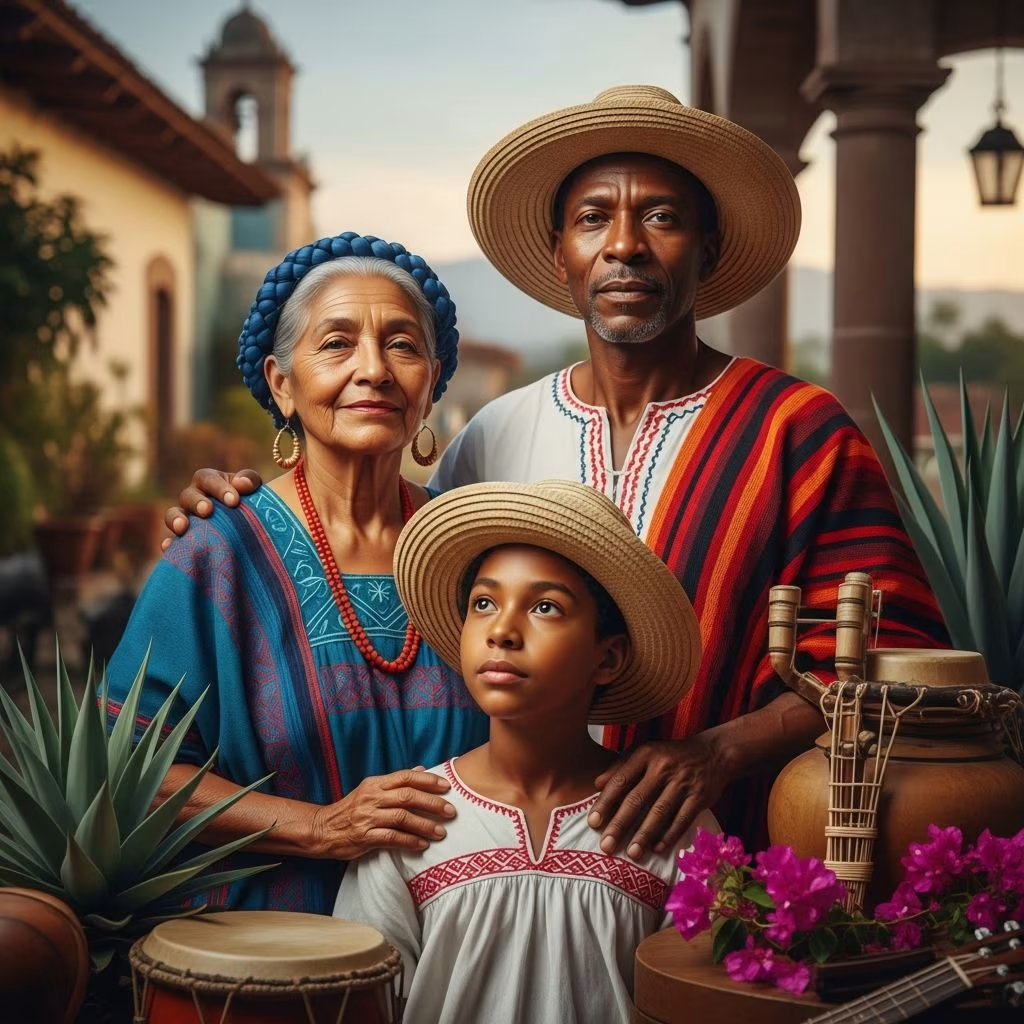
Explore the profound history of Afro-Mexicans: their arrival via enslavement, resistance efforts, cultural fusion, and recent recognition in Mexican society.
 Travel Essentials
The story of Afro-Mexicans reveals a vital yet frequently overlooked chapter in Mexico’s multicultural narrative. Descendants of Africans brought during the colonial era, they have influenced everything from music and dance to social structures, despite centuries of marginalization. This article delves into their journey, highlighting key historical milestones, cultural contributions, and contemporary resurgence.
During the 16th and 17th centuries, Mexico—then New Spain—received a massive influx of enslaved Africans, rivaling any other region in the Americas. Historical records indicate that by 1650, the population of African descent matched that of Spanish heritage in the colony. An estimated 200,000 to over 500,000 Africans arrived from West, Central, and South Africa, comprising about 10% of the total population at peak times.
These individuals were not a monolithic group; they hailed from diverse ethnic backgrounds with varied languages, traditions, and skills. Enslaved primarily for labor in mines, sugar plantations, urban workshops, and as domestic workers, they filled gaps left by the decimation of Indigenous populations due to disease and exploitation. Unlike plantation-heavy economies elsewhere, Mexico’s labor system integrated Africans into cities and artisan roles, fostering early cultural exchanges.
Spaniards brought Africans as early as the conquest of the Aztec Empire. Chronicles note their presence alongside Hernán Cortés, distinguished by their curly hair amid European and Indigenous forces. This early integration set the stage for profound demographic shifts.
Afro-Mexicans actively resisted oppression, forming maroon communities known as palenques in remote mountains. The most legendary figure is Gaspar Yanga, who escaped enslavement in 1579 and established a palenque in Veracruz.
Yanga’s group sustained itself by raiding Spanish trade routes like the Camino Real. In 1609, after defeating Spanish forces, they negotiated a treaty granting freedom and land, creating San Lorenzo de los Negros (now Yanga, Veracruz)—the first free Black community in the Americas. This victory inspired similar escapes and palenques across regions like Guerrero and Oaxaca, where Afro-Mexican populations remain strong today.
By the 17th century, free Blacks and mulattos outnumbered the enslaved, signaling shifting dynamics despite peak importation. Mexico’s abolition of the slave trade in 1824 and slavery itself in 1829 further empowered freedom seekers, including African Americans fleeing via the Underground Railroad southward.
Afro-Mexican heritage blended with Indigenous and Spanish elements, forming la tercera raíz—the third root of Mexican identity, officially recognized by the government in 1992. This acknowledgment spurred reconnection through arts and activism, especially on the Pacific coast.
Music and dance exemplify this fusion. Genres like Son Jarocho, La Bamba, and El Fandango trace roots to African rhythms, adapted with local instruments. The Dance of the Devils, performed during Day of the Dead, satirizes colonial rulers through masked portrayals of enslaved labor.
Everyday influences persist in cuisine, language, and spirituality. Afro-Mexicans introduced techniques for seafood preparation in coastal areas and rhythmic speech patterns in regional dialects.
| Category | Examples | Regions |
|---|---|---|
| Music & Dance | Son Jarocho, La Chilena, Dance of the Devils | Veracruz, Guerrero, Oaxaca |
| Cuisine | Seafood stews, tamales with African spices | Pacific Coast |
| Spiritual Practices | Blended rituals with Indigenous elements | Costa Chica |
These areas maintain vibrant traditions, with communities passing down instruments like the quijada (jawbone percussion) and stories of resilience.
For centuries, Afro-Mexicans faded from national narratives due to intermarriage and mestizaje ideology emphasizing Indigenous-Spanish mixes. Colonial caste systems blurred racial lines, with terms like mulatto and creole complicating identity.
Popular media often caricatured Black features, denying their presence. Yet, the 1992 declaration marked a turning point. In 2015, Mexico’s census first included an Afro-Mexican category, revealing about 1.4 million self-identifiers (1.2% of population), though experts suggest undercounting.
Recent activism, including political mobilizations and cultural festivals, amplifies their voice. Museums in places like Cuajinicuilapa showcase artifacts, dances, and independence contributions.
Today, Afro-Mexicans reclaim heritage through education, media, and tourism. Initiatives highlight their role in independence wars and underground networks aiding U.S. escapees.
International links grow, with Afro-diaspora scholars tracing Olmecs to possible African origins, though debated. Youth embrace fusion genres blending hip-hop with traditional beats, fostering pride.
Travelers can immerse in this legacy:
These sites offer authentic encounters, supporting local economies.
Approximately 1.2% per 2020 census, though cultural descendants may be higher.
A leader who founded the first free Black town in the Americas after defeating Spanish forces in 1609.
Many fought alongside criollos; their labor and resistance weakened colonial control.
Yes, its rhythms derive from African beats fused with local styles.
Intermarriage, mestizaje promotion, and lack of census recognition marginalized their narrative.
Afro-Mexican history enriches Mexico’s tapestry, urging deeper appreciation. Through education and celebration, their indelible mark—from resistance anthems to rhythmic heartbeats—continues to pulse.
