

 Travel Essentials
 Travel Essentials

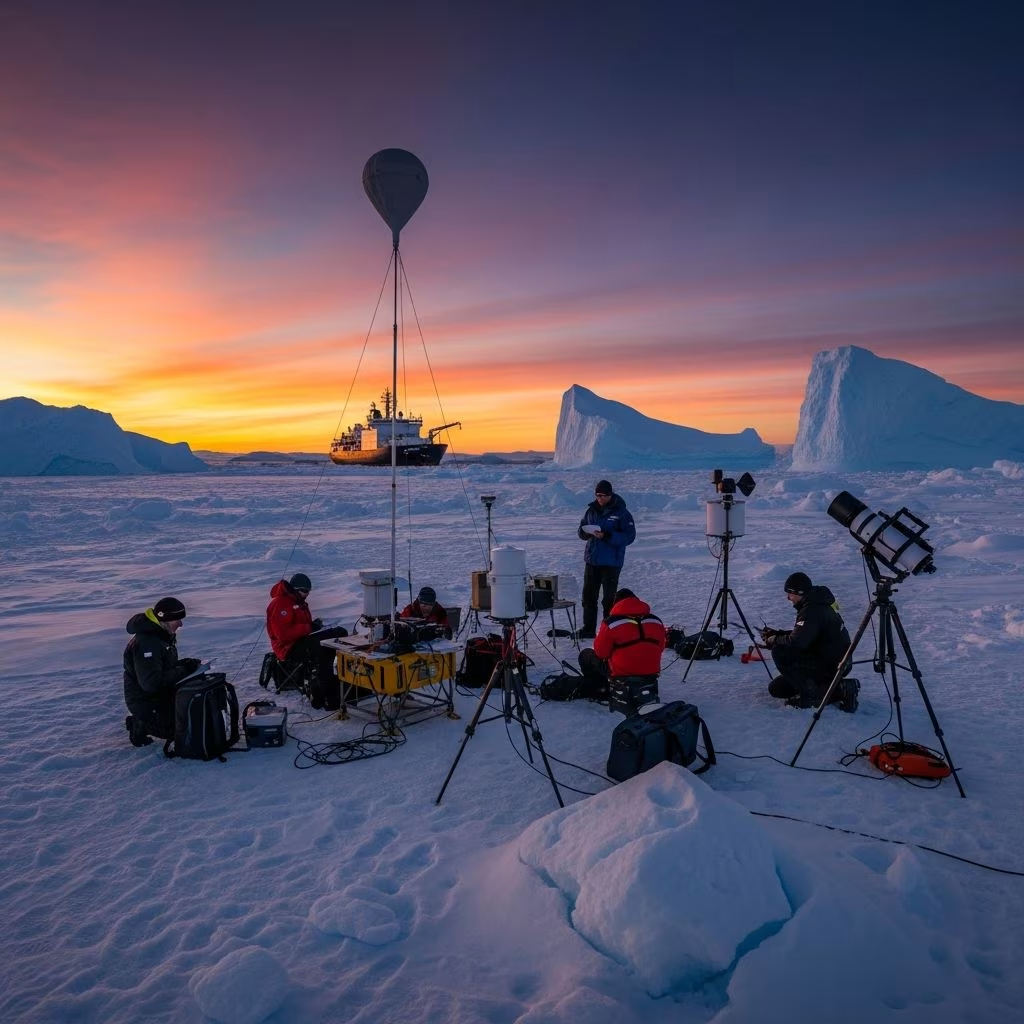
Five volunteers joined Antarctic field research to hunt microplastics in snow, showing how citizen science can help protect a remote wilderness.
 Travel Essentials
Imagine trading everyday life for eight days on the world’s most isolated continent, contributing to cutting-edge environmental science. Airbnb’s Antarctic Sabbatical made this possible, selecting volunteers from around the globe to assist in researching microplastic pollution in Antarctica’s snow. This initiative combined breathtaking adventure with meaningful citizen science, highlighting human impact on Earth’s last frontier.
Airbnb launched the Antarctic Sabbatical as part of its commitment to purposeful travel. Partnering with Ocean Conservancy, the program aimed to raise awareness about climate change and plastic pollution in one of the planet’s least explored regions. Unlike traditional vacations, participants didn’t just visit—they actively supported scientific endeavors.
The call for applicants drew over 140,000 submissions from more than 200 countries, showcasing global interest in environmental action. Selection criteria prioritized passion for conservation over professional expertise, ensuring diverse backgrounds enriched the team.
Five standout individuals were picked: a teacher from Hawaii, a tech professional from Arizona, an engineer from India, a student from Norway, and a marketer from Dubai. Each brought unique perspectives, united by a drive to protect the environment.
These citizen scientists flew from Punta Arenas, Chile, to Union Glacier Camp in West Antarctica, a remote outpost serving as their base.
Nestled in the Ellsworth Mountains, Union Glacier Camp offers heated tents, gourmet meals, and expedition support. Volunteers arrived via specialized aircraft, stepping into sub-zero temperatures yet finding comfort in communal dining halls and cozy accommodations.
Daily routines blended science with wonder: mornings collecting samples, afternoons in the lab, evenings stargazing under endless skies. The camp’s isolation fostered deep bonds, turning strangers into a tight-knit research team.
| Camp Feature | Description |
|---|---|
| Accommodations | Insulated tents with comfortable bedding |
| Meals | Freshly prepared international cuisine |
| Activities | Snow sampling, lab work, scenic flights |
| Facilities | Lab setup, sauna, medical support |
Under the guidance of British environmental scientist Kirstie Jones-Williams, the team investigated microplastics—tiny plastic particles threatening even Antarctica. These pollutants, carried by winds and ocean currents, could contaminate the continent’s pristine snow.
Volunteers collected snow cores from untouched sites, using sterile techniques to avoid contamination. Back at the lab, they melted samples, filtered residues, and examined particles under microscopes, documenting potential plastic invaders.
Antarctica acts as a global sink for pollutants. Microplastics here signal widespread human impact, affecting wildlife from krill to penguins. Findings could influence international policies on plastic production and waste management.
No PhD required: training equipped volunteers with tools like corers, filters, and microscopes. They processed dozens of samples, learning protocols that mirrored professional research. This approach proved citizen science’s power in remote fieldwork.
Challenges included extreme cold hampering equipment and sudden weather shifts, yet teamwork triumphed. Volunteers’ fresh eyes spotted anomalies professionals might overlook.
Beyond science, the continent captivated. Volunteers witnessed icebergs calving, penguin colonies thriving, and endless ice fields glowing blue. A highlight: a flight over the Hercules Inlet, revealing the vast, untouched landscape.
Post-expedition, data fueled advocacy campaigns. Airbnb and Ocean Conservancy used results to educate on plastic pollution, pushing for policy changes. Volunteers returned transformed, launching local initiatives and sharing stories worldwide.
The program demonstrated travel’s potential for good, inspiring thousands to engage in environmentalism. It underscored that anyone can contribute to planetary health.
Though this 2019 expedition concluded, similar programs emerge. Organizations seek citizen scientists for polar research. Prepare by gaining basic skills and following calls from groups like Ocean Conservancy.
An Airbnb program sending volunteers to aid microplastics research in Antarctica.
From 140,000+ applicants, based on conservation passion and diversity.
Collect snow samples, analyze in lab, experience Antarctic wonders.
Yes, with expert guidance and camp facilities.
Provides data for anti-pollution advocacy and policy.
The Sabbatical redefines adventure: not just sightseeing, but stewardship. It encourages blending wanderlust with world-bettering actions, proving remote places need global guardians.
