

 Travel Essentials
 Travel Essentials

Learn the legal reasons airlines downgrade passengers, your entitled compensation, and practical strategies to protect your premium seat booking.
 Travel Essentials
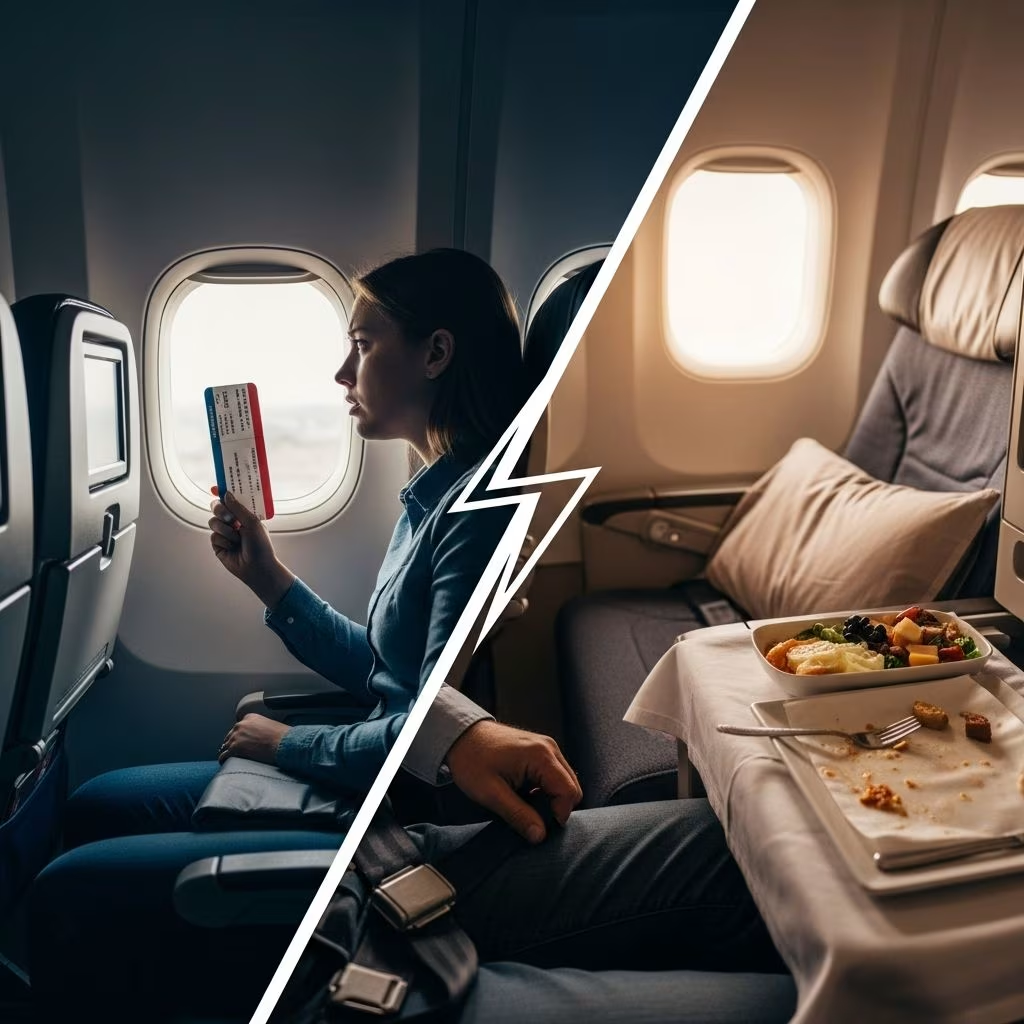
When you purchase a ticket in business class or first class, you expect to experience the premium service and comfort that accompanies that cabin. However, passengers occasionally find themselves unexpectedly moved to a lower class of service—a practice known as an involuntary downgrade. Understanding why these downgrades occur, what compensation you’re entitled to receive, and how to minimize your risk of being affected can transform your travel experience and ensure you get what you paid for.
An involuntary downgrade occurs when an airline reassigns a passenger from their original cabin class to a lower one without the passenger’s consent. This differs significantly from a voluntary downgrade, where a passenger chooses to accept a lower cabin in exchange for accommodations on another flight, typically after a missed connection or operational disruption. The distinction matters considerably when determining your rights and potential compensation.
While involuntary downgrades may seem unfair, airlines possess the legal authority to make such reassignments under specific circumstances. This authority typically appears in the airline’s contract of carriage—the fine print that passengers agree to when purchasing their ticket. Understanding these circumstances helps travelers recognize legitimate downgrades from unjustified ones.
Airlines don’t downgrade passengers arbitrarily. Several operational and safety-related factors commonly trigger these decisions:
The fundamental principle underlying passenger rights during downgrades is straightforward: you paid for a specific service level and didn’t receive it. American carriers are legally obligated to refund the fare difference between your original cabin class and the lower cabin to which you were moved. This compensation applies regardless of whether you purchased a refundable or non-refundable ticket—the distinction doesn’t matter when an airline fails to deliver what you purchased.
The calculation process depends on your original payment method. If you paid cash for your premium seat, the airline should refund the monetary difference between the first-class or business-class fare and the economy fare. For award ticket passengers who redeemed miles or points, the refund should be calculated as the difference in miles between the two cabin classes. Partner award tickets require special handling; you’ll typically need to contact the program through which you booked to request the mile difference, as they can most easily process the adjustment.
Some airlines demonstrate additional generosity beyond basic fare refunds. Emirates, for example, offers an exceptionally passenger-friendly policy: if you’re downgraded at or after check-in due to an oversold cabin or mechanical seat issue, you receive a complete voucher for a new return flight in your original class of service. This approach significantly exceeds minimum legal requirements and reflects a customer-first philosophy.
Many airlines unfortunately won’t proactively offer compensation for downgrades. This means you’ll likely need to request your refund explicitly. The process typically involves:
Airlines often respond to refund requests with partial reimbursements calculated on a pro-rated basis. This approach applies the percentage of your journey completed in the downgraded cabin to your total premium fare. For instance, if you were downgraded for the second leg of a two-leg journey, the airline might refund approximately 50% of the fare difference.
While airlines reserve the right to downgrade passengers, several practical strategies can significantly reduce your probability of experiencing this disruption:
Frequent fliers with elite status receive prioritized protection during operational disruptions, including downgrades. Airlines rarely downgrade their most valued customers, as loyalty program status indicates both higher revenue generation and brand commitment. Achieving top-tier elite status with your preferred airline dramatically improves your seat protection odds. Even mid-tier status offers more protection than no status at all.
Cabin reconfigurations and aircraft substitutions occur more frequently later in the day, particularly following earlier flight disruptions that create cascading schedule impacts. By booking early morning or midday flights, you reduce exposure to the operational chaos that accumulates throughout the day’s flight schedule. Early-morning flights also benefit from more reliable equipment and fresh flight crews.
Checking in as early as possible creates what might be called a “force field” around your seat reservation. Early check-in confirms your presence and locks in your seat assignment, making it less likely that the airline will subsequently reassign you due to oversold cabins or other operational issues. In the modern travel environment, checking in exactly 24 hours before departure—the earliest permitted moment—maximizes your protection.
When booking flights, particularly international routes, choosing larger aircraft with more available seats provides greater seating flexibility for the airline. Wide-body aircraft operating on long-haul routes typically have more premium seats than smaller narrow-body planes. This abundance of seating means the airline faces fewer constraints when accommodating operational needs, reducing the likelihood they’ll need to downgrade premium passengers.
Before purchasing a premium ticket, review the airline’s contract of carriage—the terms and conditions governing your ticket. This document explicitly states that while the airline makes every effort to ensure you receive your chosen seat, seat assignments aren’t guaranteed. Understanding these terms helps you recognize situations where the airline is operating within its legal rights versus situations where your compensation request has stronger merit.
| Compensation Approach | Typical Implementation | Passenger Advantage |
|---|---|---|
| Basic Fare Difference Refund | Refund of price difference between cabin classes | Moderate—covers financial loss but requires passenger to request |
| Pro-Rated Refund | Percentage of fare difference based on distance traveled downgraded | Limited—reduces compensation if downgrade occurs mid-journey |
| Voucher for Future Travel | Travel credit for downgraded cabin difference | Variable—only valuable if you plan future travel with that airline |
| Courtesy Rebooking | Rebooking on alternative flight with original cabin class | Excellent—preserves original experience if viable alternative exists |
| Complete Replacement Flight | Free return ticket in original cabin class (Emirates-style) | Superior—far exceeds typical industry standards |
The difference between voluntary and involuntary downgrades significantly affects your compensation expectations. If your inbound flight experiences delays causing you to miss your connection, and you voluntarily accept an economy seat on the next available flight to reach your destination, this constitutes a voluntary downgrade. In such scenarios, you may have limited compensation rights, though airlines often provide partial refunds as goodwill gestures.
Conversely, if the airline unilaterally decides to downgrade you due to operational issues before you’ve had opportunity to agree, this constitutes an involuntary downgrade with stronger compensation rights.
Passengers who received complimentary upgrades based on elite status face a unique situation if subsequently downgraded. Since no payment was exchanged for the upgrade, technically nothing requires refunding. However, airlines often view this situation as a service recovery opportunity and may offer alternative accommodations or future benefits.
Award ticket downgrades require careful calculation. If you redeemed miles for a first-class seat that’s later downgraded to business class, you’re entitled to the difference in miles between those two cabin classes, not a cash refund. Contacting your frequent flier program directly typically expedites this process more effectively than dealing with airline customer service.
Should you experience an involuntary downgrade, taking immediate action improves your compensation prospects:
While airlines retain the legal authority to downgrade passengers in specific operational circumstances, you deserve compensation when this occurs. Understanding the legitimate reasons for downgrades, knowing your compensation rights, and implementing practical protection strategies positions you to either avoid downgrades entirely or receive appropriate reimbursement when they’re unavoidable. The investment of a few minutes reviewing airline policies and optimizing your booking strategy can meaningfully protect your premium travel experience.
