

 Travel Essentials
 Travel Essentials

Learn how airplane restrooms differ by aircraft type, what accessibility options exist, and how to plan ahead for a more comfortable flight.
 Travel Essentials
Navigating restroom facilities during air travel presents unique challenges for passengers, particularly on long-haul flights where options are limited and regulations strict. This guide explores aircraft lavatory designs, accessibility provisions, queuing protocols, and practical strategies to ensure comfort and compliance mid-flight.
Airplane bathrooms, often called lavatories or lavs, vary significantly by aircraft type. Narrow-body planes, common for short domestic routes, feature compact single-occupancy units with minimal space, typically measuring around 3 feet wide by 4 feet deep. These suffice for able-bodied passengers but pose difficulties for those with mobility aids.
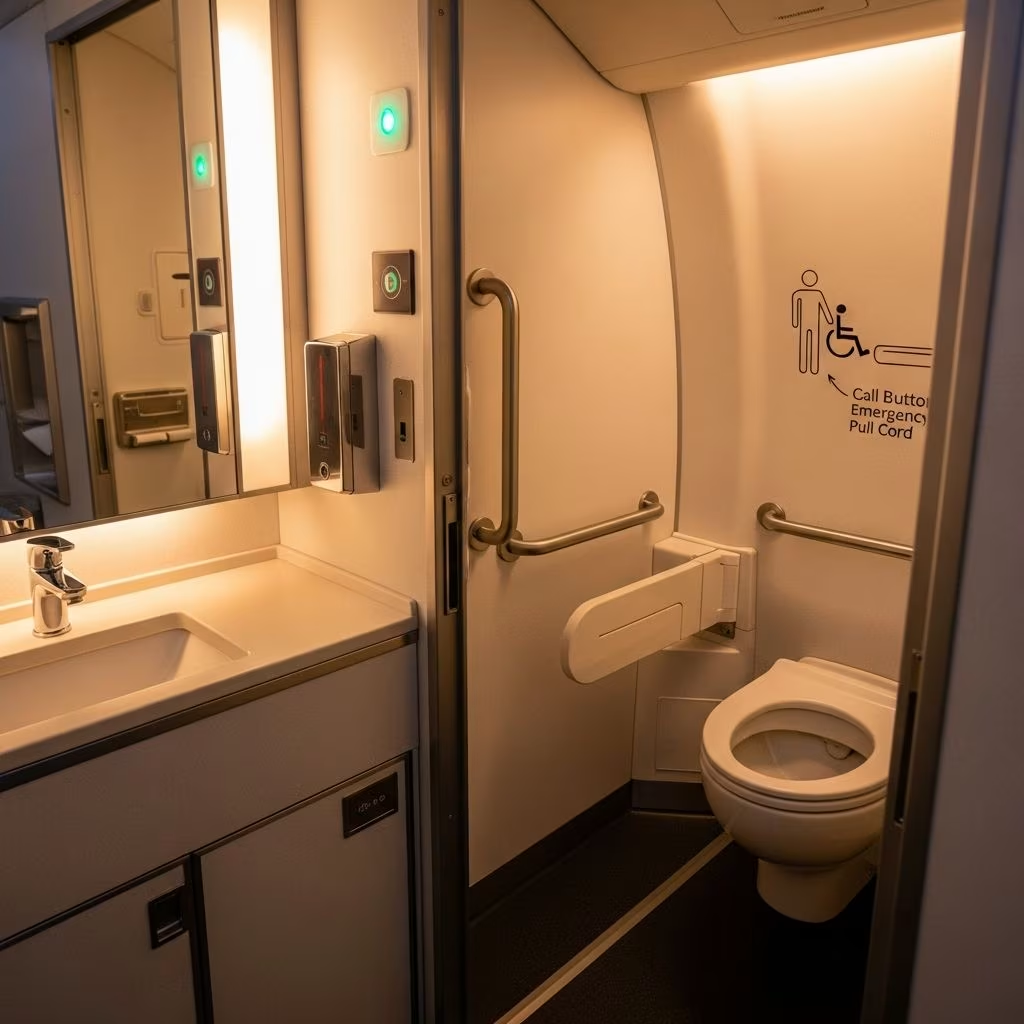
Wide-body aircraft, used on transoceanic routes, sometimes include enlarged restrooms. For instance, certain Boeing 787-8 and 777-300ER models offer wheelchair-accessible bathrooms with dimensions allowing transfers from aisle chairs. These feature grab bars, higher toilets, and more floor space, though availability depends on the airline and route.
| Aircraft Model | Accessible Bathroom | Key Features |
|---|---|---|
| Boeing 787-8 | Yes | Movable armrests in select rows, 37×42-inch cargo door |
| Boeing 777-300ER | Yes | Accessible in multiple sections, 103×61-inch cargo door |
| Narrow-body (e.g., Boeing 737) | No | Standard compact design |
Passengers can verify plane configurations via tools like SeatGuru before booking to select flights with better facilities.
For travelers with mobility impairments, airplane restrooms demand pre-planning. Single-aisle planes lack onboard accessible toilets, but airlines must provide aisle chairs upon 48-hour advance request for aircraft with over 60 seats. Flight attendants assist by wheeling passengers to standard lavatories, though the process involves navigating narrow aisles and potential disruptions.
Double-aisle wide-body planes offer true accessible restrooms, enabling independent or semi-independent use. However, personal experiences highlight inconsistencies, especially on regional European flights favoring smaller aircraft.
A landmark U.S. Department of Transportation rule, announced with Vice President Kamala Harris and Secretary Pete Buttigieg, mandates larger lavatories on new single-aisle planes. This ensures wheelchair users can transfer without excessive strain, addressing a long-standing barrier where millions avoided flying due to restroom inaccessibility.
Lines outside airplane bathrooms spark frequent debates, influenced by cabin class and flight direction. On U.S.-bound international flights, security directives prohibit passenger congregation near lavatories to mitigate risks, restricting use to one’s ticketed cabin except for special needs cases. Flight attendants often announce this policy, creating confusion if misapplied outbound.
Domestically, queuing is generally permitted when the seatbelt sign is off, provided it doesn’t block aisles or emergency exits. International norms allow lines but emphasize courtesy to avoid impeding service carts.
Help buttons inside lavatories alert crew if assistance is needed, activating cabin lights and sounds.
Proactive itinerary design minimizes in-flight discomfort. Opt for multi-segment flights with generous layovers, leveraging airport accessible restrooms. Major hubs offer spacious, equipped facilities, far superior to aircraft options.
Research layover airports for reliable accessible bathrooms, especially amid delays. Aisle seats adjacent to lavatories reduce wait times and travel distance.
| Action | Why It Helps |
|---|---|
| Review seat map | Identify proximity to bathrooms |
| Book wide-body flights | Access to enlarged facilities |
| Request aisle chair 48+ hours ahead | Ensures mobility support |
| Plan hydration around layovers | Avoids peak in-flight needs |
| Pack sanitation kit | Maintains hygiene standards |
Cleanliness varies; many passengers report subpar conditions. Combat this with personal wipes, sprays, and gloves. For long flights, timing usage before meal services avoids cart delays in aisle chair retrieval.
Dehydration strategies help: limit fluids pre-boarding but stay hydrated overall. Families with children or medical needs should notify crew early for accommodations.
U.S. DOT enforces Air Carrier Access Act provisions, requiring reasonable accommodations. Airlines like United detail accessible features per model, including movable armrests aiding transfers. Internationally, ICAO standards promote inclusivity, though enforcement varies.
Report issues via airline hotlines or DOT complaints for systemic improvements.
Yes on most domestic flights when safe; restricted on U.S.-inbound internationals to prevent congregation.
No, primarily wide-body long-haul aircraft; new rules expand this to single-aisles.
Book 48 hours in advance; inform crew upon boarding.
Typically no on international U.S. arrivals; ask crew otherwise.
Press the help button for crew alert.
Ongoing regulations promise standardized larger lavatories, reducing barriers. Airlines invest in aisle chair improvements and staff training, fostering equitable skies for all.
