

 Travel Essentials
 Travel Essentials

Learn what common airplane sounds mean—from engine roar to landing gear thumps—so every flight feels less mysterious and less stressful.
 Travel Essentials
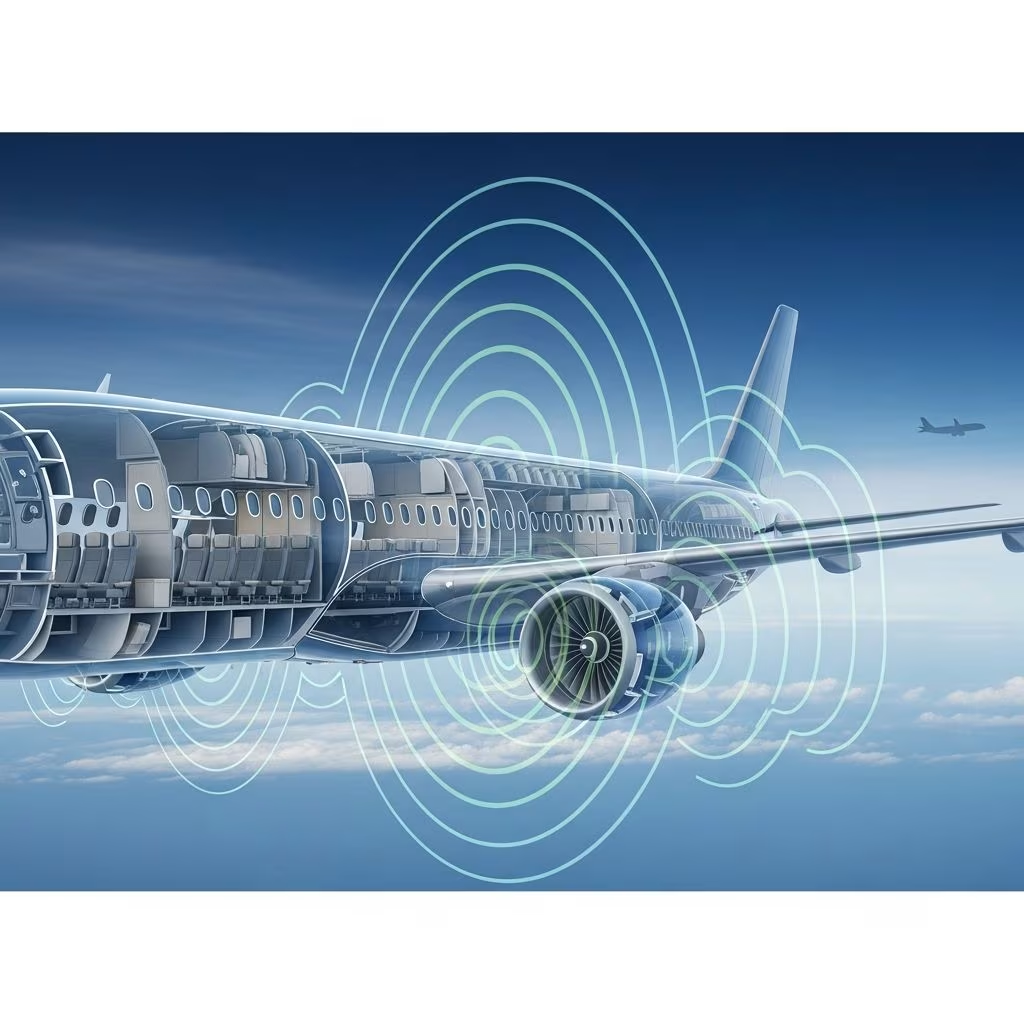
Air travel captivates millions with its blend of engineering marvel and routine operations, yet unfamiliar sounds often spark unease among passengers. From deep engine growls to sudden thumps, these noises are integral to safe flight but can alarm the uninitiated. This guide breaks down the most common auditory cues encountered during a commercial flight, drawing from pilot explanations and aviation principles to provide clarity and reassurance.
Before wheels leave the tarmac, several distinctive sounds signal the aircraft’s awakening. One of the first you might notice is a high-pitched whine or roar emanating from the tail section, especially if seated near the rear or boarding via stairs at a remote gate. This originates from the Auxiliary Power Unit (APU), a small turbine engine that supplies electricity and air conditioning when external ground power disconnects.
As engines spool up for taxiing, particularly on Airbus models, a peculiar barking or woofing noise may resonate from below the cabin floor. Known as the Power Transfer Unit (PTU) activation, this hydraulic system balances pressure when operating on a single engine for efficiency, mimicking a large dog’s bark but posing no safety risk. Passengers often report this during startup or low-speed ground movement.
The takeoff roll unleashes the aircraft’s raw power through escalating engine noise—a deep, droning growl that builds to a forceful roar as thrust increases. This steady hum, sometimes whinier on modern jets, reflects engines reaching maximum output to generate lift. Concurrently, wing-mounted motors whir as flaps and slats extend, high-lift devices that boost airflow over wings at low speeds.
Overhead, single or double chimes—resembling doorbell dings—facilitate crew coordination. A single chime often indicates a passenger call button or routine intercom query, while doubles signal imminent runway lineup. Post-liftoff, a subtle engine spool-down occurs during thrust reduction to climb settings, conserving fuel without altering ascent rate, though it may feel like a momentary drop.
| Sound | Cause | Timing |
|---|---|---|
| Engine roar buildup | Thrust increase | Runway roll |
| Wing whirring | Flaps/slats extension | Pre-takeoff |
| Chimes (1-2) | Crew/passenger signals | Throughout takeoff |
| Post-takeoff rumble-thump | Gear retraction | Immediately after liftoff |
The most noticeable post-takeoff jolt is the landing gear retraction: a pronounced rumble-thump as hydraulic systems tuck wheels into bays, louder near wings or front fuselage due to nose gear braking. Overhead bins may rattle slightly from vibrations, a designed tolerance for such stresses.
At cruising heights around 35,000-40,000 feet, the cabin settles into a consistent drone from engines and air rushing over the fuselage. Air conditioning vents may vary in whoosh intensity, adjusting for cabin pressurization—maintained at 6,000-8,000 feet equivalent for comfort despite high altitude. This modulation prioritizes systems like anti-icing or bleed air extraction.
Intermittent high-pitched chimes pierce the hum, typically from passenger service requests (light illuminates overhead) or crew announcements. Galley areas, especially on Airbus, might creak during turbulence or maneuvers, attributed to plastic casings flexing harmlessly. These are brief and confined when seatbelt signs activate.
As descent begins, familiar whirs return: flaps and slats extend anew, creating a rumbling vibration from wing mechanisms reshaping for low-speed lift. Engine pitch may rise slightly with speed brakes or thrust adjustments. A significant thump signals landing gear deployment—doors opening, struts extending, and locking—with accompanying wind rush.
Mechanical groans or bangs during final approach stem from speed brake panels (spoilers) deploying to control descent rate, felt more acutely in rear seats. Cabin crew chimes intensify for landing prep, often triples for urgency.
Contact with the runway produces dual bumps from main and nose gear absorption, followed by screeching tire smoke and reverse thrust roar as engines spool backward to decelerate. Brake fans whir post-touchdown, cooling rotors from high-speed friction. Spoilers rise with a whoosh, dumping lift to weight wings for braking efficacy.
Modern airliners balance efficiency, safety, and passenger comfort through complex systems. High-bypass turbofan engines produce directional noise forward for thrust, minimized rearward by design. Hydraulic actuators for gear and flaps generate thumps from fluid pressure shifts. Cabin chimes standardize across fleets for quick, unambiguous communication without voice.
Pressurization packs draw engine bleed air, modulating vent flow and contributing to whooshes. All sounds undergo rigorous certification; Federal Aviation Administration (FAA) standards ensure they remain within safe operational envelopes.
For nervous flyers, contextualizing noises reduces stress. Pilots emphasize most are routine, like a car’s gear shifts. Apps simulating cabin sounds aid desensitization, while explaining via pre-flight videos builds confidence. Studies show informed passengers report 20-30% less anxiety.
This PTU activation on Airbus aircraft equalizes hydraulic pressure during single-engine ops, sounding like barks but fully normal.
Thrust reduces from takeoff to climb power for fuel efficiency; the plane continues ascending steadily.
No, bins withstand forces exceeding turbulence or takeoffs; rattles are cosmetic flexing.
Single: call bell; double: takeoff prep; triple: landing imminent or urgent crew alert.
Yes, from gear doors opening and higher airspeed over fuselage.
Seat choice influences perception: wings minimize gear thumps, rear amplifies APU. Track phases via altimeter apps correlating sounds to altitude. Enthusiasts record flights for analysis, noting variations by model (Boeing vs. Airbus).
In summary, airplane symphonies orchestrate safe passage; familiarity transforms apprehension into appreciation of aviation’s precision.
