

 Travel Essentials
 Travel Essentials

Explore the science behind airplane turbulence, from causes like jet streams and thermals to safety tips and intensity classifications for worry-free air travel.
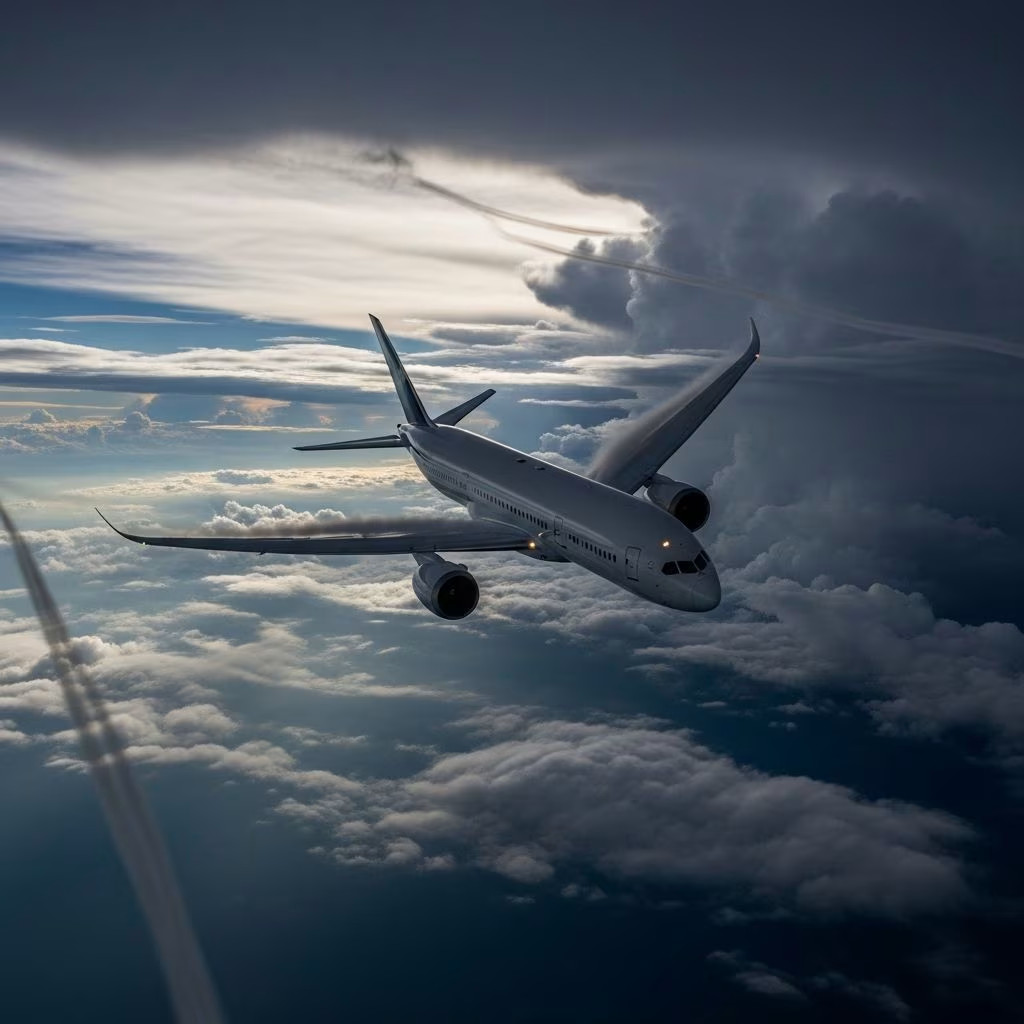 Travel Essentials
Airplane turbulence refers to irregular air movements caused by eddies, vertical currents, or wind shear, leading to sudden jolts during flight that can range from mild bumps to intense shaking.
Turbulence arises from disruptions in smooth airflow, primarily through two mechanisms: convective currents from uneven surface heating and mechanical obstructions like mountains or buildings. When the sun warms the ground unevenly, hot air rises in thermals while cooler air sinks, creating pockets of unstable air that aircraft encounter as bumpy rides. These vertical motions extend from the surface up to cloud tops in convective weather, intensifying with stronger updrafts.
Mechanical turbulence occurs when wind encounters physical barriers, such as hills or urban structures, generating eddies that propagate downstream and unsettle passing aircraft. At higher altitudes, phenomena like jet streams—narrow bands of strong winds—produce wind shear, where rapid changes in speed or direction cause clear air turbulence (CAT), invisible and hard to predict.
Aviation authorities classify turbulence by its effects on aircraft control and passenger comfort, helping pilots communicate risks via PIREPs (Pilot Reports). The table below outlines the standard levels:
| Intensity | Aircraft Effects | Passenger Experience |
|---|---|---|
| Light | Slight erratic changes in altitude/attitude | Minor bumps; loose items may shift slightly |
| Moderate | Noticeable changes but aircraft remains in control | Strain against seatbelts; objects dislodge |
| Severe | Large abrupt changes; possible momentary loss of control | Violent forces against seatbelts |
| Extreme | Violent tossing; nearly impossible to control; potential structural damage | Extreme forces; high injury risk |
Chop, a milder rhythmic bumpiness, often precedes more intense turbulence and is common in layered atmospheres.
CAT poses unique challenges as it occurs in visually clear skies, driven by jet stream gradients where winds shift abruptly. Pilots rely on weather radar, SIGMETs, and PIREPs since it’s undetectable visually. Recent studies emphasize its rise with climate shifts, urging advanced forecasting.
Pilots use preflight weather briefings, onboard radar for convective activity, and real-time PIREPs to adjust altitudes or routes. For CAT, crossing jet streams at gentle angles minimizes shear exposure. During encounters, reducing speed to maneuvering limits prevents structural stress, and crews secure cabins while advising seatbelt use.
The FAA stresses keeping seatbelts fastened whenever seated, as most injuries stem from unbelted passengers being tossed. Larger aircraft handle turbulence better due to mass and wing design, but all flights can experience it. Stay seated, avoid overhead bins, and follow crew instructions promptly.
Modern jets feature reinforced structures tested for extreme gusts, with flight controls limiting maneuvers in rough air. Design speeds account for turbulence loads, ensuring safety even in severe conditions.
Tools like turbulence prediction models from NOAA integrate satellite, radar, and pilot data for proactive alerts. Future LIDAR systems promise real-time CAT detection, enhancing safety.
While uncomfortable, certified aircraft withstand severe turbulence without structural failure; injuries are rare with proper precautions.
Lighter aircraft respond more to air movements due to lower inertia.
No recorded crashes from CAT alone; pilots are trained to manage it safely.
Choose seats over wings for stability, keep belts on, and opt for early/late flights to dodge thermals.
Models suggest increased CAT frequency with stronger jet streams.
Turbulence, though startling, is a normal atmospheric feature pilots routinely navigate. Understanding its causes empowers confident travel—buckle up and enjoy the ride above the clouds.
