


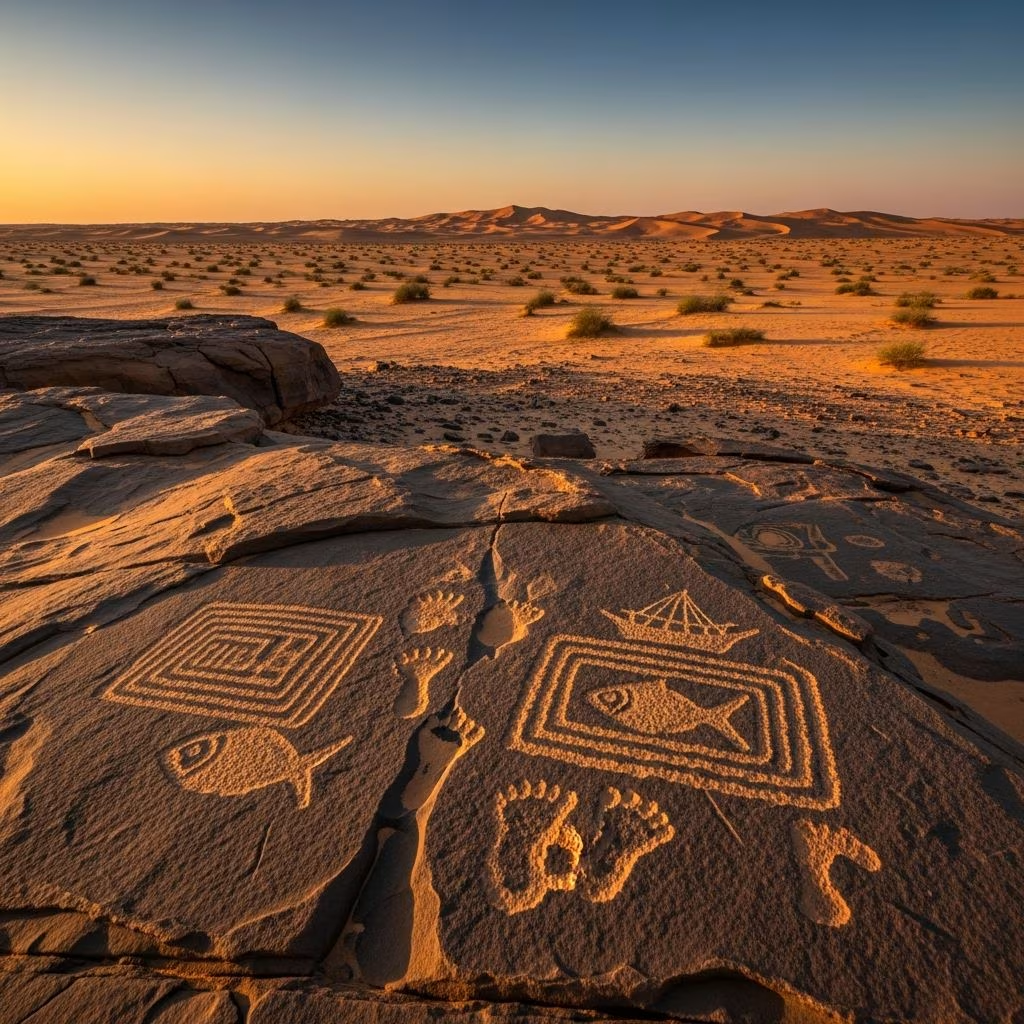
Tucked away in Qatar’s remote northeastern landscape lies one of the Middle East’s most captivating archaeological mysteries. The Al Jassasiya rock art site represents a window into the ancient past, preserving nearly nine centuries of human expression carved into weathered limestone. This sprawling desert sanctuary contains approximately 874 distinct petroglyphs, making it the most substantial petroglyph collection across Qatar’s coastline and a significant archaeological treasure rarely matched anywhere in the region.
Understanding the Site’s Historical Significance
The Al Jassasiya rock carvings constitute a remarkable archive of ancient human civilization, with specialists estimating that the earliest etchings originate from the Neolithic period. The site’s discovery in 1957 marked a pivotal moment in Qatari archaeology, revealing what appeared to be nothing more than an abandoned limestone extraction zone to be instead a repository of invaluable cultural heritage. The immediate cessation of quarrying operations following this discovery underscores the site’s archaeological importance and protected status within Qatar’s cultural framework.
What distinguishes Al Jassasiya from other petroglyph sites discovered throughout Qatar and neighboring regions is both the sheer concentration of carvings and their exceptional state of preservation. While rock art exists elsewhere along Qatar’s coastal regions and on nearby Al Hawar Island in Bahrain, Al Jassasiya stands as the preeminent example of this ancient artistic tradition. The site sprawls across an expansive 700-meter-wide terrain, providing visitors with an immersive experience of ancient creative expression.
Deciphering the Artistic Vocabulary of Ancient Petroglyphs
The petroglyphs at Al Jassasiya represent a fascinating visual language that archaeologists continue to interpret and understand. The collection encompasses diverse motifs that provide glimpses into the daily existence, spiritual beliefs, and economic activities of ancient inhabitants.
Maritime and Animal Imagery
Among the most distinctive carvings are depictions of traditional sailing vessels known as dhows. These maritime representations offer compelling evidence of the region’s historical connection to seafaring commerce and fishing traditions that persist in modern Qatar. The presence of dhow carvings suggests that maritime activities formed a cornerstone of ancient economic life in this coastal region.
The site also features elaborate representations of fauna significant to the ancient inhabitants. Fish carvings dominate many sections, reflecting the population’s reliance on marine resources. Equally notable are etchings portraying ostriches, creatures that once inhabited the Arabian Peninsula’s desert ecosystems. Scorpion depictions appear throughout the site, their meaning and significance remaining subjects of scholarly debate.
Geometric Patterns and Mysterious Cup Marks
Rosette designs—circular patterns radiating outward from a central point—appear frequently among the petroglyphs, their purpose continuing to puzzle researchers. These geometric formations may have held symbolic or decorative significance, or potentially served ceremonial functions within ancient communities.
Perhaps the most enigmatic features are the numerous cup-shaped indentations scattered across the limestone surfaces. Researchers have proposed multiple interpretations for these mysterious marks. One prevailing theory suggests these cups served as receptacles for storing pearls, an interpretation supported by the region’s historical significance as a pearl-diving center. Alternatively, some scholars propose that the cup arrangements formed the game boards for ancient pastimes known as Al Haloosa or Al Huwaila, primitive versions of what modern enthusiasts recognize as Mancala-style games.
Human Representations
The collection includes numerous footprint carvings and other anthropomorphic imagery, suggesting that ancient artists sought to document human presence and activity. These handprints and footmarks may represent territorial claims, commemorations of significant individuals, or simply personal expressions of identity within the broader community.
Geographic Location and Access Information
For those planning a visit to this remarkable heritage site, understanding its precise location and accessibility remains essential. Al Jassasiya sits approximately 40 to 60 kilometers north of Doha, Qatar’s bustling capital city, positioning it within reasonable traveling distance for day-trippers and heritage enthusiasts.
Navigational Directions
The primary route to the site involves traveling northward from Doha via Al Shamal Road, a well-maintained highway that forms the backbone of Qatar’s northern corridor. Visitors should watch for the Ras Laffan exit, after which they continue for approximately 8 kilometers before turning left. Following this turn, the Al Jassasiya site lies roughly 3 kilometers further along the road. The main concentration of petroglyphs occupies the left side of the thoroughfare, though additional carvings exist on the right side as well.
Transportation Considerations
While the primary site remains accessible via conventional sedan vehicles using established tarmac roads, exploration of deeper desert regions benefits from four-wheel-drive capabilities. The main access route has been improved to accommodate regular automobiles, democratizing visitor access compared to earlier periods when specialized vehicles were mandatory. Most travelers drive themselves, though car rental services operate throughout Doha and provide comprehensive insurance options. Alternatively, private taxi services or organized tour companies offer guided experiences, typically including transportation, expert commentary, and necessary site permits.
Temporal Proximity to Other Attractions
The site’s location positions it approximately 10 minutes from French Beach, enabling visitors to combine archaeological exploration with coastal relaxation during comprehensive northern Qatar itineraries.
Optimal Times for Visitation
Qatar’s extreme desert climate necessitates strategic planning regarding when to visit Al Jassasiya. The region experiences scorching summer temperatures that frequently exceed 45°C (113°F), making daytime exploration during these months physically challenging and potentially dangerous.
Winter months, particularly from November through February, provide dramatically more comfortable visiting conditions. Early morning excursions during these cooler seasons allow extended exploration without the oppressive heat exposure. Late afternoon visits during winter months similarly appeal to photographers seeking optimal lighting conditions as the sun descends toward the horizon, casting dramatic shadows that accentuate the petroglyphs’ relief details.
Site Infrastructure and Visitor Experience
Contemporary conservation efforts have transformed Al Jassasiya into a protected heritage zone while maintaining its rustic authenticity. The area is enclosed by fencing designed to preserve the site and manage visitor flow, with multiple gates providing access points. This protective infrastructure safeguards the petroglyphs from vehicular damage and unauthorized modification while remaining unobtrusive.
The absence of extensive signage throughout the site creates an atmosphere of discovery and mystery, though it requires visitors to exercise patience in locating individual petroglyphs. Most carvings concentrate along the ridge formation paralleling the main road, providing a natural framework for exploration. The limestone-dominated landscape, with its scattered mounds and abandoned structures, creates an evocative environment that transports visitors backward in time.
Visitors are strongly encouraged to engage local tour guides who possess necessary permits and comprehensive knowledge of the site’s archaeological significance. These professional guides enhance the experience substantially by identifying otherwise easily overlooked carvings and offering contextual interpretation regarding the petroglyphs’ probable meanings and historical contexts.
Frequently Asked Questions About Al Jassasiya
What is the estimated age of these petroglyphs?
The earliest carvings are believed to originate from the Neolithic period, though precise dating remains challenging. Multiple phases of creation likely occurred across centuries, with different sections potentially representing distinct chronological periods.
How many petroglyphs exist at the site?
The site contains approximately 874 documented carvings, though new discoveries or documentation efforts may adjust this total. The scale of this collection makes Al Jassasiya exceptionally significant globally.
Can I visit independently or must I hire a guide?
While independent visitation is possible for those who gain site access, hiring a knowledgeable local guide substantially enhances the experience and ensures appropriate conduct regarding this protected heritage site.
What should I bring when visiting?
Essential items include abundant water supplies, sun protection equipment, comfortable walking footwear suitable for uneven terrain, and a camera for documentation. During winter visits, light layers provide flexibility for temperature variations.
Are facilities available at the site?
The site maintains minimal amenities, with no restaurants, shops, or restroom facilities present. Visitors should prepare accordingly and bring necessary supplies from Doha.
The Enduring Mystery and Archaeological Significance
What renders Al Jassasiya uniquely compelling is the profound mystery surrounding its petroglyphs’ creators and underlying purposes. Despite scholarly attention and archaeological investigation, substantial questions remain unanswered. The combination of recognizable imagery—boats, animals, footprints—alongside utterly enigmatic symbols creates an interpretive challenge that continues attracting researchers and curious visitors.
The site’s uniqueness extends beyond its scale and preservation to its context. Located in a landscape that once functioned as a thriving trade and community hub centuries ago, the petroglyphs represent creative expressions by populations deeply connected to maritime commerce and desert existence. The limestone quarry’s later exploitation demonstrates how ancient heritage nearly escaped obliteration through industrial activity, highlighting the crucial importance of archaeological awareness and preservation protocols.
Al Jassasiya stands as an irreplaceable cultural monument documenting a civilization whose detailed history remains largely unknown. The petroglyphs serve as silent testimonies to ancient aspirations, beliefs, and daily realities, offering contemporary observers tangible connections to their predecessors across millennia.
References
- Al Jassasiya Rock Art Site Carvings — Visit Qatar. 2024. https://visitqatar.com/intl-en/things-to-do/art-culture/heritage-sites/al-jassasiya-rock-art-site
- Al Jassasiya Rock Carvings — Qatar Tourism Authority. 2024. https://www.qatartourism.org/explore-qatar/al-jassasiya-rock-carvings/
- Al Jassasiya Petroglyphs in Qatar — Atlas Obscura. 2024. https://www.atlasobscura.com/places/al-jassasiya-petroglyphs
- Exploring Qatar’s Mysterious Rock Carvings of Al Jassasiya — Vagabondish. 2024. https://vagabondish.com/al-jassasiya-rock-carvings-qatar/
- Al Jassasiya Rock Carvings — Expedia Travel Guides. 2024. https://www.expedia.com/Al-Jassasiya-Rock-Carvings-Al-Shamal.d553248635979546105.Vacation-Attraction

