

 Travel Essentials
 Travel Essentials

Discover Alaska's eight national parks, from Denali's towering peaks to Glacier Bay's tidewater glaciers. Complete guide to planning your Alaskan adventure.
 Travel Essentials
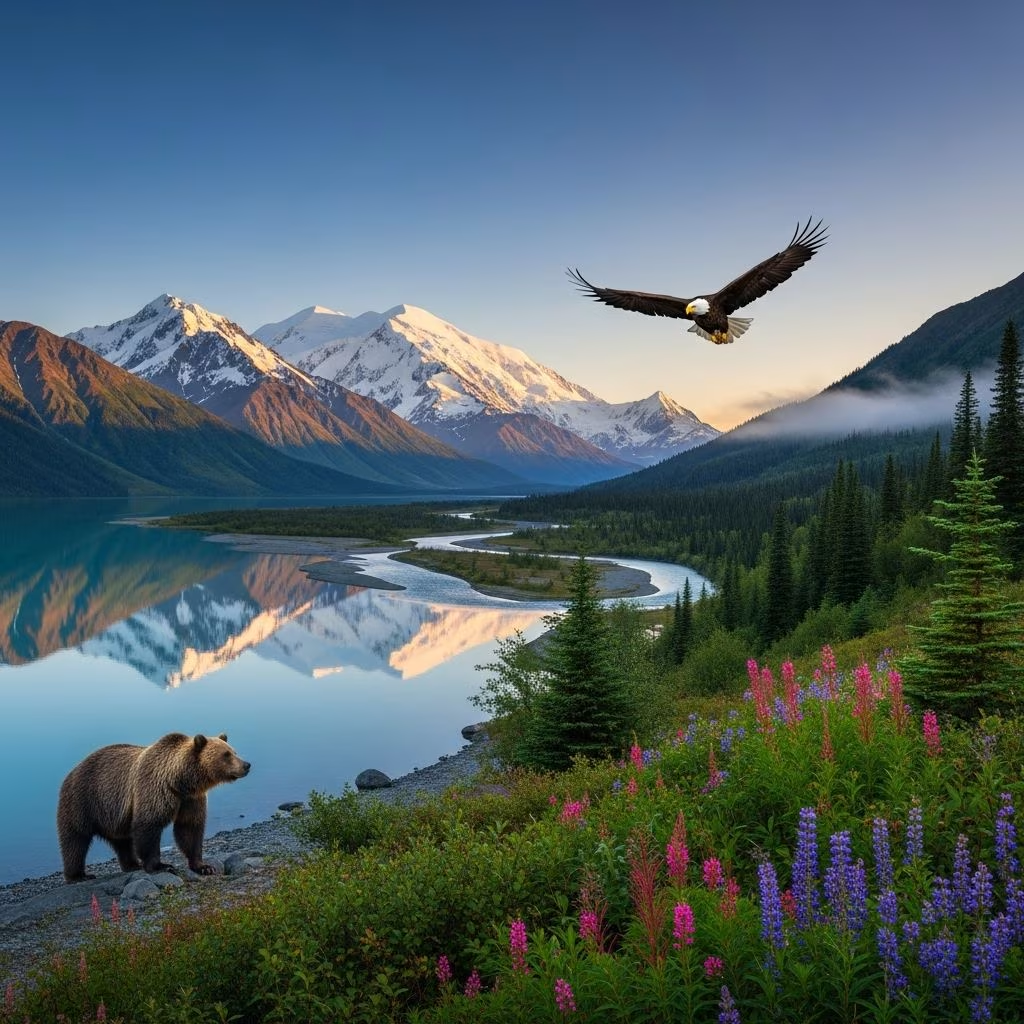
Alaska stands as a conservation treasure, protecting nearly one-third of all U.S. National Park Service land within its borders. The state encompasses eight distinct national parks, each offering dramatically different ecosystems, geological formations, and wildlife encounters. Whether you seek towering mountain peaks, calving glaciers, volcanic landscapes, or Arctic tundra, Alaska’s national parks deliver some of the most remote and unspoiled wilderness experiences available in North America. This comprehensive guide explores each of these protected lands, providing essential information for planning your Alaskan adventure.
Alaska’s national parks represent a remarkable concentration of superlatives. Four of the five largest national parks in the entire United States are located in Alaska, and the state contains ten of the country’s highest mountain peaks. These protected areas preserve not only dramatic natural wonders but also the traditional homelands of Indigenous peoples who have inhabited this region for thousands of years. The parks range from 1.43 million acres to over 13 million acres, offering experiences for every type of traveler, from day hikers to serious mountaineers.
Denali National Park and Preserve stands as Alaska’s most famous protected area, encompassing approximately six million acres of pristine wilderness. The park’s centerpiece is Mount Denali itself, standing at 20,310 feet and representing North America’s tallest peak. Known to the Indigenous Athabascan people as “the Great One,” this mountain dominates the landscape and shapes the entire visitor experience.
Beyond its celebrated mountain, Denali protects a vast ecosystem transitioning from taiga forest at lower elevations to high alpine tundra at higher altitudes. A single ribbon of road bisects this immense park, creating the primary access route for most visitors. Along this corridor, travelers witness the dramatic transformation of vegetation zones while observing wildlife including moose, caribou, grizzly bears, and wolves living in their natural, unfenced habitat.
The park was originally established in 1917 specifically to protect Dall sheep populations from overhunting, though its mandate has since expanded to preserve the entire ecosystem. Visitors can enjoy guided tours, hiking excursions, backcountry expeditions, and photography opportunities.
Located in Southeast Alaska, Glacier Bay National Park and Preserve covers 3.3 million acres of stunning coastal and mountainous terrain. The park’s defining feature is its collection of tidewater glaciers—seven massive ice formations that flow from mountaintops directly into the sea, where they calve millennia-old ice with thunderous crashes.
Glacier Bay protects a diverse landscape encompassing rugged mountains, dynamic glaciers, temperate rainforest, wild coastlines, and sheltered fjords. The park represents the homeland of the Huna and Yakutat Lingít peoples and is recognized as part of a UNESCO World Heritage Site and one of the world’s largest internationally protected Biosphere Reserves.
The park serves as an important research center where scientists study glacial processes and ecological dynamics. Marine wildlife abounds, including humpback whales, orcas, sea otters, brown bears, and numerous seabird species. Most visitors experience Glacier Bay through boat tours, kayaking expeditions, or cruise ship visits, as land access is limited.
Kenai Fjords National Park earned its name from the stunning fjords carved by ancient glaciers, though the park’s most remarkable feature is the Harding Icefield, which feeds nearly 40 individual glaciers cascading down mountainsides. This dramatic glacial landscape creates some of Alaska’s most visually impressive terrain.
The park preserves a unique environment where massive ice formations meet the sea. Visitors can explore this landscape through various activities: boat tours provide viewing opportunities for calving glaciers and marine wildlife including whales, sea lions, and puffins; the challenging Harding Icefield Trail offers hikers a glimpse into conditions during the previous Ice Age; and sea kayaking through Resurrection Bay provides intimate encounters with the fjord environment.
Kenai Fjords represents one of Alaska’s three national parks accessible by automobile, making it particularly popular with visitors who prefer road-based travel rather than charter flights.
Wrangell-St. Elias National Park stands as the largest national park in the entire United States, encompassing 13.2 million acres—nearly six times the size of Yellowstone. This vast preserve stretches from the Gulf of Alaska to towering mountains above, protecting a landscape of extraordinary geological diversity.
The park features glaciers, volcanoes, and mountain ranges, including the 76-mile-long Hubbard Glacier, the longest tidewater glacier in North America. Several historic mining sites from Alaska’s gold rush era remain within the park boundaries, including the evocative Kennecott Ghost Town, which offers visitors a tangible connection to the region’s industrial heritage.
Despite its immense size and attractions, Wrangell-St. Elias remains relatively unknown compared to other Alaskan parks. Activities available to visitors include hiking, backpacking, mountaineering, and scenic flights. The park is accessible by road from the small town of McCarthy, making it one of Alaska’s few parks reachable without charter flights.
Katmai National Park preserves a landscape transformed by one of the twentieth century’s most significant volcanic events. The 1912 eruption of Novarupta created the Valley of Ten Thousand Smokes, a vast volcanic landscape of ash flows and pumice that remains visually striking today. The park was initially protected to preserve this geological wonder but has since become equally famous for its brown bear population.
The park’s famous Brooks Camp offers one of North America’s premier locations for bear viewing and photography. During salmon runs, visitors witness brown bears congregating to catch fish, providing unparalleled opportunities to observe these magnificent creatures in their natural habitat. Beyond bear watching, Katmai offers hiking through volcanic terrain, fishing in productive waters, and exploration of the otherworldly volcanic landscape. Access requires charter flights from nearby towns.
Lake Clark National Park combines stunning natural features—volcanoes, glaciers, and the pristine lake for which it was named—with significant cultural importance. The park preserves the traditional lands of the Dena’ina people, who have inhabited this region for thousands of years and maintain their connection to the landscape through subsistence practices and cultural traditions.
The park’s diverse ecosystems support an array of wildlife, from bears and caribou to fish species important to both ecological processes and human communities. Visitors access the park primarily through charter flights, and activities include wildlife viewing, fishing, and exploration of the varied landscapes.
Gates of the Arctic National Park and Preserve protects some of Alaska’s most remote and pristine Arctic wilderness. The park encompasses vast territories of relatively unexplored landscapes, making it ideal for experienced backcountry travelers seeking isolation and adventure. Access is primarily by charter flight, and the park offers minimal infrastructure compared to other Alaskan parks, preserving its wilderness character.
As one of the four largest national parks in the United States, Gates of the Arctic provides opportunities for mountaineering, backpacking, and wildlife observation for those prepared for challenging Arctic conditions.
Kobuk Valley National Park offers a distinctive experience combining Arctic desert features with traditional wildlife migrations. The Great Kobuk Sand Dunes rise to heights of 100 feet, creating a striking desert-like landscape within the Arctic environment—a geological anomaly that makes the park visually unique.
Each year, hundreds of thousands of caribou traverse the Kobuk River during seasonal migrations, creating a dynamic natural spectacle. The park also protects numerous archaeological sites providing insight into the region’s rich cultural history. Visitors can hike the impressive sand dunes, fish in the Kobuk River, and potentially witness the remarkable caribou migration, though the latter depends on timing and conditions.
Only three of Alaska’s eight national parks are accessible by automobile: Kenai Fjords National Park, Denali National Park, and Wrangell-St. Elias National Park. These parks offer the most convenient access for visitors who prefer driving and can be incorporated into multi-park road trips.
The remaining five parks—Glacier Bay, Katmai, Lake Clark, Gates of the Arctic, and Kobuk Valley—require charter flights to access, which represent significant expenses but provide access to Alaska’s most remote wilderness areas. Most visitors to these parks arrive via flights from Anchorage, Fairbanks, or other regional hubs.
Alaska’s national parks are primarily accessible during summer months (June through September), when weather conditions are most favorable and services operate at full capacity. Shoulder seasons offer excellent opportunities for wildlife viewing, while winter access is extremely limited and generally only available in Denali.
Denali National Park offers the most accessible introduction to Alaska’s wilderness, with developed infrastructure, a scenic park road, and abundant wildlife viewing opportunities. Alternatively, Kenai Fjords provides spectacular glacial scenery accessible by road and boat tours.
Late June through early September represents the optimal visiting season, offering extended daylight, mild weather, and full availability of visitor services and activities.
Day hiking and boat tours require minimal special preparation, but backcountry exploration, mountaineering, or visits to remote parks demand significant experience and appropriate gear. Consult specific park websites for recommendations.
Most parks charge no entrance fee, but costs vary based on activities: guided tours, lodging, charter flights, and internal transportation generate substantial expenses. Budgeting ranges from modest day-trip costs to thousands of dollars for comprehensive multi-park expeditions.
Alaska’s national parks represent an ongoing commitment to environmental preservation while honoring the rights and traditions of Indigenous peoples. Many parks explicitly recognize tribal homelands and incorporate Indigenous knowledge into management practices. Visitors are encouraged to learn about and respect these cultural dimensions alongside natural features.
Alaska’s national parks collectively preserve ecosystems, geological wonders, and wildlife populations on a scale matched nowhere else in the United States. Whether traveling to iconic Denali, exploring Glacier Bay’s tidewater glaciers, or venturing to remote wilderness areas, visitors encounter landscapes and experiences that define the majesty of American wilderness preservation.
