

 Travel Essentials
 Travel Essentials

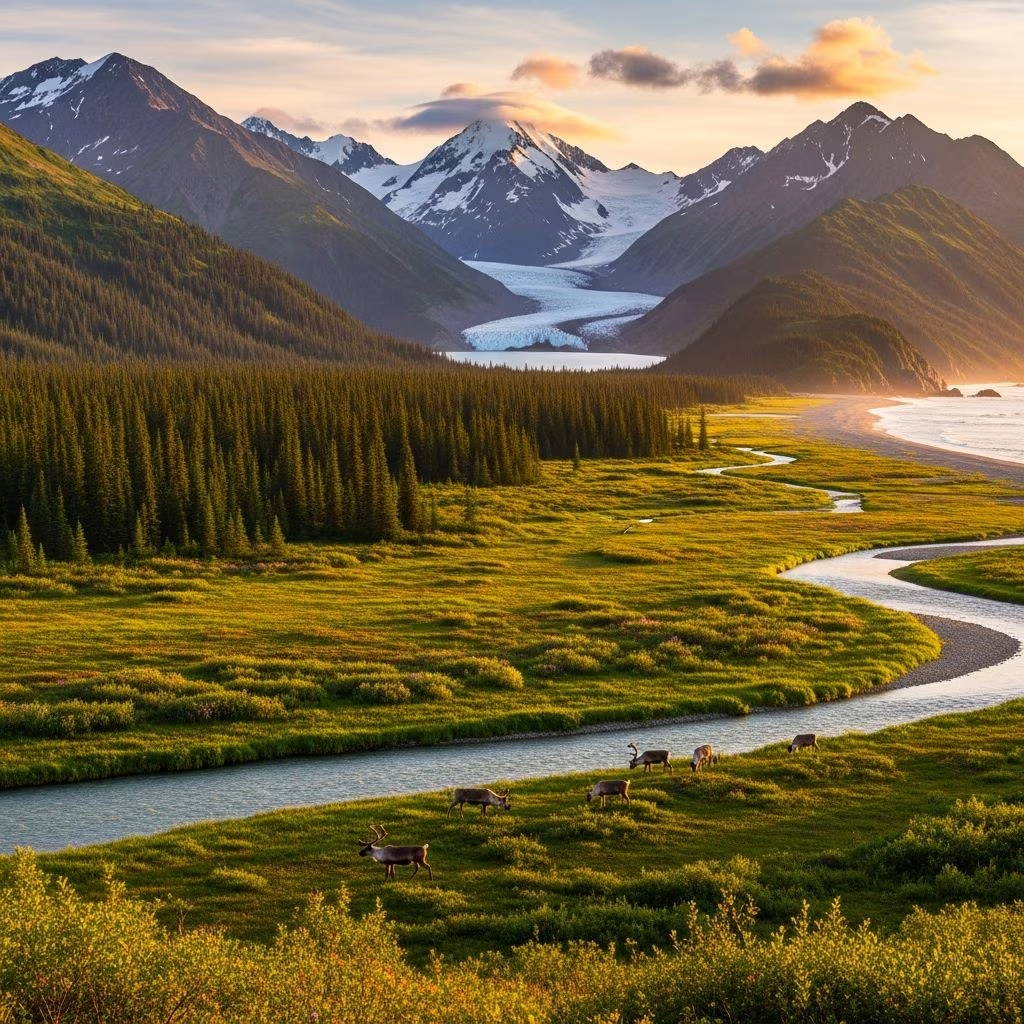
Explore Alaska's five distinct geographic regions, each offering unique natural features and adventure opportunities shaped by climate, terrain, and ecosystems.
 Travel Essentials
Alaska stands as North America’s largest and most geographically diverse state, encompassing an extraordinary range of ecosystems and terrain. The state’s vastness—spanning over 665,000 square miles—creates dramatically different environments across its geography. Understanding these distinct regional characteristics is essential for anyone planning to explore this remarkable destination, as each area offers unique environmental conditions, wildlife populations, and recreational opportunities shaped by its specific geographic and climatic context.
The way visitors experience Alaska depends significantly on which region they choose to explore. Rather than viewing the state as a single unified destination, understanding Alaska as a collection of distinct geographic zones provides crucial insight into what travelers will encounter. Glacial valleys, temperate rainforests, coastal fjords, interior mountains, and arctic tundra each present their own challenges, rewards, and seasonal variations. The diversity of Alaska’s landscapes means that adventure planning requires careful consideration of regional characteristics.
Climate, topography, accessibility, and seasonal factors all vary dramatically across the state’s different zones. A visitor interested in experiencing temperate coastal environments will find very different conditions than someone venturing into interior mountain ranges or arctic regions. This geographic diversity has shaped Alaska’s settlement patterns, economic activities, and cultural traditions across centuries.
Southeast Alaska’s temperate rainforest represents one of North America’s most distinctive ecosystems. This region experiences a maritime climate characterized by significant rainfall, relatively mild temperatures, and dense vegetation. The rainforest environment supports towering stands of spruce, hemlock, and cedar trees alongside a rich understory of ferns, mosses, and other shade-tolerant plants.
The coastal geography features numerous islands, inlets, and waterways that have shaped both the natural environment and human settlement patterns. These water systems remain crucial for transportation, as road networks are limited throughout much of the region. Visitors to this zone encounter dramatic contrasts between emerald-green forests, dark blue waters, and glacier-carved fjords.
Key characteristics of this region include:
Alaska’s interior encompasses vast stretches of boreal forest interspersed with mountain ranges, river valleys, and alpine terrain. This region experiences more extreme temperature variations than coastal areas, with warmer summers and colder winters. The landscape transitions from dense forest at lower elevations to open tundra and bare rock at higher altitudes.
The interior’s geography includes some of North America’s most significant mountain ranges and river systems. These features have profoundly influenced indigenous settlement patterns, subsistence practices, and modern transportation routes. The region remains relatively undeveloped compared to coastal areas, with vast areas accessible only by air or extensive hiking.
Defining features of the interior region:
Alaska contains more glacier ice than any other U.S. state, with extensive glacial systems concentrated in mountainous regions. These ice masses represent remnants of the massive glaciation that shaped the state’s geography during previous ice ages. Glaciers continue to be major landscape-forming features, carving valleys, creating lakes, and influencing regional climate patterns.
Glaciated regions attract visitors seeking dramatic scenery and the visceral experience of encountering massive ice formations. The interplay between glacial ice, meltwater streams, and newly exposed terrain creates dynamic and visually striking environments. Seasonal variation in glacial melt significantly influences water levels, sediment loads, and downstream ecosystems.
Notable aspects of glaciated mountain regions:
Alaska’s northern regions extend into Arctic latitudes, where tundra ecosystems replace forests and glaciers. This environment experiences extreme seasonal variations in daylight, with summer months featuring extended periods of sunlight and winter months characterized by prolonged darkness. The landscape consists primarily of low-growing vegetation adapted to harsh environmental conditions, permafrost soils, and active layer dynamics.
Arctic regions remain among the least accessible and most sparsely populated areas of Alaska. The extreme climate, limited infrastructure, and remoteness create both challenges and opportunities for visitors seeking authentic wilderness experiences. The region’s ecosystems remain highly sensitive to environmental changes, including climate warming and related permafrost degradation.
Characteristics defining Arctic tundra regions:
Alaska’s extensive coastline and numerous islands create unique marine and littoral environments. These zones experience the moderating influences of ocean temperatures while remaining subject to powerful tidal forces and storm systems. Rocky shores, pebble beaches, and sandy strands support distinct communities of organisms adapted to the challenging intertidal and subtidal environments.
Coastal and island regions have historically supported both indigenous populations and more recent settlements due to access to marine resources. The productivity of Alaska’s marine ecosystems remains legendary, supporting commercial fisheries that have shaped the state’s economy and culture. Islands range from large landmasses with substantial populations to remote and uninhabited formations.
Important features of coastal and island regions:
Alaska’s geographic regions experience dramatically different seasonal patterns that influence visitor experiences and activity availability. Summer months provide extended daylight, accessible terrain, and milder weather across most regions, though conditions remain variable. Winter conditions restrict access to many areas while creating unique opportunities in specific locations. Spring and fall serve as transition seasons with their own distinctive characteristics.
| Region | Summer Conditions | Winter Conditions | Best Visit Period |
|---|---|---|---|
| Coastal Rainforest | Mild, wet, extended daylight | Cold, icy, limited daylight | June-September |
| Interior Forest | Warm, long days, excellent hiking | Extreme cold, limited access | June-August |
| Glaciated Mountains | Accessible hiking and climbing | Extreme conditions, avalanche danger | July-September |
| Arctic Tundra | Midnight sun, accessible terrain | Polar night, extreme cold | June-August |
| Coastal Islands | Marine wildlife viewing, boating | Rough seas, limited transportation | May-September |
Each of Alaska’s regions supports specific types of outdoor activities based on environmental conditions and available infrastructure. Coastal temperate regions facilitate marine-based activities including boating, kayaking, and fishing. Interior regions provide extensive hiking and backcountry camping opportunities. Mountainous areas attract mountaineers and alpine enthusiasts. Arctic regions appeal to specialized travelers seeking extreme wilderness experiences.
Regional activity highlights:
Alaska’s diverse landscapes support equally diverse wildlife populations, with species distributions closely aligned to regional characteristics. Marine mammals concentrate in coastal and island waters. Bears utilize coastal salmon streams and interior forests. Caribou herds migrate across tundra and boreal forest regions. Birds utilize various habitats from coastal nesting colonies to interior forests.
Understanding which species inhabit specific regions helps visitors anticipate wildlife encounters and prepare appropriately. Regional variations in wildlife abundance and behavior reflect ecosystem productivity and available resources. Seasonal movements of both residents and migratory species create temporal variations in sighting probabilities.
The vast distances and challenging terrain of Alaska’s regions have created distinctive transportation patterns. Coastal regions benefit from established maritime routes and community connections. Interior regions rely heavily on air transportation, river routes, and limited road corridors. Arctic regions depend almost entirely on air access except where ice roads function seasonally.
Understanding regional transportation options is crucial for trip planning, as accessibility directly influences which destinations remain feasible for visitors with different time and budget constraints. Developed infrastructure exists in major population centers, while remote areas require specialized logistics.
Coastal rainforest regions around Southeast Alaska offer accessible glacier viewing, abundant wildlife, and established tourism infrastructure, making them ideal for visitors new to the state.
June through September provides the most favorable conditions across all regions, with July and August offering peak daylight and warmest temperatures throughout the state.
Requirements vary by region and land ownership. National Parks require permits for backcountry camping, while other areas may have different regulations. Check with specific region authorities before traveling.
Coastal regions provide the most reliable and accessible wildlife viewing, particularly for bears and marine mammals. Interior and Arctic regions support different species but require more specialized access.
Yes, though transportation between regions can be time-consuming and expensive. Combining nearby regions like coastal and glaciated mountain areas is more feasible than attempting extensive multi-regional itineraries.
Layered clothing, waterproof outer layers, sturdy footwear, and region-appropriate gear are essential. Specific requirements vary by chosen region and intended activities.
