

 Travel Essentials
 Travel Essentials

Explore Alaska's vast wilderness, rugged coasts, and pioneering history in this guide to the ultimate American frontier adventure.
 Travel Essentials
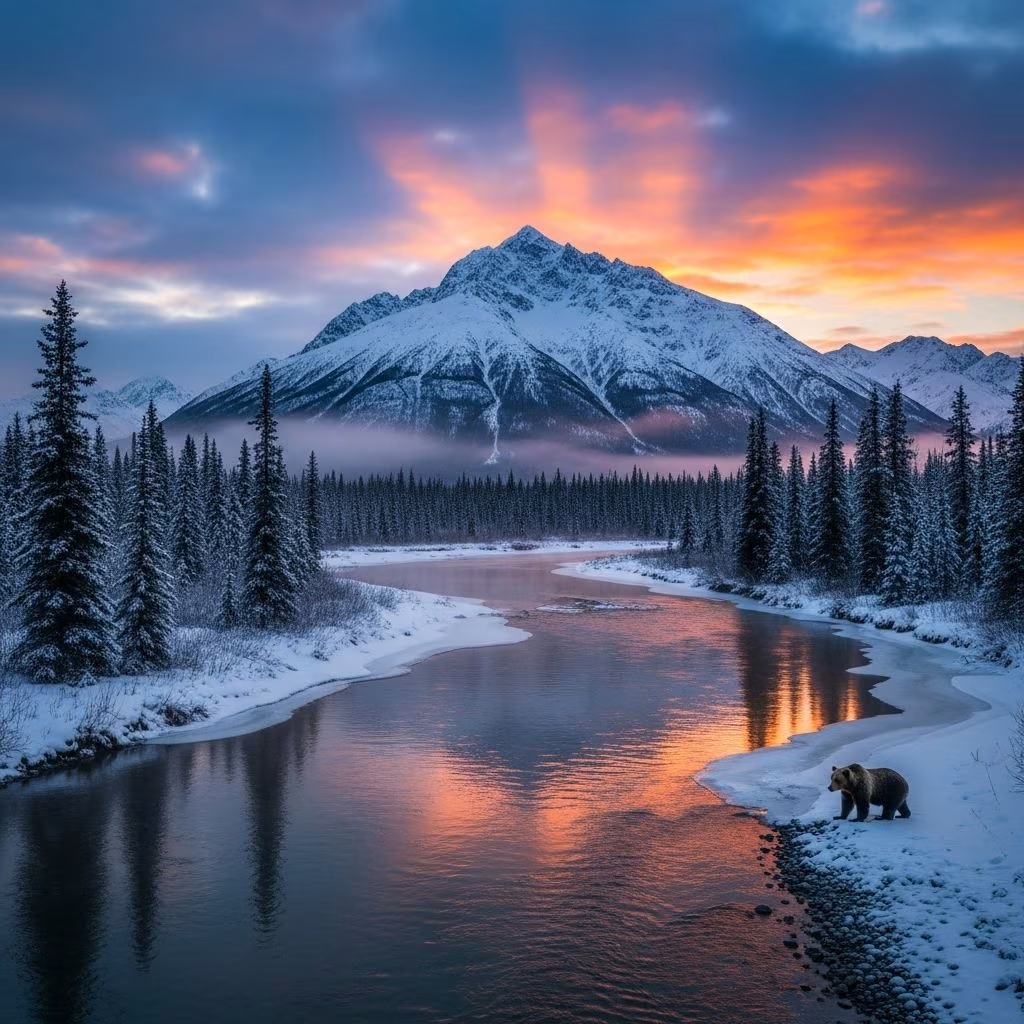
Alaska stands as the ultimate embodiment of untamed America, a colossal expanse of jagged peaks, icy fjords, and dense boreal forests that captivates those seeking raw natural power. Spanning over 663,000 square miles—larger than most countries—this state remains sparsely populated, with more than half its land untouched by roads or settlements. Its nickname, the Last Frontier, evokes images of hardy pioneers pushing boundaries against relentless elements, a legacy that persists today in its remote communities and vast protected areas.
Alaska’s terrain defies easy categorization. To the south, the Panhandle—a 500-mile stretch of islands and channels known as the Inside Passage—features dramatic coastlines battered by Pacific swells, with tides swinging up to 20 feet and hidden reefs posing eternal threats to navigators. Inland, towering ranges like the Alaska and Brooks dominate, cradling extensive glacier fields that carve deep valleys and feed roaring rivers.
The state’s sheer scale means much of it is accessible only by air or sea. Over 3,000 rivers, including the mighty Yukon, wind through taiga forests, while permafrost underlies 80% of the land, limiting agriculture and infrastructure. This isolation fosters unique ecosystems: brown bears roam coastal meadows during salmon runs, while caribou herds migrate across the Arctic tundra.
Human presence in Alaska dates back over 10,000 years, with Indigenous groups like the Tlingit, Haida, and Yup’ik adapting masterfully to harsh conditions. By the late 1700s, only about 15,000 Tlingit inhabited the resource-rich southeast, living in relative peace compared to continental Native conflicts due to low population density and transient resource extractors like trappers and miners.
Russian fur traders arrived in the 1700s, followed by the U.S. purchase in 1867 for $7.2 million—derided as “Seward’s Folly.” Gold rushes in the 1890s drew 30,000 stampeders to the Klondike, spurring towns like Juneau. World War II transformed the landscape: U.S. military buildup after Pearl Harbor added roads, airfields, and pipelines, boosting population from 72,524 in 1940 to over 100,000 by war’s end.
Statehood in 1959 and oil discovery at Prudhoe Bay in 1968 fueled modern growth, yet Alaska retains its frontier ethos. Today, Native corporations manage vast lands under the Alaska Native Claims Settlement Act, balancing tradition with resource development.
To grasp Alaska’s frontier pull, immerse in its outdoors. Denali National Park, home to North America’s tallest peak at 20,310 feet, offers bus tours through grizzly habitats and taiga. Glacier Bay National Park showcases calving ice walls from sea kayaks, where humpback whales bubble-net feed in summer.
Hiking the Chugach Mountains near Anchorage yields panoramic views of Prince William Sound. For multi-day treks, the Resurrection Pass Trail connects Hope to Cooper Landing over 39 miles, passing alpine lakes and historic cabins. Winter brings fat-tire biking on Iditarod trails or heli-skiing in the Chugach’s endless powder.
| Activity | Best Location | Season | Difficulty |
|---|---|---|---|
| Kayaking Fjords | Kenai Fjords | Summer | Intermediate |
| Glacier Trekking | Matanuska Glacier | All Year | Advanced |
| Wildlife Viewing | Katmai NP | Summer | Easy |
| Northern Lights | Fairbanks | Winter | Easy |
Alaska’s allure lies in self-reliance. Homesteaders like those on the Kilcher property near Homer embody this, forgoing modern utilities to hunt, fish, and farm against brutal winters—a lifestyle showcased in long-running documentaries. Over 600,000 Alaskans embrace permanent fund dividends from oil revenues, enabling remote living.
Build-your-own-cabin laws allow 5-year permits on state land. Communities like Chicken or Eagle persist via gold panning and subsistence. Fish wheels on the Yukon harvest king salmon runs, sustaining diets rich in wild proteins. Yet challenges abound: cabin fever, wildlife encounters, and logistics—groceries flown in cost double continental prices.
The archipelago off Alaska’s coast mirrors early explorer tales. Kodiak Island, birthplace of Russian America, hosts the world’s largest brown bears amid Sitka spruce. Ferry hop the Inside Passage from Bellingham, WA, docking at Ketchikan’s totem-lined shores or Wrangell’s Anan Creek for black bear salmon feasts.
Remote outposts like Shuyak Island offer solitude: tidepool foraging, halibut trolling, and no cell service. Artist Rockwell Kent’s 1918-19 stay on Fox Island inspired wilderness art, proving even century-old cabins evoke profound connection.
Tourism surges to 2.5 million visitors yearly, focusing on eco-principles. Operators emphasize Leave No Trace; cruise lines partner with tribes for cultural tours. Challenges include overtourism in Juneau and climate impacts—glaciers retreating 20% since 1950.
Adventure lodges like Ultima Thule in Wrangell-St. Elias blend bush plane access with dog-sledding. First Nations guides share berry-picking lore, fostering respect for land stewardship.
Getting There: Fly into Anchorage (ANC) or Fairbanks (FAI); ferries from Washington. Rent 4WD for highways; bush planes for backcountry.
When to Go: June-August for daylight; September for fall colors and bears; winter for lights and skiing.
Gear Essentials: Waterproof layers, bear spray, satellite communicator. Permits needed for backcountry.
Costs: Budget $200-400/day; splurges like flightseeing add $500+.
Safety: Hypothermia, bears, moose—carry First Aid, know signaling.
Yes, with preparation. Stick to trails, inform others of plans, use apps like Gaia GPS.
Visit Fairbanks September-March; clear skies, low light pollution maximize odds.
Absolutely—many do via hunting, solar, and rainwater. Check state homesteading programs.
Katmai or Kodiak for viewing platforms during salmon season—ethical distance maintained.
For highways yes; trains/buses in railbelt. Flights for remote jumps.
Alaska’s wild heart endures through protected status: 70% public land, including 8 national parks. Climate change threatens permafrost thaw and sea rise, urging sustainable visits. Support via carbon offsets, local outfitters. As explorers from Kent to modern adventurers prove, this frontier rewards those respecting its power.
