

 Travel Essentials
 Travel Essentials

Archaeologists uncovered a young Neolithic couple's skeletons locked in an embrace in Greece's Alepotrypa Cave, dating to 3800 BC. This rare find sheds light on ancient emotions, family ties, and early settlement life.
 Travel Essentials
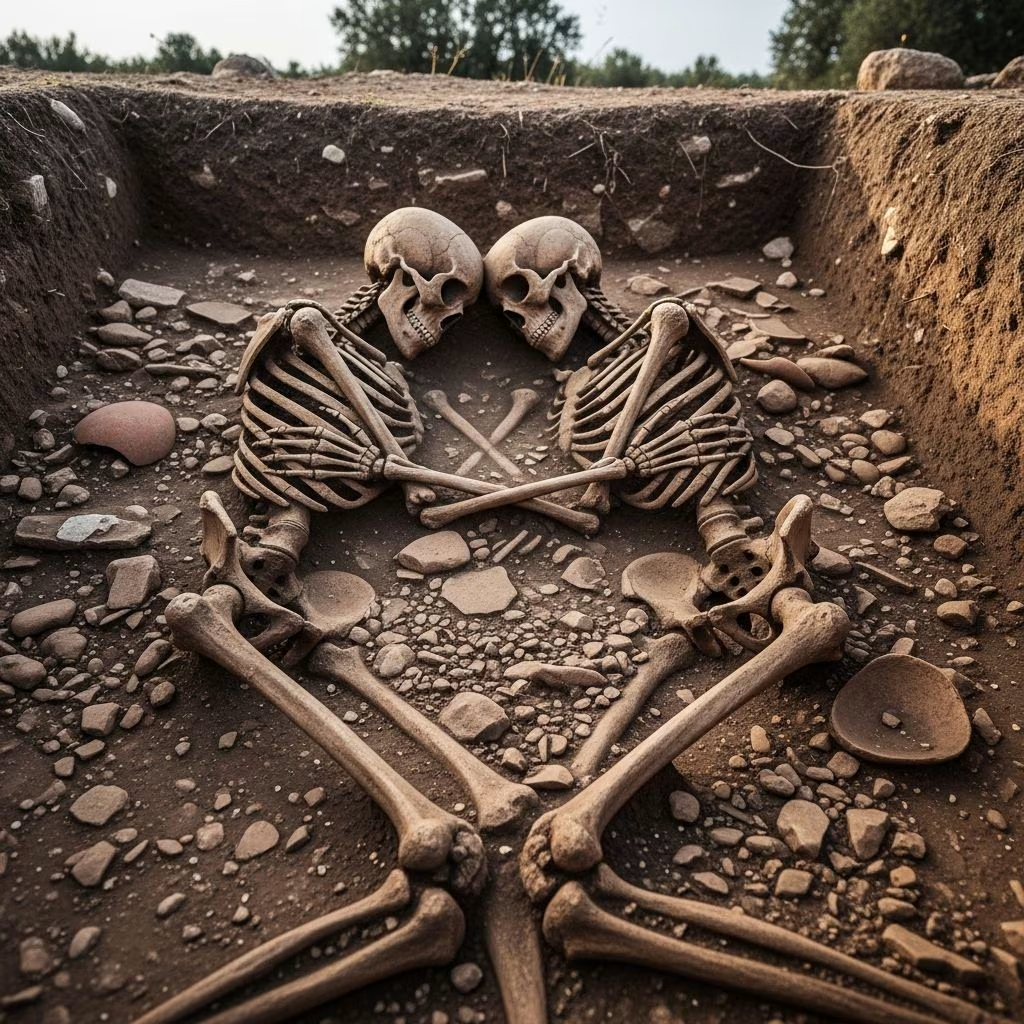
In the shadowy depths of Alepotrypa Cave in southern Greece, a poignant discovery has captivated archaeologists and the public alike. The skeletons of a young man and woman, locked in a tender embrace, offer a rare window into the emotional lives of Neolithic people around 3800 BC. This find, confirmed through DNA analysis, highlights the depth of human connections in one of Europe’s earliest settled communities.
Alepotrypa Cave, located in the Mani Peninsula of the Peloponnese near the Diros Caves, served as a thriving Neolithic settlement from approximately 6000 to 3200 BC. Known as the “Foxhole,” this vast cavern system spans over 15,000 square meters, making it one of the largest in Europe. It wasn’t just a shelter; it was a hub for living, crafting, and burying the dead.
Excavations began in the 1970s under the leadership of archaeologist Giorgos Papathanassopoulos, who described the site as extraordinarily rich in artifacts and human remains. The cave yielded tools, pottery, silver items, and hundreds of skeletons, painting a picture of a sophisticated society transitioning from hunter-gatherer lifestyles to agriculture and animal domestication.
The embracing skeletons were first unearthed in 2014 near the cave’s northern entrance, within an ancient cemetery area. DNA testing, released around Valentine’s Day in 2015, dated the remains to circa 3800 BC and confirmed they belonged to individuals in their early 20s—a man and a woman.
Positioned in a fetal curl, the pair appears to be spooning: the man behind the woman, his arms draped over her, legs intertwined in an intimate hold. Archaeologist Anastasia Papathanasiou, involved since the late 1980s, noted the pose’s naturalness, suggesting they either died this way or were arranged shortly after.
This burial stands out amid common Neolithic practices of fetal positioning, which symbolized rebirth. Yet, the double burial in such an affectionate pose is exceptionally rare—one of the earliest known examples. Papathanassopoulos emphasized its significance in underscoring family bonds in prehistoric times.
Speculation abounds: Did they perish together in a tragic event, like a cave collapse or violence? No evidence supports claims of stoning; the cause remains elusive. The undisturbed grave, near child burials, suggests a community cemetery where kin were interred close together.
| Aspect | Common Neolithic Burials | This Unique Find |
|---|---|---|
| Position | Fetal curl (individual) | Embracing couple (spooning) |
| Grave Goods | Tools, pottery | Ossuary, urns, beads, arrowheads |
| Significance | Rebirth symbolism | Evidence of pair bonding/family |
The Alepotrypa inhabitants were part of the Final Neolithic period, marked by advanced pottery, metallurgy hints, and dense populations. The cave’s cemetery spans 4200-3800 BC, with burials of adults, children, and even embryos, indicating a settled community facing high infant mortality.
Artifacts like broken arrowheads hint at hunting or conflict, while ceramics and beads reflect trade and craftsmanship. This society domesticated animals, cultivated crops, and possibly engaged in early rituals, as evidenced by the structured burials.
Nearby, another pair lies facing each other in curled fetal positions, knees to chins. A third grave holds a child and newborn, underscoring familial clustering. These finds contribute to over 100 skeletons from the site, offering DNA for genetic studies on ancient migrations.
Similar “lover” burials worldwide, like those in ancient Mesopotamia or medieval Europe, suggest universal human tendencies to honor intimate bonds in death. However, Alepotrypa’s example is uniquely preserved and early.
Papathanassopoulos called it a “stunning discovery,” potentially the oldest such grave in Greece. The skeletons, preserved remarkably, may soon grace a museum, allowing public contemplation of prehistoric humanity.
Ongoing excavations continue to reveal Alepotrypa’s role in European prehistory, possibly as a ceremonial center. Challenges include cave preservation amid tourism and climate threats.
The natural embracing pose of a confirmed male-female pair from 3800 BC is among the earliest double burials showing intimacy.
In Alepotrypa Cave near Diros, in a Neolithic cemetery by the northern entrance.
Dated to 3800 BC via DNA and stratigraphy, about 5,800 years old.
Unknown; no trauma evidence, dispelling stoning rumors.
Plans exist for museum display, as stated by lead archaeologists.
This embrace transcends time, humanizing our ancestors. It prompts reflection on enduring themes of love and loss, while advancing knowledge of Neolithic Greece. As research progresses, Alepotrypa promises more revelations about humanity’s dawn.
