

 Travel Essentials
 Travel Essentials

Discover vital tips on visas, safety, culture, transport, and must-see sites for exploring Algeria, Africa's largest nation, from Mediterranean coasts to Sahara dunes.
 Travel Essentials
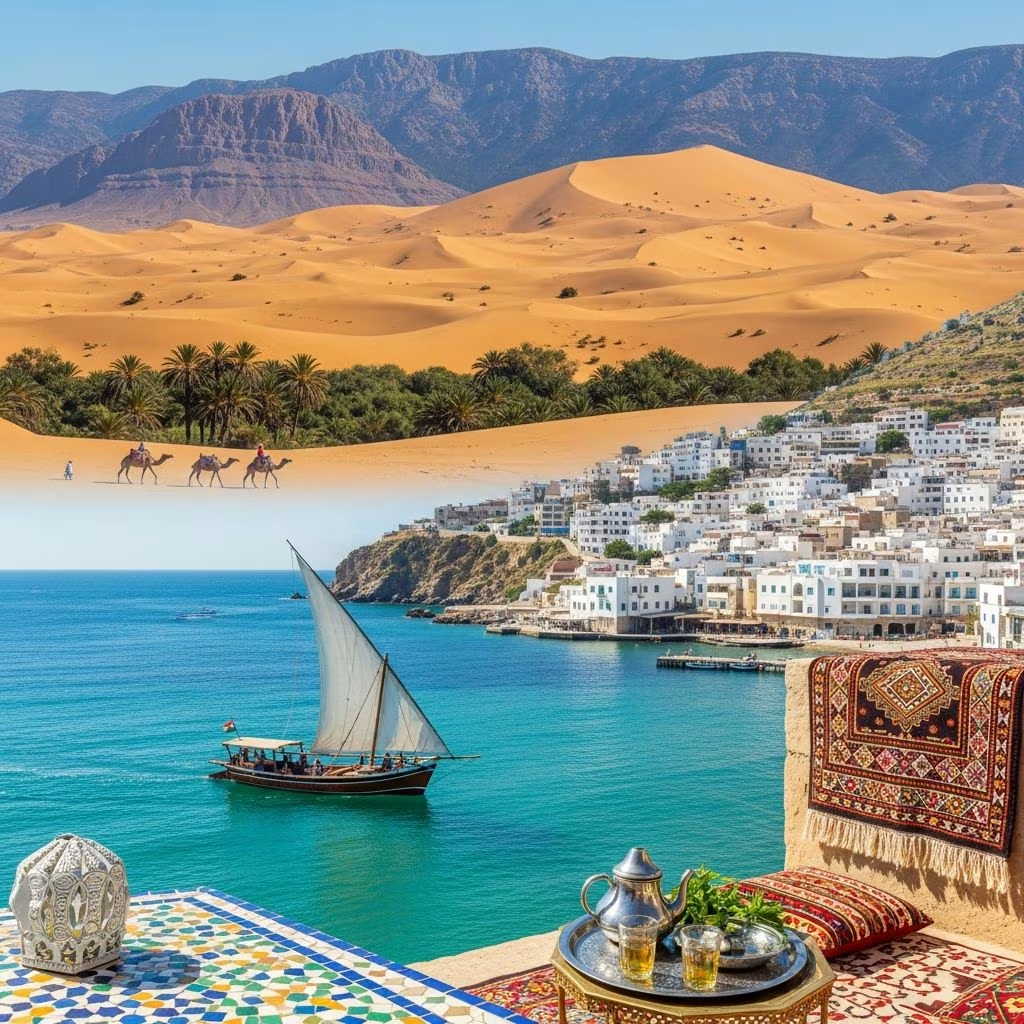
Algeria, Africa’s largest country by land area, beckons adventurers with its Mediterranean shores, Saharan expanses, and millennia of historical layers from Berber roots to Roman legacies. Spanning over 2.3 million square kilometers, it offers untouched beaches, towering kasbahs, and dramatic gorges, yet demands thoughtful preparation due to its unique visa policies, security landscape, and cultural norms. This guide equips you with practical insights to navigate entry requirements, safety measures, local customs, transportation networks, financial logistics, and iconic destinations, ensuring a rewarding exploration of this North African treasure.
Securing access to Algeria starts with understanding its stringent visa regime. Most nationalities require a pre-arranged tourist visa, applied for through Algerian consulates or embassies abroad, as on-arrival options are limited to specific cruise ship passengers. Processing times can span weeks, so initiate applications early, providing flight itineraries, hotel bookings, and invitation letters if needed. Independent travel is feasible in northern regions, but southern desert areas like the Sahara mandate guided tours with licensed operators for safety and regulatory compliance.
Prepare documentation meticulously: passports must remain valid for at least six months beyond departure, with multiple blank pages. Yellow fever vaccination proof may be required if arriving from endemic zones. Upon approval, visas typically grant 30-90 days, extendable in-country via the Ministry of Interior. Cruise visitors benefit from simplified shore passes, but land borders remain tightly controlled.
Safety forms the cornerstone of any Algerian itinerary. The U.S. Department of State advises exercising increased caution overall, escalating to ‘Do Not Travel’ near eastern and southern borders within 50 km of Tunisia and 250 km of Libya, Niger, Mali, and Mauritania due to terrorism risks and kidnappings. Stick to major highways, urban centers like Algiers, Oran, and Constantine, and air travel where possible. Enroll in programs like STEP for alerts and register with your embassy.
Urban areas boast improved security, but petty theft occurs in crowded medinas—use hotel safes and avoid flashing valuables. Women travelers should opt for modest attire to blend seamlessly.
Algeria’s heritage weaves Berber, Arab, Ottoman, and French threads into a conservative Muslim fabric. Respect dictates modest dress: cover shoulders, knees, and cleavage; women may prefer headscarves in rural or religious sites. Alcohol is prohibited publicly and rare domestically—hospitality revolves around mint tea and communal meals.
Greetings involve warm handshakes or cheek kisses among same genders; ‘salaam alaikum’ opens interactions. During Ramadan, fasting is observed—refrain from public eating. Multilingualism aids navigation: Arabic predominates, with French ubiquitous in cities, English growing among youth, and Tamazight (Amazigh) in Berber regions. Haggling enlivens souks, but patience fosters genuine connections. Avoid political discussions, especially on the 1954-1962 independence war.
| Custom | Do | Don’t |
|---|---|---|
| Dress Code | Wear loose, covering clothes | Opt for shorts or tank tops |
| Greetings | Use right hand, say salaam | Discuss sensitive politics |
| Photography | Ask permission first | Snap women without consent |
| Dining | Accept tea offers | Drink alcohol publicly |
Algeria’s vastness challenges mobility. Air travel via national carrier Air Algérie connects Algiers to regional hubs like Oran, Constantine, and Tamanrasset efficiently. Domestic flights are affordable yet prone to delays—book via official sites.
Road networks feature modern highways north of the Atlas Mountains, but southern pistes demand 4×4 vehicles. Buses (ETUSA) and trains (SNTF) serve the north reliably; louages (shared taxis) offer flexible, inexpensive jumps between cities. In Algiers, efficient metros and trams ease urban travel. For Sahara excursions, join agency-led convoys with experienced drivers.
The Algerian dinar (DZD) is non-convertible outside borders—carry euros or USD for exchange at banks or hotels. ATMs rarely accept foreign cards; stock cash upon arrival, as rural access is scarce. Daily budgets range 5,000-10,000 DZD ($35-75), covering meals (500 DZD tagine), sites (low fees like 10 DZD for Djemila), and louages.
Black market exchanges yield better rates but pose risks—prefer official outlets. Cards work in upscale Algiers hotels; tipping 10% gratifies service.
Algiers’ Casbah, a UNESCO-listed labyrinth blending fortress and medina, perches dramatically above the sea, showcasing Ottoman and colonial architecture. Constantine, the ‘City of Bridges,’ spans a vertiginous gorge with seven spans over the Rhumel River.
Roman marvels abound: Timgad (100 AD) and Djemila feature pristine amphitheaters and forums, rivaling Italy’s sites. Venture to Ghardaia’s M’Zab Valley for Mozabite white-wrapped women (no photos) and evening auctions. Sahara highlights include Tassili n’Ajjer rock art, Hoggar Mountains, and foggaras oases.
No mandatory vaccines beyond routine, but hepatitis A/B, typhoid advised; malaria risks low north, higher south—use repellents. Tap water varies; bottled is safest. Pack layers: coastal summers hit 30°C, Sahara nights drop to 5°C. Ramadan (dates vary) quiets eateries; aim for spring/fall.
With modest dress and group tours in remote areas, many women travel successfully; caution in crowds advised.
Budget $300-500 excluding flights, covering food, transport, sites.
Limited; cash dinars essential outside Algiers.
October-April for milder temperatures.
No, independent travel allowed; south yes.
