

 Travel Essentials
 Travel Essentials

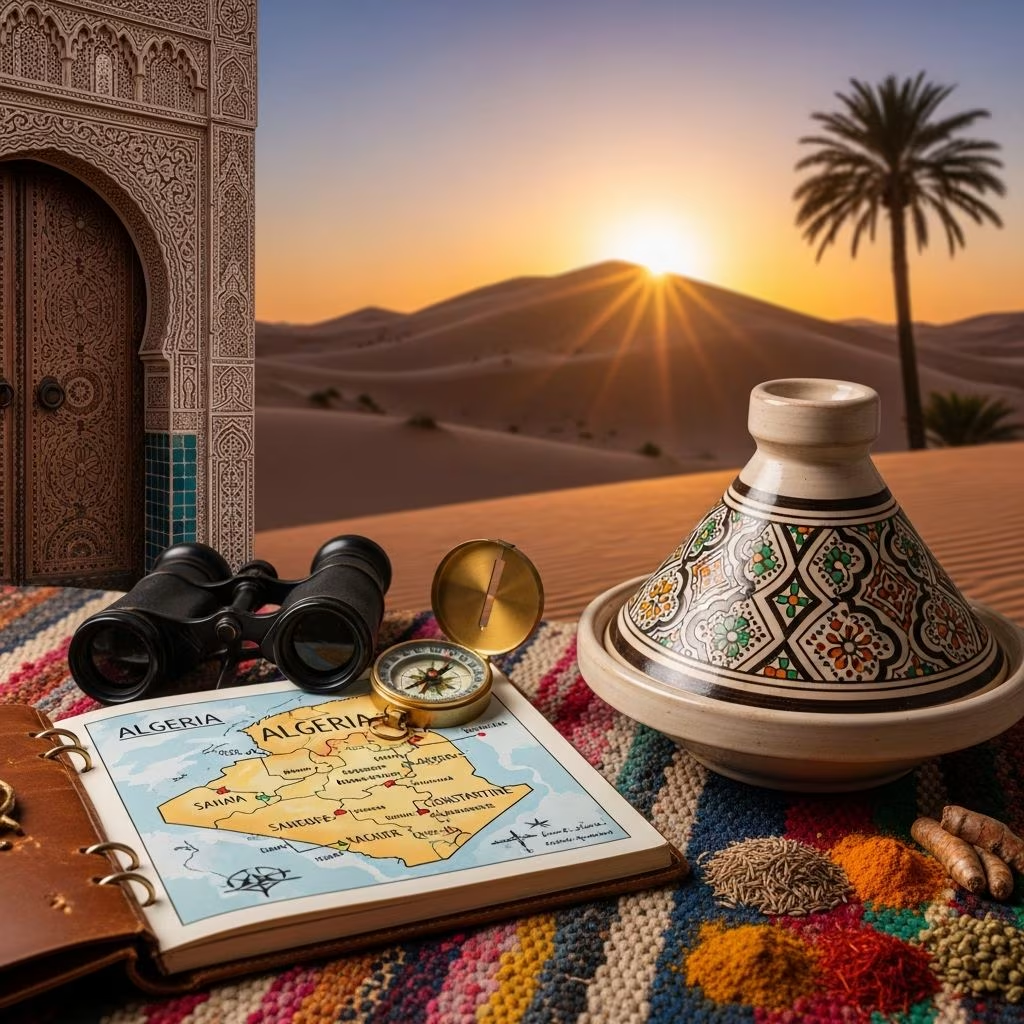
Comprehensive guide to exploring Algeria independently: visas, transport, safety, top regions like Algiers, Sahara oases, Roman ruins, and cultural immersion tips for 2026 travelers.
 Travel Essentials
Algeria, Africa’s largest country by land area, offers a tapestry of Mediterranean coasts, ancient Roman ruins, Berber mountain villages, and vast Sahara expanses. Spanning over 2.3 million square kilometers, it blends Arab, Berber, French colonial, and Ottoman influences into a destination ripe for adventurous travelers. Despite past security concerns, improved stability has opened its doors wider, with independent travel feasible in many regions using affordable public transport.
Securing entry to Algeria demands careful preparation, primarily around the visa process. All visitors except those on organized cruise excursions or specific southern tours arranged by approved agencies require a visa in advance from an Algerian embassy or consulate. A passport valid for at least six months beyond your stay is mandatory, and passports bearing Israeli stamps may lead to entry issues.
For independent travelers, the Letter of Invitation (LOI) is key. Southern tour operators in Djanet or Tamanrasset can provide an LOI for nationwide validity by booking a short desert excursion or paying a fee around $200 USD, allowing free travel elsewhere before or after. Algiers-based firms often mandate full-tour bookings, inflating costs. Apply early, as processing takes weeks; include flight details, accommodation proofs, and the LOI.
Most journeys begin at Houari Boumediene Airport (ALG) in Algiers, served by direct flights from Paris, London, Madrid, and other European hubs. US travelers connect via these cities. Secondary gateways include Oran (ORN) and Constantine (CZL) for regional access.
Algiers, the vibrant capital, greets arrivals with Ottoman-era casbahs, French colonial boulevards, and seafront promenades. Use metro, trams, or apps like InDrive, Yassir, or Heetch for city navigation—reliable and inexpensive. Explore the Casbah’s winding alleys (UNESCO site), Martyrs’ Monument, and Notre Dame d’Afrique basilica for panoramic views.
Algeria’s transport network supports budget-conscious independent travel. Trains link major northern cities like Algiers to Oran (400km for ~€7, 4-5 hours), though notoriously slow. Buses and minibuses (algiers) cover everywhere, including multi-day hauls to Tamanrasset. Roads are generally good, enabling quick movement between sites.
Share-taxis offer flexibility for mid-distances. Renting a car suits remote areas but requires an international permit; fuel is cheap. In cities, walk central zones or hail rideshares.
| Route | Option | Duration | Cost (approx.) |
|---|---|---|---|
| Algiers-Oran | Train | 4-5 hrs | €7 |
| Algiers-Constantine | Bus | 6-8 hrs | €10-15 |
| Algiers-Ghardaia | Bus | 6-7 hrs | €15-20 |
| Algiers-Tamanrasset | Bus | 24-36 hrs | €50+ |
The northern Mediterranean strip captivates with minimal development, pristine beaches, and Kabylie Berber heartlands. Algiers anchors the center, flanked by Tipasa’s Roman ruins and Bejaia’s lush bays. Kabylie’s Tizi Ouzou and Tissemsilt buzz with cultural vibrancy—hike cedar forests, visit villages clinging to cliffs.
Oran, western hub, boasts Andalusian architecture, Santa Cruz fortress, and lively markets. Northeast, Constantine—the ‘City of Bridges’—dramatizes a gorge-spanning spectacle with seven spans over the Rhumel River. Day-trip to Roman marvels: Timgad (founded 100 AD, grid-plan perfection) and Djemila (hilltop preservation, €0.10 entry). Batna and Annaba add Numidian tombs and basilicas.
Algeria’s Sahara claims 80% of its territory, home to epic dunes, foggaras (underground aqueducts), and Tassili n’Ajjer National Park’s 12,000-year-old cave art amid sandstone pillars. Ghardaia, M’Zab Valley UNESCO gem, clusters five palm-fringed towns: Ghardaia markets peak mornings; Beni Isguen hosts evening auctions and tower views (women in Ahuli robes—no photos); El Atteuf, Bou Noura, Melika reachable by bus or foot. Mandatory guides (250-500 DZD) operate 9am-1pm, 4-6pm.
Tamanrasset and Hoggar Mountains demand 4×4 tours for Assekrem hermitage sunrises and Dr. Seuss-like formations. Djanet accesses Tassili—book southern LOI providers for access.
Algerians embody hospitality (diyafa), offering tea and meals to strangers. Arabic and Berber (Kabyle, Chaoui) dominate; French is common, English less so—pack a phrasebook. Islam shapes rhythms: modest dress, Ramadan fasting respected. Women travelers note conservative norms, especially south.
Cuisine delights: couscous Fridays, merguez sausages, shakshuka, makroud sweets. Street stalls serve cheap tagines; dine family-style. Markets brim with rugs, spices, dates. Haggling expected; cash (dinar) reigns—ATMs sparse south, exchange euros.
Daily costs: €30-50/person (transport €5-20, food €10, lodging €20-40). Hostels scarce; hotels or homestays fill gaps. Budget rises south for tours.
Safety: Exercise caution due to terrorism/kidnapping near eastern/southern borders—avoid them. Northern/central areas safe; check updates. Health: Vaccinations (hepatitis, typhoid); malaria low-risk. Drink bottled water; sunblock essential desert.
Connectivity: 4G spotty south; power banks vital. Dress layers: coastal mild winters (10-20°C), Sahara extremes (-5°C nights to 40°C days).
Extend for Sahara: Add Djanet/Tamanrasset tours post-Ghardaia.
Northern and central regions are generally safe with normal precautions; avoid border zones per advisories.
Independent travel possible north/center with LOI; southern highlights like Tassili require tours.
Algerian dinar (DZD); no widespread tipping, small change appreciated.
Spring (Mar-May) or fall (Sep-Nov) for mild weather; avoid summer heat.
Limited; cash primary, especially south.
