

 Travel Essentials
 Travel Essentials

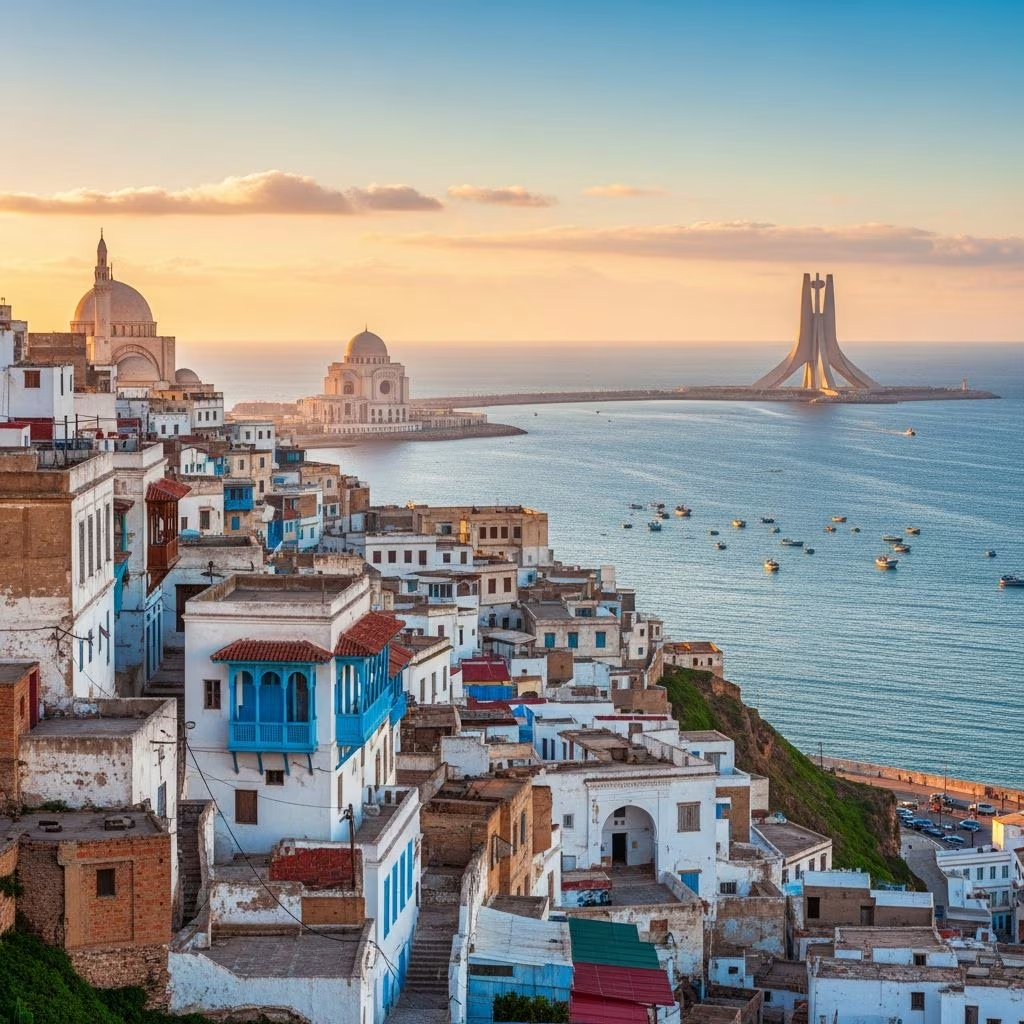
Explore Algiers' UNESCO-listed Casbah, iconic memorials, lush gardens, and vibrant streets in this comprehensive guide for first-time visitors seeking history, culture, and coastal charm.
 Travel Essentials
Algiers, Algeria’s dynamic capital, blends Ottoman heritage, French colonial elegance, and contemporary North African vibrancy against a stunning Mediterranean backdrop. Nestled between sea waves and forested hills, this city offers first-time visitors a tapestry of narrow historic lanes, grand boulevards, and panoramic viewpoints that capture its resilient spirit.
The allure of Algiers lies in its layered history: from Berber origins and Ottoman rule to French colonization and independence struggles. Its architecture—from Moorish mosques to Haussmannian avenues—mirrors influences across centuries, while daily life pulses with markets, cafes, and prayer calls echoing at dusk. As a UNESCO World Heritage gem, the city promises cultural depth alongside coastal relaxation.
Visitors often note the warm hospitality of locals, who share stories over mint tea. Whether hiking hillsides or strolling promenades, Algiers delivers sensory experiences: aromatic spices, sea breezes, and views rivaling Europe’s finest.
Spring (March-May) and fall (September-November) bring mild weather, ideal for exploring without summer’s intense heat. Winters are mild but rainy; avoid peak summer humidity unless beach-focused.
For essentials, allocate three days: one for the historic core, one for central sights, and one for memorials and gardens. Extend to a week for day trips to Roman ruins at Tipaza or nearby beaches, allowing deeper immersion in neighborhoods and cuisine.
| Duration | Highlights | Ideal For |
|---|---|---|
| 3 Days | Casbah, Grande Poste, Martyr’s Memorial | Short trips, city essentials |
| 5-7 Days | Gardens, museums, beaches, day trips | Relaxed pace, culture dive |
| 10+ Days | Regional excursions, local life | Comprehensive exploration |
Perched on a hillside, the Casbah—Algiers’ old quarter—is a labyrinth of whitewashed alleys, staircases, and Ottoman palaces, designated UNESCO World Heritage in 1992. Dating to the 17th century with roots in ancient Icosium, it once sheltered revolutionaries during the independence war, immortalized in films like The Battle of Algiers.
Key gems include the Palais des Raïs (1780s), now an arts center with exhibitions, and Dar Azouz, echoing Ottoman grandeur. Navigate its maze-like paths carefully; hiring a local guide via Instagram or at Ketchaoua Mosque ensures safety and enriching tales. Artisans craft copperwork in cellars, perfect for authentic souvenirs.
Alger Centre surprises with Parisian-style avenues like Didouche Mourad and Larbi Ben Mhidi, lined with boutiques, eateries, and cafes. The Grande Poste, a neo-Moorish masterpiece from the early 1900s, stands as a social icon—now a museum showcasing postal history.
Stroll Ernesto Che Guevara and Zighout Youcef boulevards for colonial facades and sea vistas. The metro, operational since 2011, connects Place des Martyrs to key spots efficiently.
Don’t miss Basilique Notre Dame d’Afrique, a hilltop neo-Romanesque church offering serene sea panoramas.
Dominating the skyline, the Maqam Echahid (Martyr’s Memorial, 1982) honors independence war heroes. Ride the cable car from Jardin d’Essai for aerial city views, then explore the subterranean National Museum of the Mujahid, detailing the struggle through artifacts and photos.
Nearby, the National Museum of Antiquities on Avenue Franklin Roosevelt displays Roman mosaics from Tipaza, bridging ancient and modern narratives.
Escape urban buzz at Jardin d’Essai du Hamma, a colonial-era botanical haven with giant ficus trees, including the famed “Tarzan Tree” from a 1930s film. Metro-accessible, it’s perfect for shaded walks and research insights.
Coastal promenades along the corniche invite breezy strolls; west of the lighthouse near Raïs Palace, sea winds refresh after Casbah hikes. Sunsets align with maghrib prayers, amplifying the call from mosques.
Algiers’ cuisine fuses Berber, Arab, and Mediterranean elements. Try couscous with lamb, chorba soup, or makroud sweets in Casbah eateries. Terraced cafes serve strong coffee and mint tea—essential for people-watching.
Algiers Metro links major sites; taxis are affordable but negotiate fares. Walking suits central areas, but carry water against heat.
Safety has improved; stick to tourist zones, join guided Casbah tours, and respect customs like modest dress near mosques. English is limited—basic French or Arabic helps.
Accommodations range from Casbah riads to modern hotels near the center. ATMs are widespread; Algerian dinars only outside airports.
Venture to Tipaza’s Roman ruins (1-hour drive) or Cherchell’s ancient sites. Beaches like Club des Pins offer relaxation. For nature, hike Sahel hills or explore oases further afield.
Yes, with precautions: use guides in the Casbah, avoid isolated areas at night, and stay vigilant like in any major city.
Start at Place des Martyrs via metro or taxi; guides await at Ketchaoua Mosque.
Bottled water is recommended; it’s safe to brush teeth with tap but not for drinking.
Taxis (fixed 2000-3000 DZD) or airport shuttle buses; pre-book for ease.
Algerian Dinar (DZD); tip 10% in restaurants, round up taxis.
As tourism grows, support locals by choosing guided tours and authentic shops. Algiers rewards patient explorers with profound connections to its past and present.
