

 Travel Essentials
 Travel Essentials

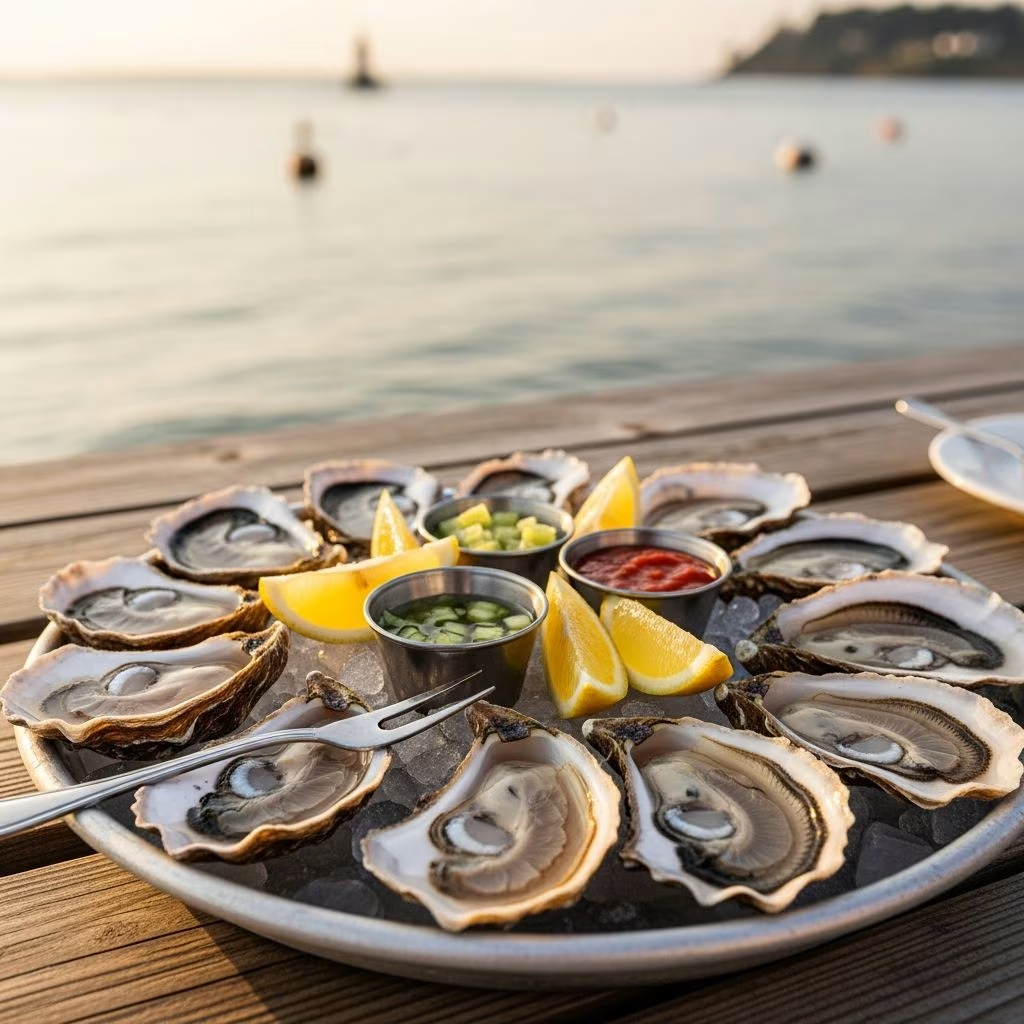
Explore North America's premier oyster harvesting regions, from Maine's cold waters to California's bays, featuring distinct varieties and local culinary traditions.
 Travel Essentials
The United States boasts a rich tradition of oyster cultivation spanning thousands of miles of coastline. From the frigid northern Atlantic to the temperate Pacific Northwest, each region produces distinctive oyster varieties shaped by local water conditions, salinity levels, and harvesting practices. For epicureans and culinary adventurers, understanding the geography of American oyster production unlocks opportunities to experience these prized mollusks at their source, discovering the nuances that make each region’s offerings unique.
The state of Maine has earned particular distinction within North American oyster circles, with approximately 80 percent of the state’s oyster harvest originating from the Damariscotta River. This waterway’s geographic position and the force of its cold tidal movements create an environment where oysters develop distinctive characteristics prized by connoisseurs. Many industry observers have drawn comparisons between this region’s reputation and that of California’s wine country, crediting the river’s terroir with producing remarkably consistent quality.
Three primary varieties dominate Maine’s oyster landscape:
Visitors to this region can experience these varieties at local restaurants, oyster bars, and farm-gate establishments that celebrate the local harvest.
Cape Cod has established itself as a concentration point for uncommon and highly sought oyster varieties. The region’s specific aquatic conditions produce mollusks with characteristics valued by experienced oyster consumers. The two most recognized varieties are Duxbury and Wellfleet oysters, each named after the municipalities where they are harvested.
Duxbury oysters appeal to individuals who favor fatty, buttery sensations on the palate, while Wellfleet oysters deliver pronounced fresh and saline notes. Beyond these primary varieties, the region also yields briny WiAnno oysters and sweet Barnstable oysters, offering visitors multiple flavor profiles within a relatively concentrated geographic area.
Rhode Island’s coastal waters, particularly Narragansett Bay, have become increasingly recognized as an oyster destination. The bay’s unique phytoplankton composition contributes to the distinctive orange coloration visible on oyster shells and creates conditions that plump the meat inside. This biological phenomenon reflects how water chemistry directly influences oyster development and flavor.
Signature varieties from this area include:
Point Judith Pond, located south of Narragansett Bay, serves as an additional harvesting area where Moonstone oysters particularly thrive.
The Chesapeake Bay region experienced dramatic changes to its oyster population over centuries. Historically, during the 1600s, wild oysters filled these waters in remarkable abundance, but overharvesting and habitat degradation substantially reduced populations. Contemporary oyster farming practices are now reversing this trend, reestablishing the region as a meaningful producer.
The Rappahannock River has emerged as the region’s primary oyster production center. This waterway’s unique position—connected simultaneously to freshwater sources in the Blue Ridge Mountains and to the larger Chesapeake Bay system—creates distinctive chemical conditions. The freshwater influence imparts a trademark sweetness to Rappahannock oysters, while lower salinity levels allow the delicate underlying flavors to become more pronounced.
Capers Island, situated outside Charleston, represents a model for sustainable oyster production in the southeastern United States. The island is home to Capers Blades oysters, which are notably hand-harvested by a local operator known as Clammer Dave, who manages the farm with emphasis on ecological sustainability. These oysters possess a rich, briny character that has made them favorites among Charleston’s restaurant community.
In the same geographic vicinity, the Barrier Island Oyster Company produces Sea Cloud oysters, characterized by bright and salty flavor notes. This concentration of quality producers in the Charleston area reflects the region’s growing reputation in the oyster world.
Despite possessing only 60 miles of coastline, Alabama ranks among the leading oyster-producing states in the United States. This seemingly paradoxical achievement reflects the efficiency and intensity of Gulf Coast oyster farming operations. Significant production areas include Dauphin Island and Bayou La Batre.
Murder Point oysters from the Bayou La Batre region exemplify the Gulf’s distinctive offerings, featuring a rich and creamy texture that appeals to consumers seeking full-bodied oyster experiences. The warm Gulf waters contribute to accelerated growth and the development of meat-forward flavor profiles.
Caminada Bay in Louisiana has developed a reputation for producing impressively large oysters with plump, juicy meat characteristics. The bay’s geography creates numerous small islands ideal for oyster cultivation, including Beauregard Island, where Beauregard oysters are harvested. These substantial oysters have become traditional ingredients in Louisiana’s celebrated po’boy sandwiches, where their size and meatiness withstand frying processes.
Hood Canal in Washington state contains abundant oyster populations visible along beaches, reflecting the region’s suitable environmental conditions. The Hama Hama Company operates as a sixth-generation family enterprise renowned for producing world-class oyster varieties. Summerstone oysters from this operation are distinguished by their beautiful cup structure and ruffled shell edges.
The Puget Sound region specializes in Olympia oysters, a variety native to the Pacific Northwest. Multiple inlets within this sound system, including Totten Inlet and Eld Inlet, provide optimal conditions for Olympia oyster development. While smaller than Atlantic varieties, Olympia oysters deliver concentrated earthy and salty flavor elements. The region also benefits from operations like Taylor Shellfish Farms, which operates the Samish Oyster Bar in Bellingham, where oysters travel directly from harvest to consumer preparation.
Tomales Bay, positioned north of San Francisco along the Sonoma coast, offers a unique intersection of oyster and wine culture. This geographic proximity allows visitors to explore oyster and wine pairing opportunities within a concentrated area. The Hog Island Oyster Company operates as an esteemed producer in this region, with Hog Island Sweetwaters serving as their flagship variety. These oysters feature small, deeply-cupped shells containing plump, sweet meat.
Understanding oyster seasonality enhances the touring experience. While oysters are harvested year-round in the United States, many regions observe traditional seasonal peaks that influence flavor development. Cold-water regions like Maine typically produce oysters with the most pronounced characteristics during winter months, when metabolic stress concentrates flavors.
American oyster bars range from historic institutions to contemporary establishments. Swan Oyster Depot in San Francisco represents a 121-year-old establishment where customers experience expertly shucked oysters arranged with precision. These venues provide opportunities to sample multiple regional varieties within single locations.
Alternatively, farm visits offer direct engagement with cultivation practices and harvesting operations. Many oyster farms in Maine, Washington, and California welcome visitors interested in understanding production methodologies and water quality management.
Regional oyster bars often feature cocktail programs specifically designed to complement oyster consumption. The briny characteristics of Gulf Coast oysters pair effectively with classic New Orleans cocktails, while Pacific varieties align well with crisp white wines or lighter beer styles. Creative culinary presentations, such as seared redfish with herby salsa accompaniments, provide alternatives to traditional oyster consumption methods.
Water chemistry, salinity levels, temperature, and available food sources (phytoplankton) create distinct oyster characteristics. Each region’s unique combination of these factors produces recognizable flavor profiles—Maine’s cold waters create briny intenseness, while Gulf waters produce creamy, meat-forward oysters.
Many oyster farms welcome visitors, particularly those in Maine, Washington, and California. Contact regional tourism boards or individual farms for visit scheduling and availability. Farm visits typically include harvesting demonstrations and direct tastings from the day’s catch.
Traditionally, oyster quality peaks during winter months (October through April) when cold water stress concentrates flavors. However, warm-water regions like the Gulf Coast and parts of California produce excellent oysters year-round.
Varieties differ in shell shape and coloration, meat size and color, and flavor profiles. Regional oyster trails and farm guides provide detailed descriptions. Experienced oyster bar staff can guide selections based on individual taste preferences.
Yes. Multiple states maintain organized oyster trails connecting farms, restaurants, and retail establishments. These trails facilitate multi-day culinary experiences featuring regional specialties and educational opportunities.
| Region | Primary Varieties | Characteristic Flavor Profile | Water Type |
|---|---|---|---|
| Maine (Damariscotta) | Glidden Point, Pemaquid, Norumbega | Briny, clean, mineral-forward | Cold, fresh ocean water |
| Massachusetts (Cape Cod) | Duxbury, Wellfleet, WiAnno | Buttery to saline, varied profiles | Atlantic coastal |
| Rhode Island (Narragansett) | Quonset Point, Moonstone, Beaver Tail | Clean, light, slightly sweet | Brackish bay system |
| Virginia (Rappahannock) | Rappahannock | Sweet with delicate undertones | Freshwater-influenced brackish |
| South Carolina (Charleston) | Capers Blades, Sea Cloud | Rich briny to bright and salty | Atlantic coastal |
| Alabama/Louisiana (Gulf) | Murder Point, Beauregard | Creamy, meat-forward, robust | Warm gulf water |
| Washington (Puget Sound) | Olympia, Summerstone | Earthy, salty, mineral-rich | Cold Pacific water |
| California (Tomales Bay) | Hog Island Sweetwater | Sweet, plump, refined | Pacific coastal |
The United States presents extraordinary opportunities for oyster enthusiasts to experience one of gastronomy’s most celebrated delicacies at its source. From Maine’s historic river systems to California’s wine-adjacent bays, regional variations in water chemistry and cultivation practices have produced distinctive oyster traditions worthy of dedicated travel. Whether sampling oysters at celebrated bars, visiting working farms, or participating in organized regional trails, visitors can develop deep appreciation for how geography, ecology, and human expertise combine to create the mollusks appreciated at tables across the nation. The oyster-focused journey represents more than simple culinary indulgence—it constitutes an exploration of American environmental diversity and the communities stewarding these waters.
