

 Travel Essentials
 Travel Essentials

Explore the cleanest lakes across America, ranked by water quality metrics like clarity, oxygen levels, and low pollutants. Highlights include Lake Superior, Lake Chelan, and state-specific treasures.
 Travel Essentials
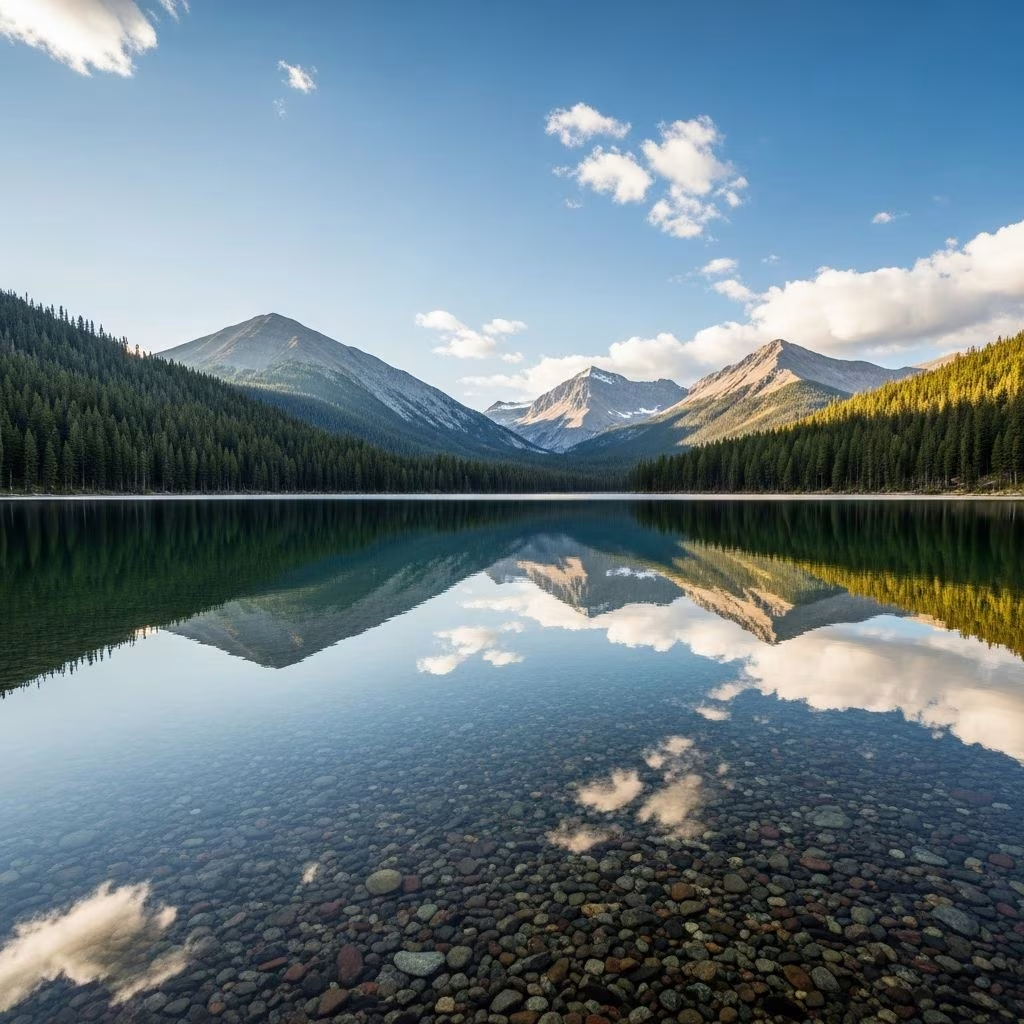
The United States boasts an incredible array of freshwater bodies, but few rival the breathtaking clarity and purity of its top lakes. These natural wonders, formed by ancient glaciers, volcanic activity, and tectonic forces, offer not just visual spectacles but also vital ecosystems. Recent analyses of water quality—measuring factors like turbidity, dissolved oxygen, nutrient levels, and contaminants—reveal standout performers that draw millions for recreation, fishing, and serene escapes. This exploration delves into the nation’s cleanest lakes, their unique attributes, and why they remain havens of pristine water.
To determine a lake’s cleanliness, scientists evaluate several key indicators. Turbidity, measured in Nephelometric Turbidity Units (NTU), gauges water cloudiness from suspended particles; lower values mean clearer water. Dissolved oxygen (mg/L) reflects aquatic health, with higher levels supporting diverse life. Total Dissolved Solids (TDS, mg/L) indicate mineral content, while pollutants like lead (µg/L), phosphorus, ammonia, and sulfate signal human impact. A balanced pH near 7 ensures neutrality. These metrics, drawn from recent reports on America’s largest lakes, provide objective rankings.
| Metric | Description | Ideal Range for Purity |
|---|---|---|
| Turbidity (NTU) | Water clarity | <1 NTU |
| Dissolved Oxygen (mg/L) | Oxygen availability | >8 mg/L |
| Lead (µg/L) | Heavy metal contaminant | <0.1 µg/L |
| Phosphorus (mg/L) | Nutrient causing algae | <0.05 mg/L |
| Total Dissolved Solids (mg/L) | Mineral load | <50 mg/L |
Only 46 of the 100 largest U.S. lakes have current data, highlighting monitoring gaps, yet patterns emerge clearly.
Lake Superior claims the crown as America’s cleanest large lake, its vast expanse bordering Michigan, Minnesota, Wisconsin, and Ontario. With 10.45 mg/L dissolved oxygen, just 0.46 NTU turbidity, and minimal lead at 0.01 µg/L, its waters gleam with otherworldly clarity. Low phosphorus (3.65 mg/L) prevents algal blooms, while TDS at 44.04 mg/L keeps it fresh. Spanning 82,100 square kilometers, it’s the world’s largest freshwater lake by surface area, offering endless shores for exploration.
Close behind, Lake Chelan in Washington state dazzles with ultra-low nutrients and TDS of 30.20 mg/L. This 50-mile-long fjord-like basin in the Cascades maintains 9.44 mg/L oxygen, fostering a cold, transparent environment ideal for scuba diving and boating.
Every state harbors lakes vying for purity titles, often validated by Secchi disk readings—measuring visibility depth. Oregon’s Crater Lake, in a dormant volcano within Crater Lake National Park, records some of the world’s clearest waters at over 140 feet Secchi depth, thanks to no inflows or outflows.
California and Nevada share Lake Tahoe, where average Secchi depths hit 60 feet amid Sierra Nevada peaks. Its 1,645-foot depth and watershed protections sustain cobalt-blue hues. Montana’s Flathead Lake, west of the Mississippi’s largest natural freshwater body, achieves 20-30 feet visibility, fed by Glacier National Park meltwaters.
New York’s Lake George, an Adirondack icon, frequently exceeds 20-30 feet Secchi, bolstered by granite geology and conservation. Recent accolades name it among the nation’s purest, ideal for kayaking and sailing.
| State | Clear Lake | Key Clarity Feature | Secchi Depth (ft) |
|---|---|---|---|
| Oregon | Crater Lake | Volcanic purity | >140 |
| CA/NV | Lake Tahoe | Alpine protection | ~60 |
| Montana | Flathead Lake | Glacial feed | 20-30 |
| New York | Lake George | Adirondack shield | >20 |
| Washington | Lake Chelan | Fjord depth | High (monitored) |
| Maine | Jordan Pond | Park protection | Excellent |
| Texas | Amistad Reservoir | Border clarity | High visibility |
Other notables include Alabama’s Lewis Smith Lake with glassy blue tones, New Hampshire’s Newfound Lake for consistent transparency, and Idaho’s Lake Pend Oreille, ranking high nationally at low pollution scores.
Pristine conditions stem from geology, climate, and stewardship. Glacial origins in the Rockies and Cascades deliver sediment-free inflows. Volcanic calderas like Crater Lake naturally filter water. Cold temperatures slow organic decay, preserving oxygen. Human efforts amplify this: Strict watershed rules around Lake Tahoe ban pollutants, while Adirondack protections shield Lake George.
Monitoring programs, like Secchi Dip-In, engage citizens in tracking clarity, ensuring early detection of threats like invasive species or runoff. Yet challenges persist—climate change warms waters, potentially dropping oxygen, and urban sprawl introduces nutrients.
These lakes beckon with diverse pursuits:
Families thrive at accessible spots like Jordan Pond’s picnic areas in Acadia, while thrill-seekers tackle Pend Oreille’s depths.
Maintaining purity demands vigilance. Agencies like the EPA and state departments enforce limits on phosphorus from farms and sewage. Public campaigns curb litter, and restoration projects in Tahoe have reversed 20th-century declines. Visitors play a role: Use pump-outs for boats, avoid soaps in swims, and support locals via eco-tourism.
Recent data underscores successes—Superior’s metrics remain elite despite shipping traffic—but dirtiest lakes like Okeechobee (34.36 NTU, high lead) warn of pollution risks elsewhere.
Lake Superior tops national rankings for large lakes due to superior oxygen, low turbidity, and minimal contaminants.
Secchi disk depth and NTU turbidity quantify visibility; deeper/higher clarity indicates purity.
Yes, but access is limited to designated areas; its cold, deep waters demand caution.
Granite-filtered water scatters blue light, enhanced by depth and low particles.
Many like Jordan Pond serve as sources post-treatment; always check advisories for recreation.
From Superior’s grandeur to George’s intimacy, America’s purest lakes embody nature’s finest. Plan your visit to witness—and help preserve—these timeless treasures.
