

 Travel Essentials
 Travel Essentials

Explore America's most bike-friendly cities, from Portland's extensive networks to Minneapolis's top rankings, featuring trails, policies, and commuter stats.
 Travel Essentials
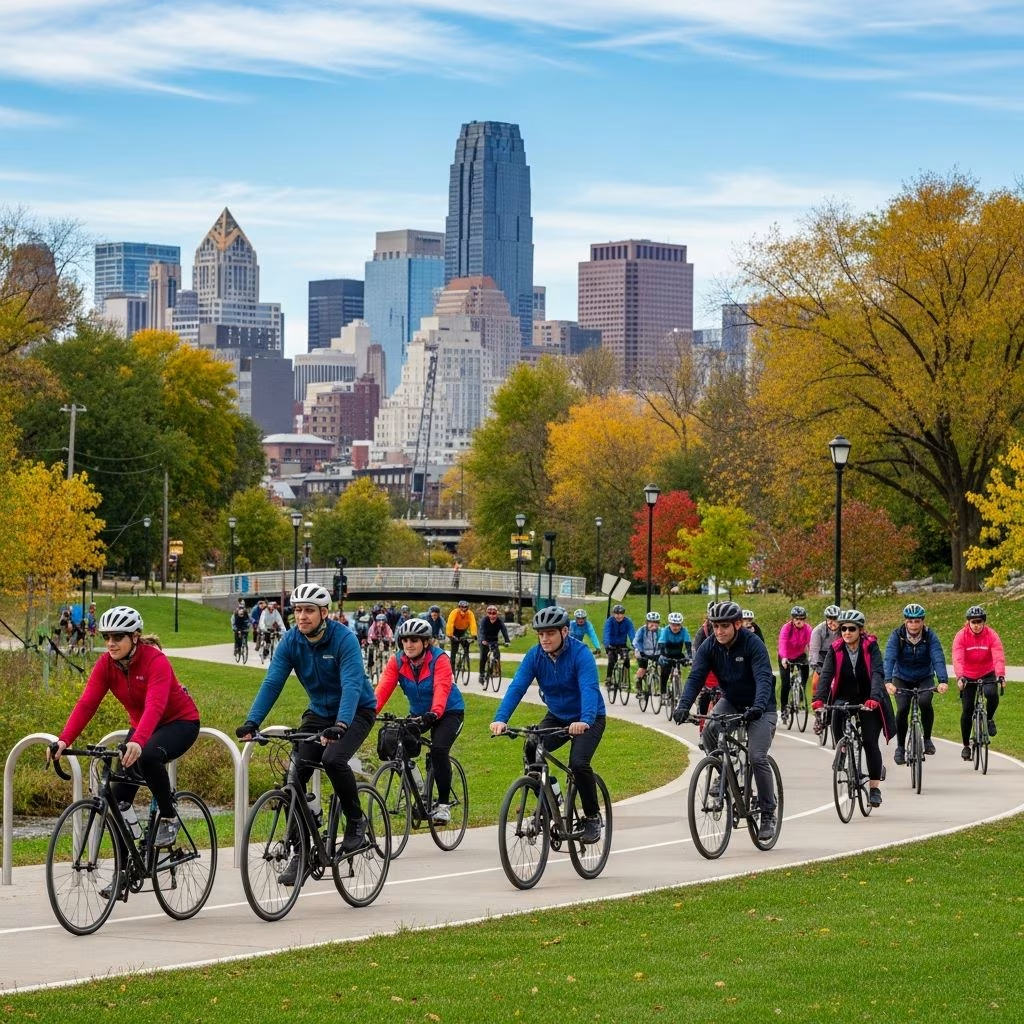
America’s urban landscapes are evolving, with cycling emerging as a cornerstone of sustainable transportation. Cities across the nation are investing in dedicated bike lanes, advanced traffic systems, and community programs to encourage residents to pedal rather than drive. This shift not only reduces traffic congestion and emissions but also fosters healthier lifestyles and vibrant public spaces. Drawing from recent rankings and official data, this article highlights the standout metropolises leading this charge, examining their infrastructure, policies, and rider experiences.
The rise of bike-friendly urban planning stems from a recognition that bicycles offer an efficient, eco-friendly alternative to cars. In the U.S., where car dependency has long dominated, progressive cities are flipping the script. Factors like protected lanes, bike-sharing programs, and integration with public transit make cycling practical for daily commutes and leisure. According to advocacy groups, cities scoring above 50 on comprehensive ratings are tipping points for widespread adoption, with average U.S. scores lingering around 23. These leaders prioritize vulnerable road users, implementing cyclist-specific signals and low-stress route networks.
Portland stands as a beacon for bike advocacy, boasting a regional network that spans bike lanes, mountain paths, and protected routes on major arterials. Home to over two million in its metro area, the city has pursued a dedicated bicycle policy since the 1990s, culminating in the Portland Bicycle Plan 2030. This blueprint embeds cycling into urban transport, aiming for seamless integration. Nearly 6% of residents choose bikes for commuting, a testament to normalized cycling culture where riders are commonplace regardless of weather.
The Portland Bureau of Transportation (PBOT) excels in safety, mapping color-coded routes for optimal paths and installing bike-detecting sensors at lights. Intersections feature reachable activation buttons, allowing cyclists to stay mounted. Portland’s four Willamette River bridges—Broadway, Steel, Burnside, and Hawthorne—host the nation’s longest-running annual bike counts, a tradition spanning over 30 years with volunteer participation from June to September. Recent accolades include a Platinum Bicycle Friendly Community designation and a fifth-place ranking among large cities with a score of 56.

Topping recent large-city rankings with a score of 68, Minneapolis exemplifies rapid progress in cycling infrastructure. This Midwest hub surged 31 points in one year, outpacing peers through aggressive investments in separated lanes and multi-use paths. The city’s network supports commuters navigating snowy winters, with heated overpasses and plow-prioritized routes ensuring year-round access.
Minneapolis integrates bikes with its renowned skyway system and light rail, offering racks and secure parking. Community bike shops and free repair stations dot neighborhoods, lowering barriers for novices. The city’s Platinum status underscores its commitment, with events like bike-to-work days drawing thousands.
Scoring 62, Seattle leverages its hilly terrain with cleverly engineered paths, including elevated bike highways that bypass steep grades. The city expands its 300+ miles of lanes annually, focusing on equity by connecting underserved areas. Protected infrastructure on busy corridors like the Burke-Gilman Trail provides scenic, car-free commuting options.
Seattle’s bike-sharing fleet and employer incentives, such as showers and lockers, boost ridership. Safety data drives expansions, with cyclist signals reducing collision risks at high-volume spots.
Beyond the top tier, cities like San Francisco (63), Philadelphia (57), and New York (just behind Portland at 55) shine in mega-urban settings. Smaller Oregon gems excel too: Ashland leads with 70, Corvallis at 63, and Eugene at 36, highlighting statewide momentum.
| City | State | Score (0-100) | Key Feature |
|---|---|---|---|
| Ashland | OR | 70 | Extensive off-road trails |
| Corvallis | OR | 63 | University-driven networks |
| Minneapolis | MN | 68 | Winter-resilient paths |
| Portland | OR | 56 | River bridge counts |
| San Francisco | CA | 63 | Hill-climbing lanes |
This table summarizes top performers, illustrating diverse strengths from trail variety to climate adaptations.
Leading cities pioneer technologies like cyclist-optimized traffic loops—the first in the U.S. soon in Portland—and app-based route planners synced with real-time data. Shared e-bikes expand reach, while cargo variants handle errands. PBOT’s vision safety audits at intersections prioritize pedestrians and bikes, setting national benchmarks.
Cycling hubs report lower obesity rates and cleaner air. Portland’s 400+ miles of trails enable point-to-point travel, cutting car trips. Commuter shares near 6% correlate with reduced emissions, per transport studies. These cities model how bikes combat climate goals while boosting local economies via bike tourism.
Despite gains, hurdles like funding and driver education persist. Portland’s flat scores since 2020 signal a need for acceleration, yet plans like 2030 targets promise growth. Nationwide, advocacy pushes for federal grants to replicate successes.
A blend of safe lanes, signals, parking, and culture, scored holistically by groups like People for Bikes.
It ranks high (5th large city) with pioneering features, though Minneapolis leads currently.
Over 400 miles of trails support daily use.
Summer for events like bridge counts; infrastructure enables year-round.
Yes, integrated into sharing programs across top cities.
Whether commuting or vacationing, these cities offer rentals, tours, and maps via PBOT-like portals. Pack layers for variable weather and download safety apps. Embrace the pedal revolution reshaping America’s streets.
