

 Travel Essentials
 Travel Essentials

Explore America's most frequented national parks, from Yellowstone to Great Smoky Mountains, with detailed visitor guides and travel insights.
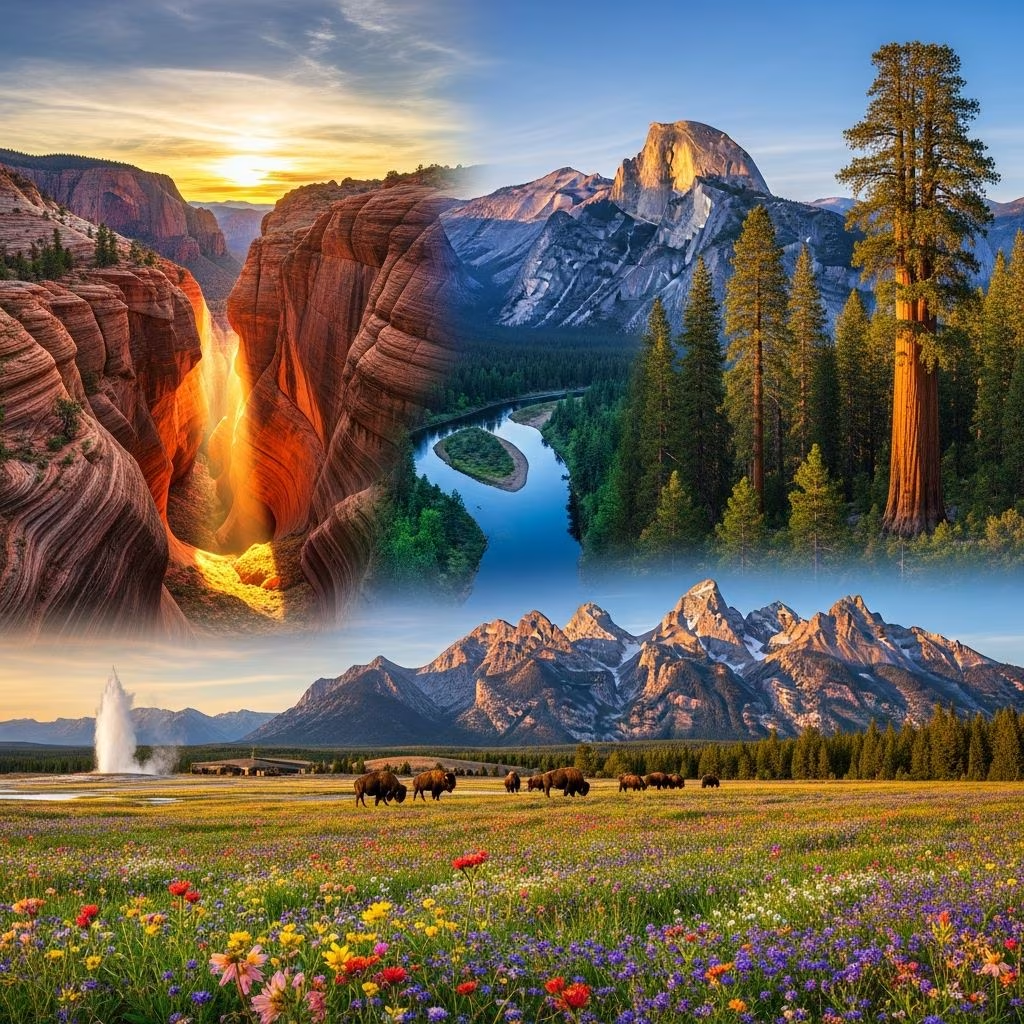 Travel Essentials
The United States National Park System encompasses 63 protected areas that preserve some of the world’s most spectacular natural landscapes. While each park offers unique geological formations, wildlife habitats, and recreational opportunities, certain destinations consistently attract millions of visitors annually. Understanding which parks draw the largest crowds and what makes them exceptional can help travelers plan meaningful experiences in America’s most cherished wilderness areas.
Several factors determine why particular national parks become destination magnets. Geographic accessibility plays a crucial role, as parks located within reasonable driving distance of major metropolitan areas experience higher visitation rates. Additionally, the presence of instantly recognizable natural features—towering geysers, dramatic canyons, and diverse wildlife populations—creates powerful attractions that capture international attention and inspire bucket-list adventures.
Climate and seasonal accessibility also influence visitor patterns. Parks offering year-round access with manageable weather conditions tend to receive steadier traffic throughout the calendar year, whereas parks restricted by severe winters or remote locations experience more concentrated visitation during favorable months.
Designated in 1872, Yellowstone National Park holds the distinction of being the United States’ first national park. This sprawling wilderness straddles Wyoming, Montana, and Idaho, encompassing nearly 3,500 square miles of geothermal wonders, alpine scenery, and abundant wildlife populations.
The park’s geothermal features represent one of Earth’s most concentrated collections of hot springs, mud pots, fumaroles, and geysers. Remarkably, Yellowstone contains approximately 60 percent of the world’s known geysers. Old Faithful, the park’s most celebrated geyser, erupts roughly 20 times daily at relatively predictable intervals, drawing crowds of spectators throughout operating seasons.
Beyond geothermal attractions, visitors explore the dramatic Grand Canyon of the Yellowstone, where the Yellowstone River plunges through colorful canyon walls in a series of powerful waterfalls. The iconic Grand Loop Road traces a figure-eight pattern through the park, providing access to diverse ecosystems where visitors encounter bison, grizzly bears, and elk in their natural habitat.
Great Smoky Mountains National Park consistently ranks as the most visited national park in America by a considerable margin. Straddling the border between North Carolina and Tennessee, this protected area encompasses more than 800,000 acres of Appalachian wilderness.
The park’s most distinctive characteristic involves its extraordinary biological diversity. Scientists have documented more than 19,000 species of plants and animals within Great Smoky Mountains boundaries—the highest species count among all United States national parks. This ecological richness reflects the region’s complex topography, varied elevation zones, and historical habitat preservation.
The park’s famous misty peaks, cloaked in ancient mountains that have eroded into rounded formations quite unlike the jagged peaks of western ranges, create an enchanting landscape. Autumn transforms the slopes into spectacular displays of red, gold, and orange foliage, attracting photographers and nature enthusiasts from worldwide. A substantial black bear population inhabits the mountains, offering visitors opportunities to observe these magnificent creatures in protected natural settings.
The Grand Canyon represents one of North America’s most photographed and visited natural wonders. Carved by the Colorado River over millions of years, this immense chasm reveals layer upon layer of geological history spanning more than a billion years.
Visitors experience the canyon through multiple vantage points accessible from the South Rim, the most developed and frequently visited section of the park. Dramatic overlooks provide panoramic perspectives of the canyon’s immense scale, intricate rock formations, and the distant Colorado River snaking through the valley floor. Experienced hikers descend into the canyon itself, encountering progressively older rock layers and diverse ecological zones as elevation changes dramatically.
Yosemite National Park showcases California’s most iconic natural features, inspiring conservationists like John Muir and photographers like Ansel Adams. The park’s granite cliffs, cascading waterfalls, and giant sequoia groves create landscapes that define California’s wilderness identity.
Yosemite Falls, North America’s highest waterfall at 2,425 feet, tumbles dramatically over rocky precipices in multiple tiers, particularly impressive during spring snowmelt. Iconic rock formations including the massive Half Dome—towering 4,800 feet above the valley floor—and the sheer wall of El Capitan dominate Yosemite Valley’s visual landscape. Hiking trails wind through old-growth forests and subalpine meadows, leading to tranquil lakes and panoramic viewpoints that reward visitor exploration.
Mount Rainier National Park centers on the Pacific Northwest’s most prominent stratovolcano, a snow-capped peak that dominates regional landscapes and captures visitors’ imaginations. When favorable weather conditions align, glimpses of Mount Rainier itself generate what many consider among the most spectacular “wow” moments available across the entire national park system.
The park encompasses 235,625 acres of diverse terrain, from temperate rainforest in lower elevations to alpine meadows and glaciated peaks. Multiple hiking trails originating from the Paradise Visitor Center provide access to stunning scenery including cascading waterfalls and vibrant summer wildflower displays. The mountain’s numerous glaciers and snowfields feed numerous streams, creating ribbons of water that descend through forested valleys.
Glacier National Park protects more than one million acres of Montana’s northern wilderness, featuring over 700 miles of trails, pristine alpine lakes, and mountain peaks sculpted by ancient glacial activity. The park’s dramatic landscape includes knife-edge ridges, cirque basins, and valleys carved by massive ice sheets that dominated the region during previous ice ages.
The Going-to-the-Sun Road, a spectacular 50-mile highway traversing the park, provides access to breathtaking scenery and numerous trailheads. Visitors encounter diverse wildlife populations including grizzly bears, mountain goats, and bighorn sheep in naturally preserved habitats.
Denali National Park encompasses 6 million acres of Alaskan backcountry where roaming wildlife significantly outnumbers human visitors. The park’s centerpiece, Mount McKinley (also known as Denali), represents North America’s tallest peak at 20,310 feet, dominating the landscape and drawing mountaineers and sightseers worldwide.
The park’s alpine landscape features glistening lakes, snow-capped peaks, and diverse hiking trails accommodating varying ability levels. Wildlife populations including grizzly bears, moose, caribou, and golden eagles thrive in this remote wilderness offering genuinely off-the-beaten-track experiences where human development remains minimal.
Zion National Park showcases Utah’s most dramatic red-rock canyons, where massive sandstone cliffs rise thousands of feet above the Virgin River valley floor. The park’s signature feature, Zion Canyon, narrows dramatically in certain sections, with canyon walls soaring nearly 2,000 feet overhead.
The Narrows hike, where visitors wade through the Virgin River flowing between canyon walls, provides unique perspectives on the park’s geology. Angels Landing offers challenging scrambles rewarding hikers with expansive views of surrounding canyonlands.
| Park Name | State(s) | Key Feature | Best Visiting Season | Difficulty Level |
|---|---|---|---|---|
| Yellowstone | WY, MT, ID | Geysers & geothermal features | May-September | Moderate |
| Great Smoky Mountains | NC, TN | Biodiversity & fall foliage | April-May, October-November | Easy to Moderate |
| Grand Canyon | AZ | Geological canyon formations | March-May, September-November | Easy to Strenuous |
| Yosemite | CA | Granite cliffs & waterfalls | May-September | Easy to Strenuous |
| Mount Rainier | WA | Volcanic peak & glaciers | July-September | Moderate |
| Denali | AK | North America’s tallest peak | June-August | Strenuous |
Successful national park visits require thoughtful preparation. Research seasonal availability, weather patterns, and facility operations before selecting travel dates. Peak seasons, typically summer months and major holidays, bring increased crowds that can diminish solitude and create congestion at popular viewpoints and trailheads.
Consider visiting during shoulder seasons—spring and fall—when weather remains generally favorable but crowds decrease significantly. Many parks offer superior hiking conditions during these periods before summer heat or winter closures impact accessibility.
Physical fitness levels should align with chosen activities. While many parks provide accessible viewpoints requiring minimal walking, others demand substantial hiking abilities and elevation acclimatization for full appreciation of their features.
National parks provide rare opportunities to observe wildlife in natural habitats. Successful wildlife viewing requires patience, appropriate distances, and respectful behavior toward animals. Park rangers provide specific guidelines for safely observing bears, elk, bison, and other species that inhabit these protected areas.
Visitors must maintain minimum distances—typically 25 yards from most wildlife and 100 yards from bears and wolves. Never approach animals for photographs or selfies, as such actions endanger both visitors and wildlife.
Great Smoky Mountains National Park consistently ranks as America’s most visited national park by substantial margins, primarily due to its geographic location within driving distance of major Eastern population centers and its exceptional biodiversity.
Shoulder seasons (April-May and September-October) typically offer optimal conditions with manageable crowds and favorable weather. Winter visits appeal to fewer visitors but may restrict access in high-elevation parks.
Yes, many parks cluster regionally. Western trips might combine Yellowstone, Grand Teton, and Glacier; Utah trips might include Zion, Bryce Canyon, and Arches; and California visitors might explore Yosemite and Death Valley.
Most major parks offer lodges, cabins, and campgrounds, though summer reservations require advance planning. Private accommodations exist outside park boundaries in gateway communities.
Day visits to accessible viewpoints require minimal equipment beyond comfortable footwear and weather-appropriate clothing. Backpacking trips, mountaineering, and technical hiking demand specialized gear and experience.
National parks face ongoing management challenges balancing visitor access with ecosystem preservation. Increased visitation stresses trail systems, wildlife habitats, and water resources. Park administrators implement crowd management strategies, trail maintenance programs, and habitat restoration projects to maintain environmental integrity while providing public access to these irreplaceable landscapes.
Visitor participation in conservation—staying on established trails, properly disposing of waste, and respecting wildlife—directly supports park preservation for future generations.
America’s most popular national parks continue attracting millions annually because they showcase the nation’s most extraordinary natural features. From Yellowstone’s geothermal marvels to Great Smoky Mountains’ unparalleled biodiversity, these protected areas provide transformative experiences connecting visitors with the natural world. Whether witnessing Old Faithful’s eruption, standing within Zion Canyon’s towering walls, or glimpsing Mount Rainier’s snow-capped summit, national park experiences create lasting memories and inspire lifetime conservation advocacy.
