

 Travel Essentials
 Travel Essentials

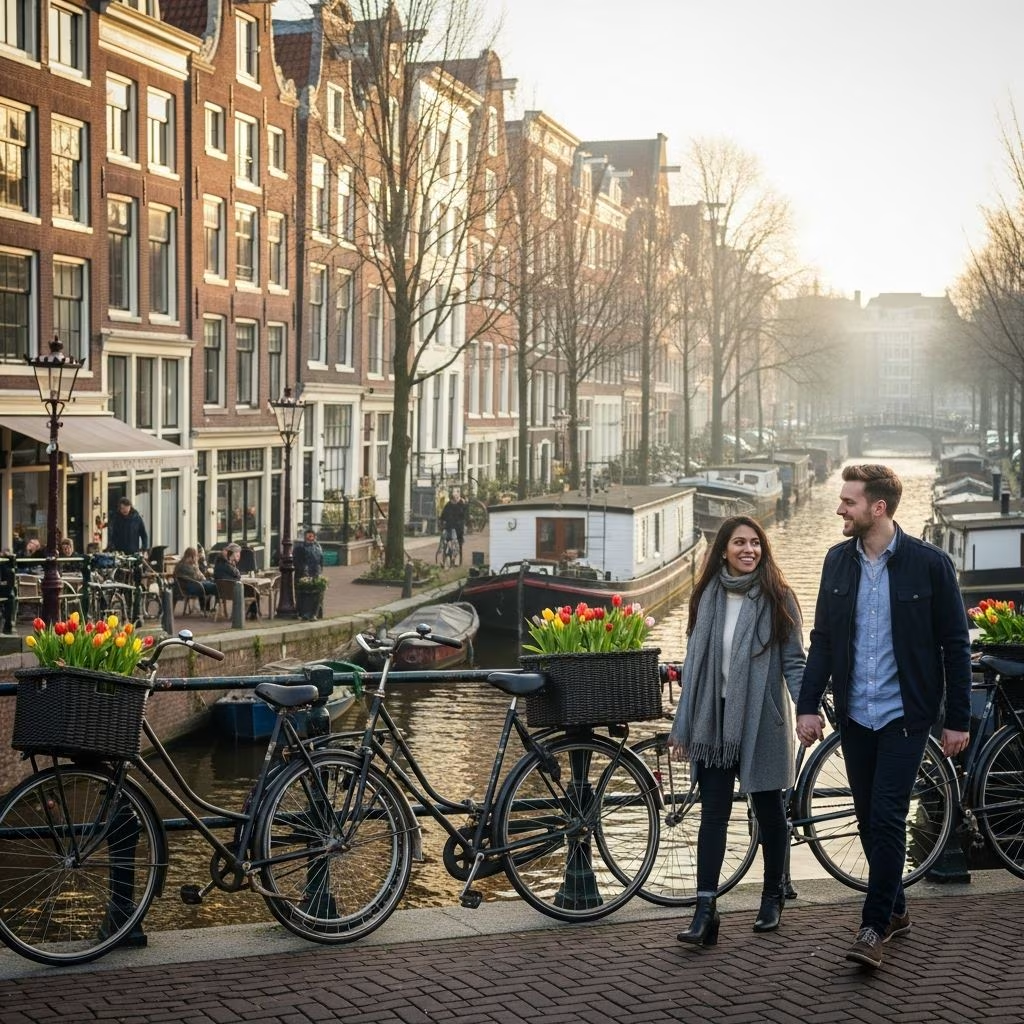
Explore how tourists can connect with Amsterdam residents through a creative day-long initiative designed to combat overtourism and foster meaningful cultural exchanges.
 Travel Essentials
Amsterdam faces an unprecedented challenge as visitor numbers continue to surge dramatically, creating significant strain on the city’s infrastructure and authentic character. The Dutch capital has become synonymous with tourism hotspots like the Red Light District and party scenes, often overshadowing the genuine local culture and hidden neighborhoods that make the city truly special. To address this growing concern, innovative tourism initiatives have emerged that aim to redirect how visitors engage with the city, transforming casual sightseers into participants in meaningful cultural exchange.
Amsterdam’s appeal as a tourist destination has grown exponentially over the past decade, with projections indicating that visitor numbers could reach 42 million annually by 2030, compared to 18 million in 2018. This explosive growth has created multiple challenges for the city, including overcrowding at major attractions, strain on local resources, and the homogenization of tourist experiences that often focus on the same handful of destinations.
The Dutch tourism board has taken the unprecedented step of discouraging international promotion of the Netherlands, acknowledging that the country receives too many visitors and that popular attractions have become dangerously crowded. This decision reflects a broader recognition that traditional tourism models are unsustainable and that a fundamental shift in how visitors interact with destinations is necessary.
In response to these challenges, grassroots movements have begun reimagining what it means to travel responsibly and authentically. These initiatives seek to transform visitors from passive consumers of tourist experiences into engaged participants who contribute positively to local communities. Rather than simply visiting attractions and moving on, these new models emphasize personal connections, cultural understanding, and support for local residents and businesses.
Organizations dedicated to this mission have developed a variety of unconventional activities designed to foster genuine interactions between travelers and Amsterdam residents. These range from environmental initiatives to social engagement opportunities, all with the shared goal of creating more meaningful and mutually beneficial tourism experiences.
Among the most distinctive offerings is a playful yet intentional pairing between visitors and local Amsterdammers. This experience involves a 35-minute ceremonial exchange featuring traditional wedding elements including formal attire sourced from second-hand shops, personalized vows, and symbolic rings. However, it is important to emphasize that this is entirely non-legal and exists solely as a creative framework for building connections and shared experiences.
The ceremony serves as an icebreaker and conversation starter, creating an immediate sense of partnership and shared purpose between two complete strangers. By framing the connection through the metaphor of a temporary union, the experience acknowledges the significance of the human bond being formed while maintaining a light, playful tone that helps participants relax and be more open to genuine interaction.
Following the brief ceremony, participants embark on what the initiative terms a “honeymoon” — a guided exploration of Amsterdam led by the local partner. This is where the true value of the experience emerges. Rather than following standard tourist routes to iconic landmarks, these locally-guided tours venture into neighborhoods and spaces that mainstream travelers rarely discover.
Local Amsterdammers possess intimate knowledge of their city that guidebooks and travel websites simply cannot replicate. They know which cafes serve the best coffee, which canals offer the most peaceful walks, which parks are frequented by residents rather than tourists, and which neighborhoods maintain authentic local character. By spending an entire day with someone who calls Amsterdam home, visitors gain access to this insider perspective that fundamentally transforms their understanding of the city.
The ceremonial experience represents just one component of a broader ecosystem of alternative tourism offerings. Organizations promoting this approach recognize that meaningful cultural exchange can take many forms, and they have developed diverse activities to suit different interests and values.
Environmental initiatives invite visitors to participate in conservation efforts, such as removing plastic from waterways and canals. These activities provide tangible benefits to the community while allowing participants to engage with Amsterdam from an ecological perspective rather than a purely recreational one.
Social engagement opportunities pair tourists with elderly or disabled residents who may benefit from companionship and assistance. These activities create intergenerational and cross-cultural connections while providing practical support to vulnerable community members.
Educational experiences include immersive programs such as refugee-led canal tours, where participants learn about immigration’s role in shaping Amsterdam while traveling on vessels with historical significance to refugee communities. These encounters offer profound insights into contemporary social issues while promoting empathy and understanding across cultural boundaries.
Participation in these experiences requires a financial investment, with the ceremonial pairing beginning at just over 100 euros per person. While this may seem significant compared to standard group tours, it reflects the personalized nature of the service and the compensation provided to local residents who dedicate their time to hosting visitors.
The pricing structure also serves as a form of quality control, limiting participation to visitors who are genuinely committed to the experience rather than seeking merely novelty or Instagram-worthy moments. This selectivity helps maintain the authenticity and depth of interactions between locals and tourists.
| Activity Type | Duration | Primary Focus | Expected Outcome |
|---|---|---|---|
| Ceremonial Pairing | 35 minutes ceremony + full day exploration | Personal connection and local guidance | Authentic neighborhood discovery |
| Environmental Engagement | Variable | Waterway conservation | Community contribution and learning |
| Social Support | Variable | Intergenerational connection | Community care and meaningful interaction |
| Educational Tours | Variable | Immigration and cultural history | Deep understanding of social issues |
The underlying philosophy of these initiatives represents a deliberate reimagining of the tourist role. Rather than treating visitors as passive consumers who extract value from a destination, this approach positions them as “changemakers” capable of contributing positively to local communities. This reframing has profound implications for how both tourists and residents view cross-cultural encounters.
When visitors are invited to participate in meaningful activities, contribute to community needs, and engage authentically with local residents, they develop a different relationship with the places they visit. They become invested in the well-being of the communities they encounter, more likely to respect local culture and environment, and more inclined to travel responsibly in future destinations.
The benefits of these experiences extend far beyond the immediate participants. When tourists engage authentically with locals and develop genuine understanding of a place, they become informal ambassadors for responsible tourism. They share their experiences with friends and family, influencing how others approach travel. They may also be inclined to support local businesses discovered through their guides, contribute to community initiatives they became involved in, and advocate for sustainable tourism practices in their home communities.
From the perspective of local residents, hosting visitors in these contexts provides economic benefit while allowing them to share aspects of their culture and community that they find meaningful. Rather than feeling like their city is being consumed by visitors, locals become active shapers of how their home is experienced and understood.
While no single initiative can solve the structural challenges created by mass tourism, approaches that emphasize personal connection and mutual benefit contribute to a broader shift in how tourism operates. By demonstrating that visitors are willing to pay for authentic experiences and that meaningful exchanges are possible, these programs create economic incentives for more responsible tourism development.
They also challenge the assumption that tourism must be standardized and scalable. Some of the most valuable travel experiences are inherently limited in scale and based on personal relationships, which by their nature cannot be mass-produced. These initiatives demonstrate that scarcity and exclusivity can actually enhance rather than diminish the tourism experience.
For travelers interested in participating in these experiences, the first step is to contact the organizing platform directly through their website or email for booking and availability information. Participants should prepare for an experience that differs significantly from conventional tours, requiring openness to uncertainty and genuine engagement with their local partner.
It is advisable to approach the experience with curiosity and humility, recognizing that locals are sharing their lived environment and insights. Being present, asking questions, and showing genuine interest in your partner’s perspective significantly enriches the experience for both participants.
Is the marriage legally binding?
No. The ceremony is entirely ceremonial and playful, creating a framework for connection rather than any legal arrangement. It is designed to be memorable and fun while building rapport between strangers.
What if I do not feel comfortable with strangers?
While this experience inherently involves meeting someone new, the structured ceremony and shared activity framework can actually help ease social anxiety. Many participants find that the playful nature of the ceremony helps break tension and creates instant common ground.
Can I choose my local partner?
Partners are typically matched based on interests, availability, and personality compatibility. This curation helps ensure positive interactions and shared activities that both participants will enjoy.
What happens if the weather is bad?
Amsterdam remains beautiful in any weather, and locals have strategies for enjoying the city regardless of rain or cold. Your partner will likely adjust activities accordingly and may even introduce you to cozy indoor local favorites.
Is this experience appropriate for all ages?
While adult participation is most common, the flexibility of the platform allows for family-friendly variations. Interested families should inquire about age-appropriate pairing options when booking.
The ceremonial experience of pairing with a local resident represents more than a clever tourist activity; it embodies a philosophical commitment to transforming how people travel and interact across cultures. By making the visitor-local relationship explicit and intentional, by framing it through a meaningful ritual, and by dedicating time to genuine exploration and conversation, these initiatives create space for authentic human connection in an increasingly commodified tourism landscape.
As global travel continues to grow and overtourism becomes an ever more pressing challenge, approaches that prioritize connection over consumption, local agency over extraction, and quality over quantity offer valuable models for sustainable tourism development. They suggest that the future of travel might involve fewer visitors engaging more deeply and meaningfully with destinations, hosted by residents eager to share their communities with genuinely interested travelers.
