

 Travel Essentials
 Travel Essentials

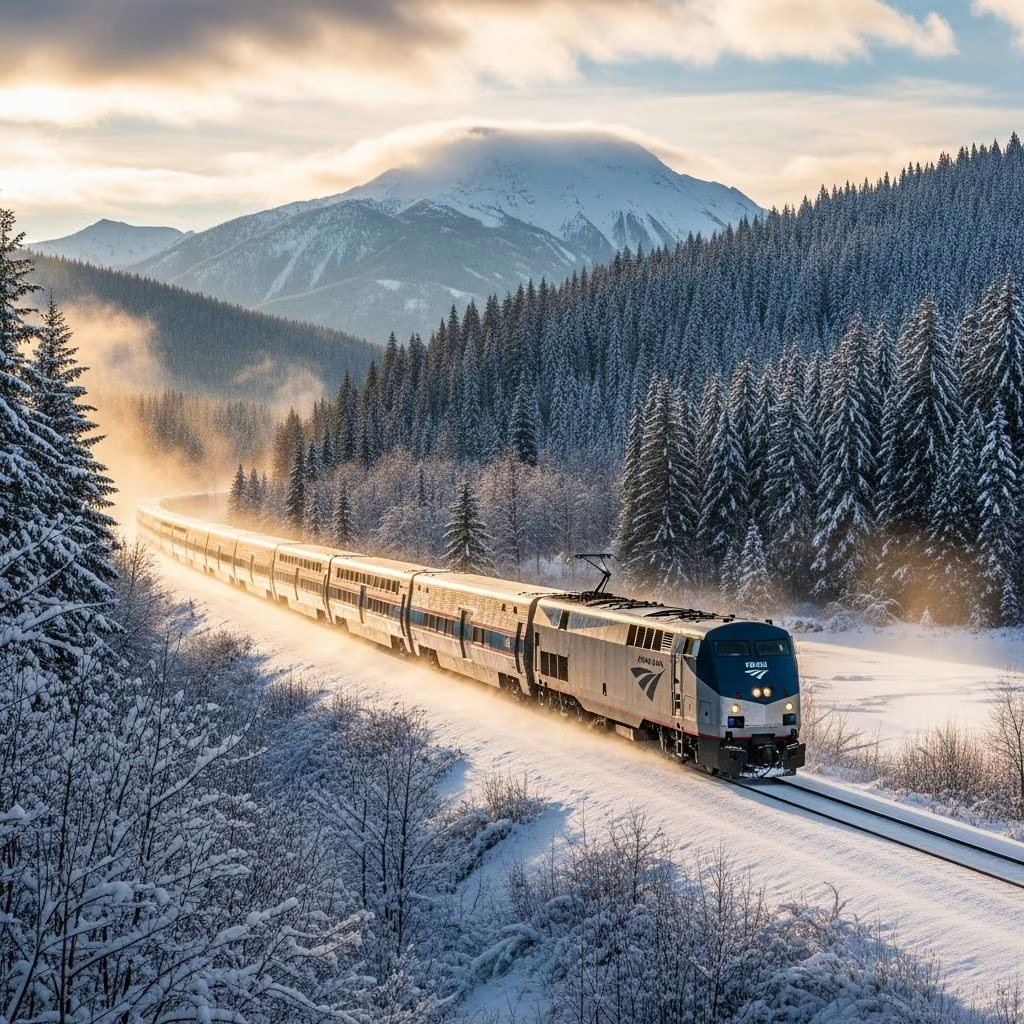
Explore the Amtrak Cascades train route through the Pacific Northwest, featuring stunning winter scenery, mountain views, and stops across Washington and Oregon.
 Travel Essentials
Train travel through the United States offers a unique perspective on natural landscapes and regional character that transcends typical tourism. The Amtrak Cascades represents one of North America’s most compelling rail experiences, weaving through diverse terrain from coastal waterways to mountain passes. When winter blankets this route in snow, the journey transforms into something particularly spectacular, revealing the raw beauty of the Pacific Northwest during its most dramatic season.
The Amtrak Cascades operates as a regional rail service connecting three states and one Canadian province, establishing itself as a vital transportation and tourism corridor. The complete route spans 467 miles, though passengers cannot travel the entire distance without transfers between separate train segments. This network structure reflects both operational realities and scheduling optimization for regional connectivity.
The service architecture includes multiple daily departures, with six daily round trips operating between Portland and Seattle, two daily round trips connecting Eugene to Portland, and twice-daily service between Seattle and Vancouver, British Columbia. Additionally, bus service supplements rail operations between Seattle and Bellingham, ensuring comprehensive regional access. The longest continuous journey without changing trains extends eight hours, traveling between Portland and Vancouver.
Passengers boarding at different stations access varying portions of this network. Eugene serves as the southern terminus, with connections through Salem, Albany, and other Oregon communities before reaching Portland. From Portland, the route continues northward through Washington state, culminating at Vancouver’s Pacific Central Station after passing through Seattle, Tacoma, Everett, Mount Vernon, and Bellingham.
Winter precipitation transforms the Pacific Northwest landscape into a photographer’s paradise and transforms typical travel into an adventure. During January 2024, heavy snowfall blanketed the region, creating dramatic conditions across Whatcom and Skagit counties where the Cascades route travels. This meteorological event illustrates how seasonal weather patterns dramatically reshape the visual experience of rail travel through this corridor.
The snow-covered terrain presents multiple photogenic scenes throughout the journey:
The Cascade Range itself becomes the visual centerpiece during winter months, with snow-clad summits providing striking views particularly visible between Portland and Seattle. Unlike summer travel when vegetation obscures distant peaks, winter’s leafless trees and clear atmospheric conditions enhance mountain visibility from rail level.
The Amtrak Cascades showcases diverse natural and geographic features that justify its reputation as one of America’s most scenic train routes. The route’s primary visual attractions include multiple waterway crossings and mountain vistas that create varied scenery throughout the journey.
| Geographic Feature | Location | Best Viewing Strategy |
|---|---|---|
| Puget Sound Waterway | Seattle to Everett segment | Left side of northbound trains for approximately one hour |
| Chuckanut Bay | Mount Vernon to Bellingham | Right side of southbound trains |
| Cascade Mountain Range | Portland to Seattle corridor | Interior seats with unobstructed window views |
| Olympic Mountains | Western Washington sections | Left-side seating on northbound routes |
| Salish Sea Approaches | Northern Washington to Vancouver | Both sides near Bellingham area |
Understanding optimal seating strategies enhances the travel experience considerably. Northbound passengers should occupy left-side seats to maximize Puget Sound views, while southbound travelers benefit from right-side positioning for waterway observations. This directional guidance reflects the route’s geographic orientation relative to major water bodies and mountain ranges.
Modern rail travel requires infrastructure supporting diverse passenger needs and preferences. The Amtrak Cascades provides multiple service tiers and facilities that distinguish it from basic transportation:
These amenities acknowledge modern travelers’ expectations regarding connectivity and comfort during extended journeys. The complete distance of 467 miles requires reliable food service and seating variety to accommodate passenger needs across multiple hours of travel. The observation car particularly enhances the scenic experience, offering unobstructed sightlines to passing landscapes without glare from window reflections.
Selecting optimal travel periods requires balancing aesthetic preferences with operational reliability and passenger comfort. Summer and fall represent the recommended travel seasons, according to established travel guidance. However, winter journeys present unique advantages that appeal to specific traveler demographics seeking distinctive experiences.
Winter rail travel offers distinct advantages:
Conversely, winter travel presents operational challenges including potential weather-related delays, reduced daylight hours limiting photograph quality, and heating system demands during extended journeys. Spring and early summer provide compromise options with comfortable temperatures, extended daylight, and reliable service schedules.
The Cascades route functions within a broader transportation ecosystem connecting major Pacific Northwest destinations. Service frequency and scheduling reflect both leisure travel demands and commuter needs, particularly for regular travelers between Portland-Seattle and Seattle-Vancouver corridors.
The reopening of Vancouver-Seattle service in September 2022 represented a significant milestone following pandemic-related suspensions, restoring cross-border travel capabilities. This restoration reconnected Pacific Northwest communities and reinvigorated tourism access to Canadian destinations, with the initial service featuring a 7:45 a.m. departure from Seattle arriving in Vancouver at 11:45 a.m.
Regional integration extends beyond simple point-to-point travel. The route facilitates access to Alaska ferry services in Bellingham, mountain recreation areas, and cultural destinations throughout the corridor. This multimodal integration distinguishes the Cascades from purely recreational rail services, establishing it as functional transportation infrastructure serving diverse passenger categories.
Understanding the Cascades’ position within the broader American rail landscape provides perspective on its distinctive qualities. While multiple scenic routes operate throughout the western United States, each offers different characteristics and geographic features.
The Coast Starlight provides similar scenery with enhanced amenities, offering upper-level observation decks, private sleeping accommodations, and long-distance travel capabilities extending from Los Angeles to Seattle. This route features observation cars providing panoramic views of Cascade Range summits and Pacific coastline, though at significantly higher ticket costs than the regional Cascades service.
The Empire Builder, extending from Chicago through Montana to Seattle and Portland, showcases different geographic features including Glacier National Park, the Mississippi River, and vast northern plains. Each route reflects regional character and natural diversity, appealing to different traveler preferences and budget considerations.
The Cascades route connects sophisticated urban centers offering distinct cultural experiences and regional character. Vancouver welcomes travelers to neighborhoods including Gastown, Chinatown, and Granville Island, with attractions ranging from suspension footbridges spanning the Capilano River to seaplane viewing at Coal Harbour. The city’s position on coastal British Columbia provides North American gateway experiences rivaling larger metropolitan areas.
Seattle’s cultural offerings include the Museum of Glass in Tacoma, showcasing work by internationally renowned artist Dale Chihuly, alongside numerous parks and urban recreation opportunities. Portland establishes itself as North America’s leading cycling destination with extensive park systems and the world’s largest independent bookstore at Powell’s. Eugene provides access to outdoor recreation, cultural attractions, and mountain environments reflecting the broader Willamette Valley region’s character.
Modern passenger rail equipment reflects decades of technological advancement and operational experience. The Amtrak Cascades operates customized trainsets designed specifically for regional rail service, featuring equipment suitable for varying weather conditions and seasonal challenges. Winter 2024 demonstrated how Cascades equipment performs in heavy snowfall conditions, with passenger trains maintaining scheduled operations despite challenging meteorological circumstances.
The rolling stock includes climate-controlled passenger cars ensuring comfort throughout seasonal variations, reliable braking systems suited to mountainous terrain, and auxiliary power systems supporting extended service periods. These engineering considerations become particularly relevant during winter operation when weather conditions demand enhanced safety margins and system reliability.
The complete route spans 467 miles connecting Eugene, Oregon to Vancouver, British Columbia, though passengers cannot travel the entire distance without changing trains.
Service includes six daily round trips between Portland and Seattle, two daily round trips between Eugene and Portland, and two daily round trips between Seattle and Vancouver.
Summer and fall represent the recommended seasons, though winter offers unique snow-covered landscapes for photographers and adventurous travelers.
Sit on the left side of northbound trains for Puget Sound views and the right side of southbound trains for Chuckanut Bay observations.
The train features coach and business class seating, bistro car services, lounge cars with observation capabilities, and WiFi connectivity throughout U.S. portions.
Yes, the Cascades maintains year-round service with seasonal adjustments for operational efficiency and weather-related considerations.
Successful rail travel requires thoughtful preparation addressing ticket acquisition, seating strategies, and realistic expectations regarding schedules and amenities. Travelers should book tickets in advance during peak seasons while recognizing that off-season travel often provides cost savings and reduced passenger density.
Preparing for seasonal conditions involves appropriate clothing, particularly during winter when platform transfers and connecting transportation may involve outdoor exposure. Digital entertainment systems and reading materials occupy travel time effectively, particularly during longer segments where window viewing provides natural diversion.
The Amtrak Cascades represents more than basic transportation infrastructure; it embodies a distinctive approach to exploring regional geography, connecting communities, and experiencing landscape transformation across seasons. Whether pursuing winter wonderland photography, summer leisure travel, or practical commuting solutions, this Pacific Northwest route offers compelling reasons to embrace rail-based exploration of America’s northwestern frontier.
