


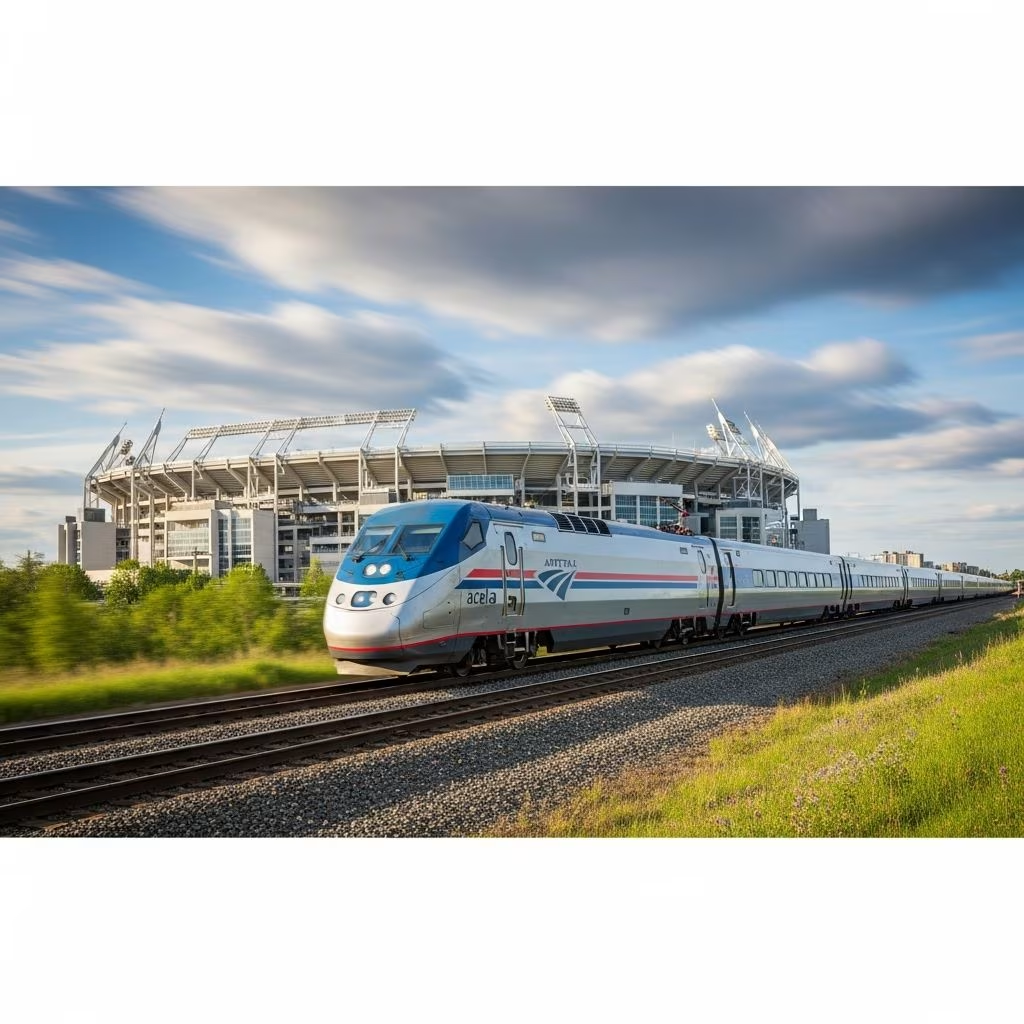
The convergence of the 2026 FIFA World Cup and the United States Semiquincentennial celebration creates an unprecedented travel opportunity for millions of fans and heritage enthusiasts. As host cities from Seattle to Miami prepare for record-breaking attendance, transportation infrastructure has become central to managing this surge in visitors. Among the most significant developments is Amtrak’s strategic expansion of intercity rail services, positioning trains as a viable alternative to traditional highway and air travel for World Cup attendees.
This comprehensive guide explores how expanded Amtrak services can enhance your World Cup experience while addressing practical concerns about accessibility, booking strategies, and multi-city itineraries.
Understanding Amtrak’s Role in World Cup Transportation
Amtrak has emerged as a critical component of the transportation ecosystem for the 2026 World Cup. Rather than simply maintaining existing schedules, the rail carrier is actively collaborating with host cities and transportation authorities to expand capacity during peak travel periods. This expansion addresses a fundamental challenge: while major sporting events draw enormous crowds to stadiums, the infrastructure supporting that travel can become overwhelmed within hours.
The advantage of rail-based transportation lies in its ability to move large passenger volumes efficiently. Unlike highways, which become congested and require extensive parking infrastructure, or airports, which struggle with security lines and terminal capacity, trains can transport thousands of fans directly from city centers to stadium areas via established corridors.
Key benefits of train travel for World Cup fans include:
- Direct city-center connections that bypass suburban highway congestion
- Elimination of airport security procedures and transfer delays
- Lower carbon emissions compared to individual vehicle travel
- Onboard amenities including Wi-Fi and at-seat power for trip planning
- Competitive journey times when ground transportation is factored into flight calculations
Northeast Corridor: The Premium Rail Network for World Cup Access
The Northeast Corridor represents Amtrak’s most developed and frequently utilized infrastructure for World Cup connectivity. This corridor, the busiest passenger rail line in the Western Hemisphere, already serves multiple host cities with established, high-frequency service.
Four major World Cup venues sit within the Northeast Corridor’s geographic sphere of influence: New York and New Jersey’s MetLife Stadium, Boston’s Gillette Stadium, Philadelphia’s Lincoln Financial Field, and facilities throughout the greater Washington region. These locations benefit from existing Northeast Regional and Acela Express services that have been operating for decades.
Northeast Corridor service characteristics:
- Northeast Regional trains provide frequent, affordable connections between all major Northeast cities
- Acela Express offers premium, business-class service with faster journey times and fewer stops
- Service extends to secondary cities including Hartford, Springfield, and Harrisburg
- Multiple daily departures accommodate flexible travel schedules
- Weekend and holiday schedules are maintained for major events
For fans planning to attend multiple World Cup matches or combine stadium visits with America 250 heritage sites, the Northeast Corridor enables seamless travel. Boston to New York requires approximately 3.5 to 4 hours via Acela, while Philadelphia sits just 1.5 hours from New York or 2 hours from Washington. These timeframes, when compared against driving times plus parking and airport procedures for flights, make rail increasingly attractive.
Expanding Rail Capacity Beyond the Northeast
While the Northeast dominates rail infrastructure, Amtrak and regional transportation authorities are implementing targeted expansions in other World Cup regions. The St. Louis to Kansas City corridor exemplifies this proactive approach.
Missouri’s Highways and Transportation Commission approved funding for a third daily Amtrak train service between St. Louis and Kansas City specifically for the 2026 World Cup season. This train will serve Kansas City’s Arrowhead Stadium, where six World Cup matches are scheduled. The service will traverse towns including Kirkwood, Washington, and Jefferson City, providing regional connectivity for the estimated 650,000 visitors expected in the Kansas City area.
The St. Louis-Kansas City expansion represents a replicable model for other regions. By identifying World Cup host cities with existing rail corridors and securing temporary funding for additional capacity, transportation planners can distribute travel demand more evenly across transportation modes. Missouri’s state legislature appropriated $1.7 million specifically for this expansion, demonstrating governmental commitment to sustainable World Cup infrastructure.
Special Event Trains and Customized Schedules
Transportation planning discussions indicate that several host cities are exploring special event trains timed specifically around match days. These dedicated services would operate according to match schedules rather than standard timetables, with departures designed to deliver fans to stadiums several hours before kickoff and return services scheduled after final whistles.
The concept of match-day trains differs from regular service in several important ways:
- Departure and arrival times synchronize with match schedules rather than standard daily operations
- Capacity is specifically allocated for World Cup attendees during competition periods
- Pricing may incorporate event-based premiums or promotional bundling opportunities
- Special amenities could include team-themed decor or food service enhancements
While specific special train offerings remain under formal development as of early 2026, the conversations between Amtrak and host cities suggest strong interest in this approach. Additional capacity deployments on the Northeast Corridor during peak travel periods are particularly likely, given the concentration of World Cup venues in this region.
Connectivity Challenges and Final-Mile Solutions
An important consideration for rail-dependent World Cup attendees is that not every host stadium sits directly adjacent to Amtrak stations. Several U.S. World Cup venues require supplementary transportation for the final leg from the rail station to the stadium itself.
West Coast venues present particular challenges. While Amtrak’s Coast Starlight serves Los Angeles, the Bay Area, and Seattle, arrival stations in these cities often require local transit, rideshare services, or shuttle connections to reach stadiums. Los Angeles to San Jose requires approximately 10 hours of train travel, while reaching Seattle from Los Angeles takes more than 30 hours, making these primarily useful for travelers combining World Cup attendance with extended cross-country experiences.
To address these connectivity gaps, fans should plan for:
- Local public transit connections from Amtrak stations to stadiums
- Rideshare services for direct point-to-point transfers
- Shuttle services potentially organized by teams or transportation authorities
- Rental car options for exploring wider geographic areas
Host cities are actively working to improve these final-mile connections, recognizing that seamless door-to-stadium service is essential for promoting rail travel among casual fans who might otherwise drive or fly.
International and Cross-Border Rail Opportunities
For World Cup attendees seeking to combine American stadium experiences with broader travel, several international rail options exist. Amtrak operates service between Seattle and Vancouver, British Columbia, via daily departures at 8:30 a.m. and 6:15 p.m., arriving in Vancouver at 12:30 p.m. and 10:15 p.m. respectively.
More ambitious travelers might consider via Rail’s Canadian route, which connects Toronto and Vancouver. However, this journey requires more than four days of travel in each direction, making it impractical for most World Cup itineraries.
Notably, no direct train routes exist between Mexico’s World Cup host cities of Mexico City, Monterrey, and Guadalajara, nor do cross-border rail services exist to these Mexican venues. Fans attending matches in Mexico will rely on air travel or ground transportation alternatives.
Booking Strategies and Advance Planning
Given expected demand spikes around World Cup matches and America 250 events, advance booking is critical. Transportation planners recommend reserving Amtrak tickets as soon as they become available for desired travel dates, particularly during key match periods and the early July Semiquincentennial peak.
Strategic booking considerations include:
- Monitor Amtrak’s fare announcements throughout spring 2026 for World Cup-specific promotions
- Book tickets immediately upon release rather than waiting to see if prices decline
- Consider flexible travel dates around specific matches to access better fares
- Register for Amtrak’s email alerts to receive notifications about special offers
- Explore multi-trip passes if attending multiple matches across different cities
While official World Cup or America 250 pass products remain unannounced as of early 2026, Amtrak’s historical practice of offering promotional fares and multi-ride options suggests such products may become available as the event approaches. Travelers should monitor official Amtrak communications for any bundled ticketing offerings that might reduce overall travel costs.
Regional Pricing and Ticket Availability
Demand-based pricing will likely characterize World Cup rail travel, particularly in densely served regions. New Jersey Transit has already announced special World Cup trains to MetLife Stadium, charging $150 per ticket for limited allocations of 40,000 tickets per game. This pricing exceeds standard regional fares, reflecting the premium associated with event-specific service.
Such pricing models raise important considerations for budget-conscious travelers. Standard Northeast Regional fares between Boston and Washington typically range from $50 to $120 depending on advance booking and specific routing. Event premiums could increase typical per-ticket costs by 25 to 100 percent during World Cup travel periods.
Creating Multi-City World Cup Itineraries
The existing rail infrastructure enables strategic fans to construct sophisticated multi-match itineraries. A traveler could realistically plan to attend a match in the New York and New Jersey area, then take Amtrak to Philadelphia or Boston for America 250 events, and continue onward to Washington, provided tickets and accommodations are booked well in advance.
Sample Northeast itinerary example:
| City | Amtrak Connection | Journey Time | Stadium/Venue |
|---|---|---|---|
| Boston | Northeast Regional/Acela | — | Gillette Stadium |
| New York | From Boston | 3.5–4 hours | MetLife Stadium |
| Philadelphia | From New York | 1.5–2 hours | Lincoln Financial Field |
| Washington, D.C. | From Philadelphia | 2–2.5 hours | Regional venues |
This routing allows attendance at multiple stadiums while maximizing time efficiency and minimizing transportation friction. Total rail travel time between Boston and Washington spans approximately 8 to 10 hours across multiple days, a duration reasonable for dedicated World Cup followers.
Environmental and Infrastructure Benefits
Beyond individual traveler convenience, Amtrak’s World Cup expansion reflects broader sustainable transportation commitments. Rail transport generates significantly lower per-passenger carbon emissions compared to individual vehicle travel or short-distance flights. When 650,000 people travel to Kansas City alone, the cumulative environmental impact of transportation choices becomes substantial.
Infrastructure benefits extend beyond environmental considerations. By distributing World Cup travel demand across rail corridors rather than concentrating all traffic on highways, cities avoid the infrastructure strain that leads to congestion, parking shortages, and security challenges. Highway capacity constraints in regions like the Northeast corridor during peak summer travel periods create cascading delays that rail alternatives effectively mitigate.
Frequently Asked Questions About World Cup Rail Travel
Can I realistically travel between multiple World Cup venues using Amtrak?
Yes, particularly in the Northeast where multiple stadiums sit within the established Amtrak corridor network. Boston, New York, Philadelphia, and Washington are well-connected with frequent service. Western and central host cities require more strategic planning but remain accessible via expanded regional services and Coast Starlight connections.
When should I book my World Cup rail tickets?
Book as soon as tickets are released for your desired dates. High demand around match days will drive rapid ticket availability depletion. Early booking provides both better fare options and guaranteed seat selection.
What if the stadium I want to attend isn’t directly served by Amtrak?
Most stadiums require supplementary transportation from Amtrak stations. Plan for local transit, rideshare services, or shuttles as the final leg of your journey. Research specific stadium connections in advance to incorporate realistic transfer times into your itinerary.
Are special World Cup ticket packages available?
While specific packages remain unannounced, Amtrak historically offers promotional fares around major events. Monitor official announcements for potential bundled offerings combining rail and event access.
How early should I arrive at the Amtrak station before departure?
Unlike airline travel, Amtrak typically requires arrival only 15–30 minutes before departure. This advantage significantly reduces total travel time compared to flights when security procedures are factored into calculations.
Looking Ahead: Transportation Innovation During the 2026 World Cup
The 2026 FIFA World Cup represents a transformational moment for American intercity rail travel. By positioning trains as a primary transportation alternative for millions of visitors, Amtrak and regional transportation authorities are demonstrating that sustainable, efficient mobility can effectively support major international events. The coordination between host cities, state governments, and Amtrak suggests a model that could influence transportation planning for future mega-events.
As the summer of 2026 approaches, travelers planning World Cup attendance should carefully evaluate rail options as central components of their logistics planning. Early booking, strategic routing between Northeast cities, awareness of final-mile connectivity requirements, and flexibility around specific travel dates will maximize the benefits of expanded Amtrak services while minimizing costs and logistical complications.
References
- Amtrak Positions Rail as Backbone of World Cup and America 250 Travel Season — The Traveler. 2026. https://www.thetraveler.org/amtrak-positions-rail-as-backbone-of-world-cup-and-america-250-travel-season/
- Best Ways to Use Public Transport to Travel Between World Cup Host Cities — Sofascore. 2026. https://www.sofascore.com/news/best-ways-to-use-public-transport-to-travel-between-world-cup-host-cities/
- Green Travel News: State Transportation Meeting Hails 3rd Amtrak Train to Take Cars Off Highways for 2026 — Environmental Echo. November 2, 2025. https://environmentalecho.com/2025/11/02/green-travel-news-state-transportation-meeting-hails-3rd-amtrak-train-to-take-cars-off-highways-for-2026/
- MBTA and NJT Special World Cup Train Services — Amtrak Trains Forum. 2026. https://www.amtraktrains.com/threads/mbta-njt-gouging-world-cup-attendees-who-choose-rail.89810/latest

