

 Travel Essentials
 Travel Essentials

Explore Athens' iconic ancient sites like the Acropolis, Agora, and Temple of Olympian Zeus. This guide offers practical tips, history, and itineraries for an immersive journey through Greece's classical past.
 Travel Essentials
Athens stands as a living museum where every corner whispers tales from antiquity. Perched atop rocky hills and nestled in bustling neighborhoods, its archaeological sites transport visitors back to the golden age of Greece, a time of philosophers, gods, and groundbreaking democracy. This guide delves into the city’s premier ancient landmarks, offering historical context, practical advice, and itineraries to maximize your exploration.
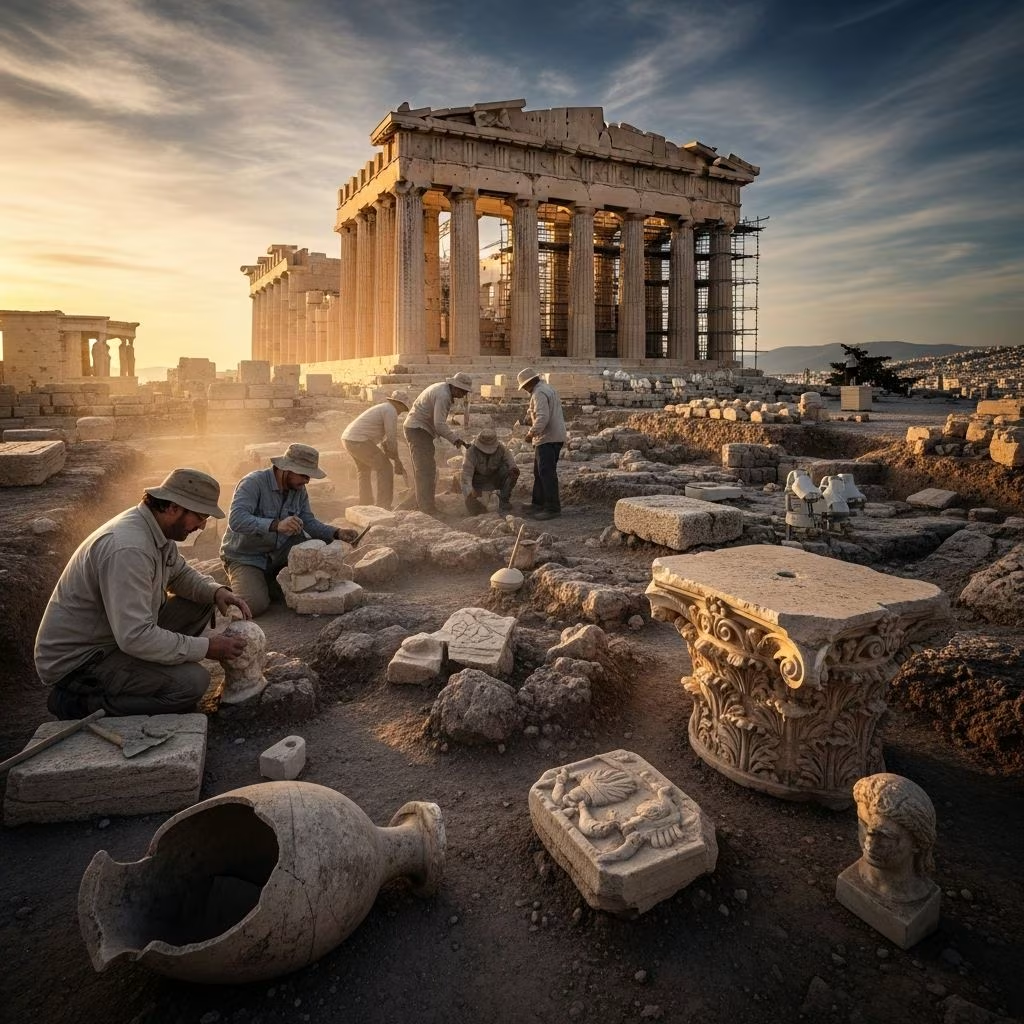
The Acropolis dominates Athens’ skyline, a flat-topped citadel rising 150 meters above the modern city. Dating to the 5th century BCE, this UNESCO World Heritage site encapsulates the pinnacle of classical Greek architecture during the era of Pericles. Constructed primarily from Pentelic marble, its structures have endured earthquakes, invasions, and time itself, symbolizing resilience and cultural supremacy.
At its heart lies the Parthenon, a Doric temple dedicated to Athena, Athens’ patron goddess. Built between 447 and 432 BCE by architects Ictinus and Callicrates under sculptor Phidias, it once housed a colossal gold-and-ivory statue of Athena Parthenos. Though damaged by a 17th-century Venetian bombardment, its 46 surviving columns evoke the harmony of ancient engineering.
Flanking the Parthenon are other gems: the Propylaea, a monumental gateway with Ionic columns; the Erechtheion, famed for its Caryatid porch where six maidens serve as columns (originals now in the Acropolis Museum); and the Temple of Athena Nike, a petite Ionic shrine celebrating victory. The south slope features the Dionysus Theatre, birthplace of Western drama, and the Odeon of Herodes Atticus, still hosting summer concerts.
Below the Acropolis’ northwest flank, the Ancient Agora sprawled as Athens’ social, political, and commercial hub from the 6th century BCE. Here, Socrates debated, trials unfolded, and merchants bartered amid stoas (colonnaded walkways). Spanning 12 hectares of olive groves and ruins, it’s a serene contrast to the Acropolis’ bustle.
Standout features include the Temple of Hephaestus, one of the best-preserved Doric temples worldwide, built circa 450 BCE. Its 18 intact columns and frieze depict myths of the forge god. The Stoa of Attalos, reconstructed in the 1950s with Rockefeller funding, now houses the Agora Museum, displaying pottery, sculptures, and ostraka (voting shards used to ostracize politicians).
Other highlights: the Heliaia (judicial court), Tholos (magistrates’ dining hall), and Altar of the Twelve Gods, a sacred mile marker. Wander paths evoking Aristotle’s peripatetic school nearby at the Lyceum site.
| Site Feature | Historical Significance | Modern Appeal |
|---|---|---|
| Temple of Hephaestus | Dedicated to craftsmanship; survived as church/mosque | Photogenic, fully roofed interior |
| Stoa of Attalos | 2nd-century BCE shopping arcade | Museum with panoramic views |
| Panathenaic Way | Processional route for festivals | Stone-paved path for immersive walks |
Southeast of the Acropolis, the Temple of Olympian Zeus sprawls across a vast platform, its 104 Corinthian columns (17 surviving) towering 18 meters. Initiated in the 6th century BCE by Peisistratos, it took 638 years to complete under Hadrian in 131 CE. Once the largest temple in Greece, it boasted a 12-meter Zeus chryselephantine statue.
Adjacent Hadrian’s Arch, a 2nd-century CE triumphal gate, honors the Roman emperor who lavished Athens with endowments. Inscribe reads: “This is Athens, the ancient city of Theseus” on one side, evolving to Hadrian’s era on the other. The site’s open expanse offers unobstructed views, ideal for sunset photos.
Near Monastiraki, the Roman Agora (1st century BCE) buzzed with markets under Roman rule. Key attraction: the Tower of the Winds, an octagonal Horologion by Andronicus Cyrrhestes, functioning as sundial, water clock, and weather vane with carved wind deities.
Hadrian’s Library nearby housed 100,000 papyrus scrolls, its facade evoking Roman grandeur. Venture to Kerameikos, ancient pottery district and cemetery, with the Dipylon Gate and Sacred Way lined with elaborate tombs.
Athens’ periphery brims with sites. Cape Sounion (1.5 hours away) features Poseidon’s Doric temple perched on cliffs, a sunset beacon since 444 BCE. Eleusis hosts the Mysteries sanctuary, while Daphni Monastery showcases Byzantine mosaics. Closer, Pentelic Quarries supplied marble for the Parthenon.
Combo Ticket: €30 covers Acropolis, Agora, Roman Agora, etc. (5 days validity).
Museums: Acropolis Museum (€15) displays originals; National Archaeological Museum houses Mycenaean artifacts.
Spring (April-June) or fall (Sept-Oct) for mild weather and fewer crowds. Summers are hot; winters rainy but site-empty.
Audio guides (€5) or free apps suffice; official guides (€50/group) add depth.
Partial: Acropolis has elevators; Agora ramps. Check odysseus.culture.gr.
Arrive at opening (8 AM); use Athens City Pass for fast-track.
Yes, with combo ticket; pace yourself—3-4 sites max.
Restoration efforts, like the Parthenon’s ongoing marble cleaning, ensure these icons endure. Support by following paths, no touching, and visiting off-peak. Athens’ ruins aren’t relics—they’re vibrant links to our shared human story.
