

 Travel Essentials
 Travel Essentials

Explore the mystical remnants of ancient England, including iconic stone circles, Roman sites, and Iron Age settlements that offer a glimpse into lost eras.
 Travel Essentials
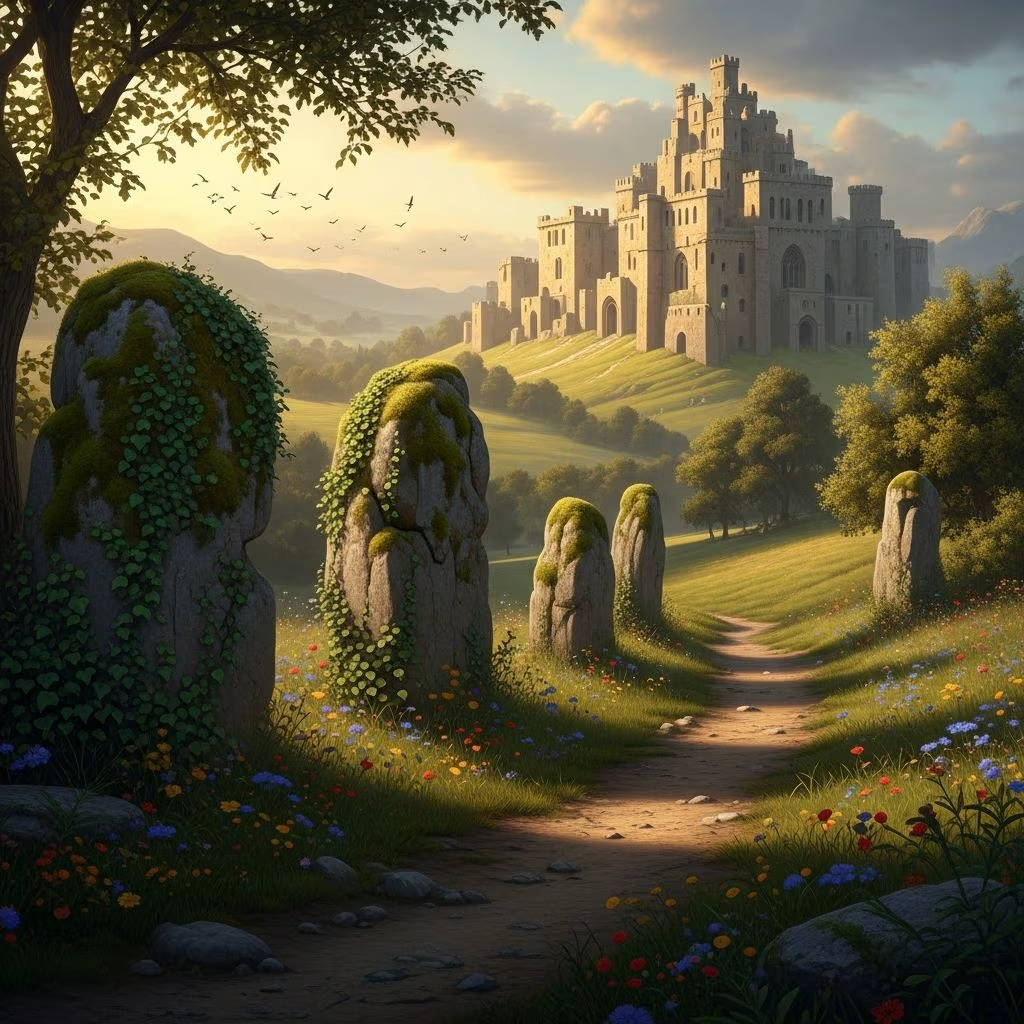
England’s landscape is a living archive of human history, dotted with monuments that predate written records. These sites, from colossal stone arrangements to subterranean dwellings, invite travelers to step into the Neolithic and Bronze Ages. This guide uncovers key destinations, practical visiting tips, and the profound sense of connection they evoke.
The allure of England’s ancient sites lies in their enigma. Constructed thousands of years ago by communities with no metal tools or written language, these structures challenge modern understanding. They served ceremonial, astronomical, or communal purposes, standing as testaments to early ingenuity.
Dominating Salisbury Plain, Stonehenge is England’s most renowned prehistoric monument. Comparable in antiquity to Egypt’s pyramids, it was built in phases over 1400 years, starting circa 3000 BCE. The central sarsen stones, some weighing 50 tons, form a precise circle aligned with solstices.
Visitors approach via a shuttle from the modern visitor center, which houses exhibits on construction techniques and artifacts. A rope barrier keeps crowds at bay, but special Stone Circle Access tours allow intimate walks among the bluestones during off-hours—book well ahead.
| Aspect | Details |
|---|---|
| Construction Timeline | 3000–1600 BCE |
| Key Features | Sarsen circle, trilithons, avenue alignment |
| Best Visit Times | Summer solstice (June 21), winter solstice (December 21) |
| Access Options | Standard view (free roam), guided inner circle (£50+) |
During solstices, the site opens for sunrise gatherings, where sunlight pierces the stones in dramatic fashion—weather permitting, as England’s skies are notoriously fickle.
In the rugged Lake District, Castlerigg Stone Circle offers a quieter alternative. Nestled amid fells and forests, its 38 volcanic boulders form a 32-meter ring, dating to 2000–1000 BCE. Poets like Wordsworth drew inspiration from its atmospheric setting.
No admission fee or crowds mar the experience; arrive at dawn for mist-shrouded views. A small parking area leads to the open field, where sheep graze beside the stones. It’s ideal for photographers seeking cinematic compositions.
This understated site captures the raw beauty of prehistoric Britain, far from tourist throngs.
Perched on Cornwall’s windswept peninsula, Chysauster reveals Iron Age life from 100 BCE to 500 CE. Eight stone houses cluster around courtyards, mimicking Roman villa layouts despite predating widespread invasion.
A half-mile path from the car park winds through fields to the site. The visitor center displays artifacts like bone tools, jewelry, and grooming implements, shedding light on daily routines. Explore the enigmatic fogou—a 10-meter tunnel possibly used for rituals or refuge.
En route to Cornwall, detour to Bodmin Moor for King Arthur’s Hall. This Bronze Age enclosure, amid tors and mires, features sturdy granite walls defining a rectangular space. Legends tie it to Arthurian lore, though its true purpose—gathering hall or ritual center—remains debated.
The remote location demands sturdy footwear; bogs surround the site. Combine with nearby Stripple Stones, a ruined circle, for a full moorland immersion.
Beyond prehistory, Roman Britain (43–410 CE) left sophisticated settlements. Sites like Housesteads on Hadrian’s Wall showcase baths, granaries, and barracks. In the south, Fishbourne Palace near Chichester boasts mosaic floors and underfloor heating, rivaling Italian villas.
These ruins blend military might with civilian luxury, illustrating empire’s reach. Interactive museums reconstruct daily life, from hypocaust systems to gladiator games.
Spring and autumn offer mild weather and fewer visitors. Solstice events draw crowds; book accommodations months ahead. Sites like Stonehenge require timed tickets via official apps.
London hubs connect via trains to Salisbury (for Stonehenge) or Keswick (Castlerigg). Rent cars for rural spots; narrow Cornish lanes suit smaller vehicles. Public buses serve major sites sporadically.
| Site | Nearest Town | Transport Tips |
|---|---|---|
| Stonehenge | Salisbury | Shuttle from visitor center |
| Castlerigg | Keswick | Short drive/hike from A66 |
| Chysauster | Penzance | Car essential; coastal path nearby |
Many paths are uneven; mobility aids available at larger sites. Respect barriers, leave no trace, and drones are prohibited. Support English Heritage or National Trust memberships for free entry.
Enhance visits with reenactments, storytelling nights, or archaeological digs (observer roles). Stonehenge hosts equinox yoga; Cornwall features Celtic music festivals. Apps like ‘Past Explorer’ overlay digital reconstructions via AR.
Climate change and tourism pressure these sites. Initiatives like drone monitoring and visitor caps ensure longevity. Travelers contribute by treading lightly and advocating conservation.
Standard visits maintain distance, but special access tours permit contact during quiet periods.
Castlerigg is free; others charge £15–25, with family discounts and annual passes available.
Expect rain year-round; layer clothing and pack waterproofs. Mornings often clearest.
Audio guides suffice for most, but live experts add depth—especially for fogous and enclosures.
Free tickets release online weeks prior; prepare for lotteries at peak events.
Visiting these sites transcends sightseeing, fostering reflection on human resilience. Amid modern bustle, they remind us of shared ancestry. Plan a circuit: Wiltshire to Lakes, then southwest—each stop builds narrative depth.
