

 Travel Essentials
 Travel Essentials

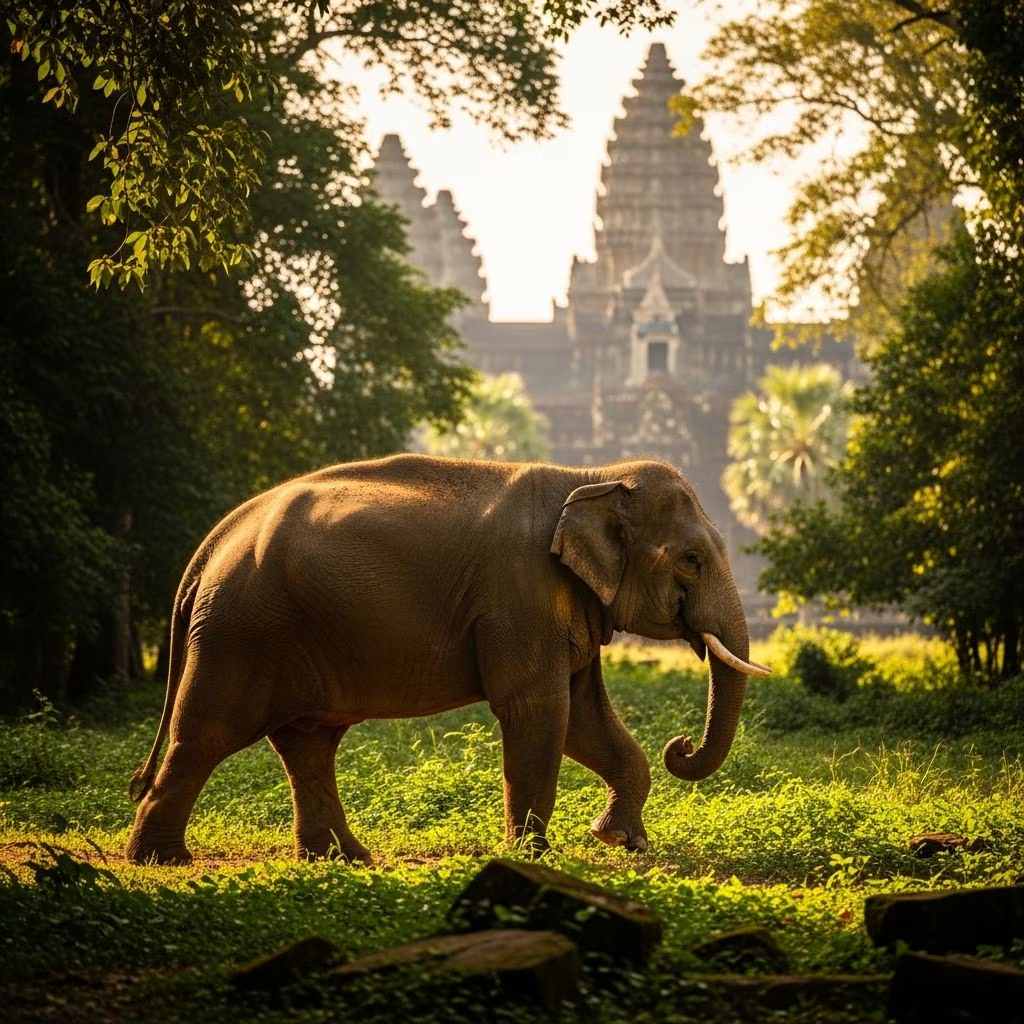
Cambodia ends elephant rides at Angkor Wat, prioritizing animal welfare and paving the way for more ethical, sustainable tourism.
 Travel Essentials
One of Southeast Asia’s premier tourist destinations, the Angkor Archaeological Park, has taken a bold step toward ethical tourism by prohibiting elephant rides starting in early 2020. This decision by the Apsara Authority reflects growing global awareness of animal welfare issues in the travel industry.
Angkor Wat, the heart of the Angkor complex, draws over 2 million visitors annually, making it a cornerstone of Cambodia’s economy. Built in the 12th century as a Hindu temple dedicated to Vishnu, it later became a Buddhist site and stands as the largest religious monument in the world. Tourists flock to its intricate bas-reliefs, towering spires, and sprawling moats, often combining visits with explorations of nearby temples like Angkor Thom and Ta Prohm.
Historically, elephant rides offered a unique vantage point for navigating the park’s vast 400-square-kilometer area. Since 2001, these rides have been a staple, allowing visitors to traverse paths between temples while enjoying elevated views. However, this practice has come under intense scrutiny as evidence mounts regarding its impact on the animals involved.
The ban stems from recognition that captive elephants endure significant hardship. Elephants at Angkor were subjected to long hours under the tropical sun, carrying heavy loads including tourists and their belongings up steep temple steps. Veterinary reports highlight issues like foot problems from hard surfaces, spinal injuries from improper saddles, and psychological stress from constant human interaction.
Long Kosal, a spokesperson for the Apsara Authority, emphasized that “using elephants for business is no longer appropriate.” The authority acknowledged the need for elephants to reside in natural habitats, free from exploitation. This aligns with broader conservation goals, as Asian elephants are classified as endangered, with wild populations dwindling due to habitat loss and poaching.
The transition began promptly in late 2019. Of the 14 elephants stationed at the park, two were relocated on November 15 to the Bos Thom community forest, approximately 25 miles away. The remaining animals followed by early 2020, ensuring a phased approach to minimize disruption. This forest provides a more suitable environment with ample space for foraging and social interaction.
The Angkor Elephant Group Committee coordinated the effort, working with local communities to manage the animals’ retirement. No new elephants will enter the tourism circuit, marking a permanent end to the practice within the park.
Cambodia’s move mirrors a worldwide shift in tourism ethics. Major operators like TUI, Intrepid Travel, G Adventures, and Thomas Cook have pledged to eliminate elephant rides from their packages. Fodor’s Travel updated its guides in 2019 to warn against such activities, citing inherent cruelty.
This trend underscores a demand for “elephant-friendly” experiences, such as observation centers where animals roam freely without riding or performing.
Visitors need not miss out on Angkor’s wonders. Enhanced options include electric carts, bicycles, remorks (motorized tuk-tuks), and guided walks. Sunrise tours at Angkor Wat remain iconic, best experienced on foot or via eco-friendly transport.
| Transport Option | Pros | Cons | Cost Estimate (USD) |
|---|---|---|---|
| Remork | Wind-in-hair experience, flexible stops | Emissions from fuel | 20-30/day |
| Bicycle | Exercise, intimate exploration | Hot weather challenge | 5-10 rental |
| Electric Cart | Quiet, low-impact | Limited capacity | 10-15/person |
| Walking Tours | Deep immersion, photo ops | Physical demands | Free with pass |
A 3-day pass to the park costs around $62, granting access to main sites without animal rides. Combine with cultural shows or village visits for a fuller experience.
Mahouts (elephant handlers) face job losses, prompting retraining programs in eco-tourism guiding or forest patrol. The Apsara Authority collaborates with NGOs to support these transitions. Economically, elephant rides generated modest revenue compared to entry fees, which fund site preservation.
Critics worry about underground operations, but official enforcement aims to prevent this. Long-term, ethical tourism could boost visitor numbers, as conscious travelers seek sustainable options.
To support conservation, choose sanctuaries verified by the Global Federation of Animal Sanctuaries. Look for no-ride, no-show policies and evidence of wild release potential. In Cambodia, visit Phnom Tamao Wildlife Rescue Centre for ethical encounters.
Beyond Angkor, Cambodia protects elephants through the Elephant Conservation Corridor in Mondulkiri Province. Government partnerships with WWF and Elephant Asia Rescue aid rehabilitation. Wild populations hover around 400-600, threatened by logging and agriculture.
The ban sets a precedent, potentially influencing neighboring countries where elephant tourism persists.
Yes, fully accessible via multiple transport modes; the ban enhances sustainability.
Early 2020, with relocations starting November 2019.
Relocated to Bos Thom forest for retirement in a natural setting.
Yes, at registered sanctuaries focusing on observation and care.
Increased focus on walking tours and eco-vehicles, maintaining high visitor satisfaction.
The Angkor ban exemplifies how tourism can evolve without compromising heritage. As travelers prioritize ethics, destinations like Cambodia lead by example, fostering wildlife protection alongside cultural appreciation. Plan your trip to witness this progress firsthand.
